UV Index Calculator
Estimate sunburn timing and safer outdoor exposure using UV level, altitude, cloud cover, reflective surfaces, SPF, and clothing protection.
☀Outdoor Presets
📏Altitude Units
⚙Sun Exposure Inputs
📊UV Planning Grid
📘Reference Tables
| UV Band | UV Range | Typical Alert | Suggested Action |
|---|---|---|---|
| Low | 0 to 2 | Minimal risk | Sunglasses and routine care |
| Moderate | 3 to 5 | Burn possible | SPF plus shade breaks |
| High | 6 to 7 | Fast burn risk | SPF 30+ and hat coverage |
| Very High | 8 to 10 | Very fast burn | Limit midday exposure |
| Extreme | 11+ | Critical risk | Minimize direct sun time |
| Skin Type | Unprotected At UV 8 | With SPF 30 + Shirt | Burn Tendency |
|---|---|---|---|
| Type I | 12 to 15 min | 30 to 45 min | Very high sensitivity |
| Type II | 15 to 20 min | 40 to 60 min | High sensitivity |
| Type III | 20 to 30 min | 55 to 80 min | Moderate sensitivity |
| Type IV | 30 to 40 min | 80 to 110 min | Lower sensitivity |
| Type V-VI | 45 to 70 min | 110 to 170 min | Lower burn frequency |
| Surface | UV Reflection | Exposure Effect | Protection Focus |
|---|---|---|---|
| Grass trail | Low | Baseline UV load | SPF and cap usually enough |
| Concrete | Low-moderate | Mild reflected load | Face and neck coverage |
| Water | Moderate | Extra underside exposure | Reapply after splash |
| Sand | Moderate-high | Higher reflected UV | Wraparound eyewear |
| Snow | High | Strong reflected UV | Full face and lip care |
The UV index is an international standard for estimating ultraviolet radiation. It shows the intensity of UV radiation regarding sunburn. For example, a UV index of 12 is double the intensity compared to 6.
The higher the index, the bigger risk of damage to skin and eyes, and the more quickly damage happens UV index is basically how quickly you get sunburned.
What the UV Index Means and How to Protect Your Skin and RV
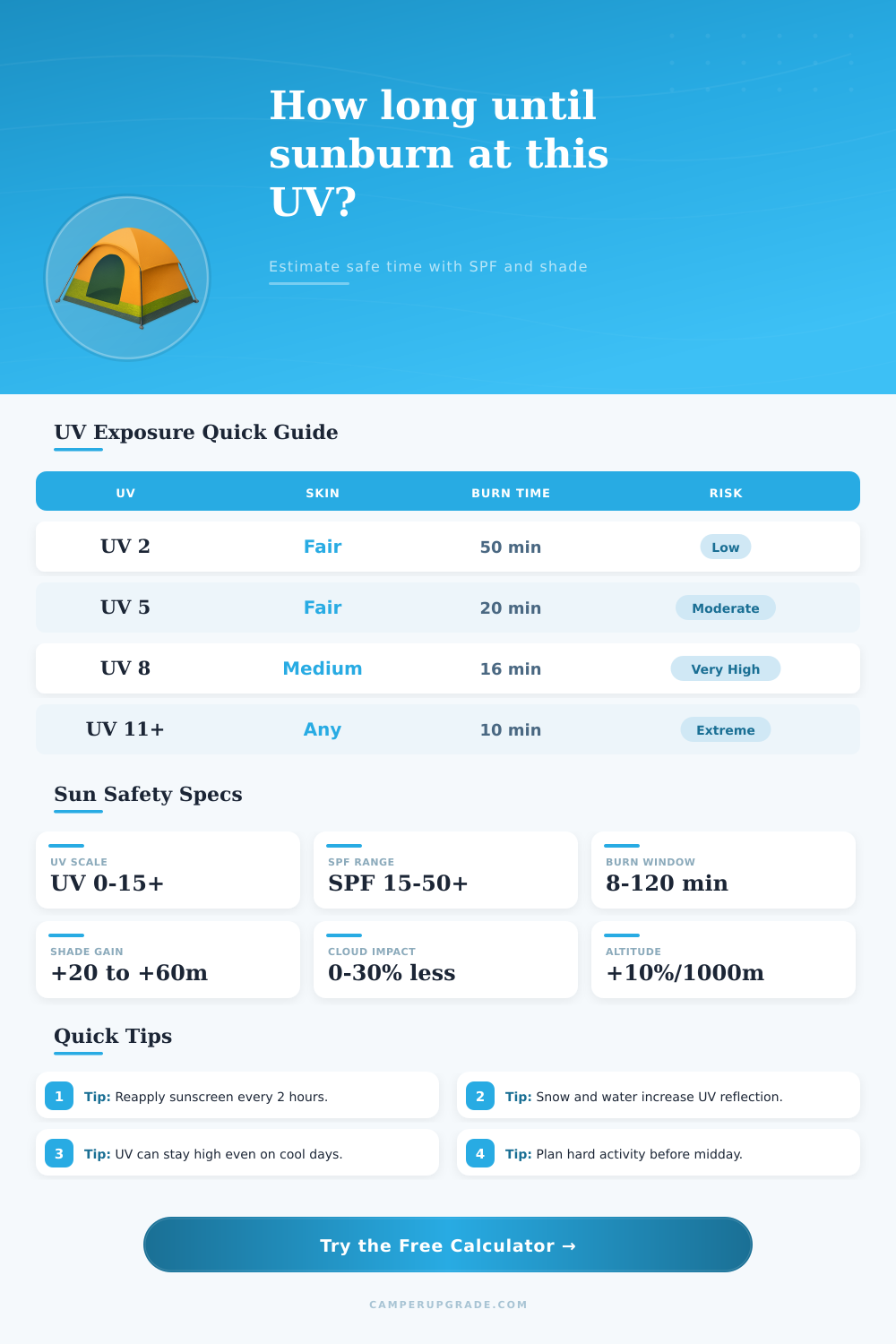
UV index values are split into five risk levels. 0 to 2 are low, 3 to 5 moderate, 6 to 7 high, 8 to 10 very high, and 11 and higher. In high index of 6 to 7 the skin burns after around 30 minuts.
Very high of 8 to 10 after only 20 minutes. Even so each person is different. Fair skin needs more care, while dark skin lasts longer.
At low UV levels basic sun protection is enough for usual activities. Wear sunglasses on bright days. For more than one hour outside, cover you and use sunscreen.
Snow almost doubles UV strength, so put cream on the face and wear sunglasses in snowy wheather.
High UV index appears when more sun radiation reach the ground. That depends on sun position in the sky, season, cloud cover and ozone. Maximum it reaches when sun is overhead in tropics.
Height strengthens UV radiation by 2 % for every 1000 feet. Thick clouds commonly block the most. At night, from 7 pm until 5 in the morning, the index falls to zero.
For campers and RV owners UV radiation is an everyday threat. It destroys recreational vehicles. Long sun exposure damages gelcoat of RVs, aluminum siding, rubber seals, roof material, tires and other parts.
303 Protectant protects tires and outsides against UV. Some prefer Armor All Extreme for more lasting protection and gloss. In EPDM or TPO roofs you must use special UV products instead of average.
Meguiars Marine wax is another choice for RV UV protection. Summer passes a lot outside, so knowing the UV index helps to protect folks and their stuff duringcamping.