Ultralight Base Weight Target Calculator
Set a realistic backpacking base weight goal from body weight, route style, weather margin, safety exposure, pack volume, and your actual gear category weights.
🎒Backpacking Base Weight Presets
⚙Base Weight Planning Inputs
🧵Material and Spec Comparison Grid
📋Base Weight Class Reference
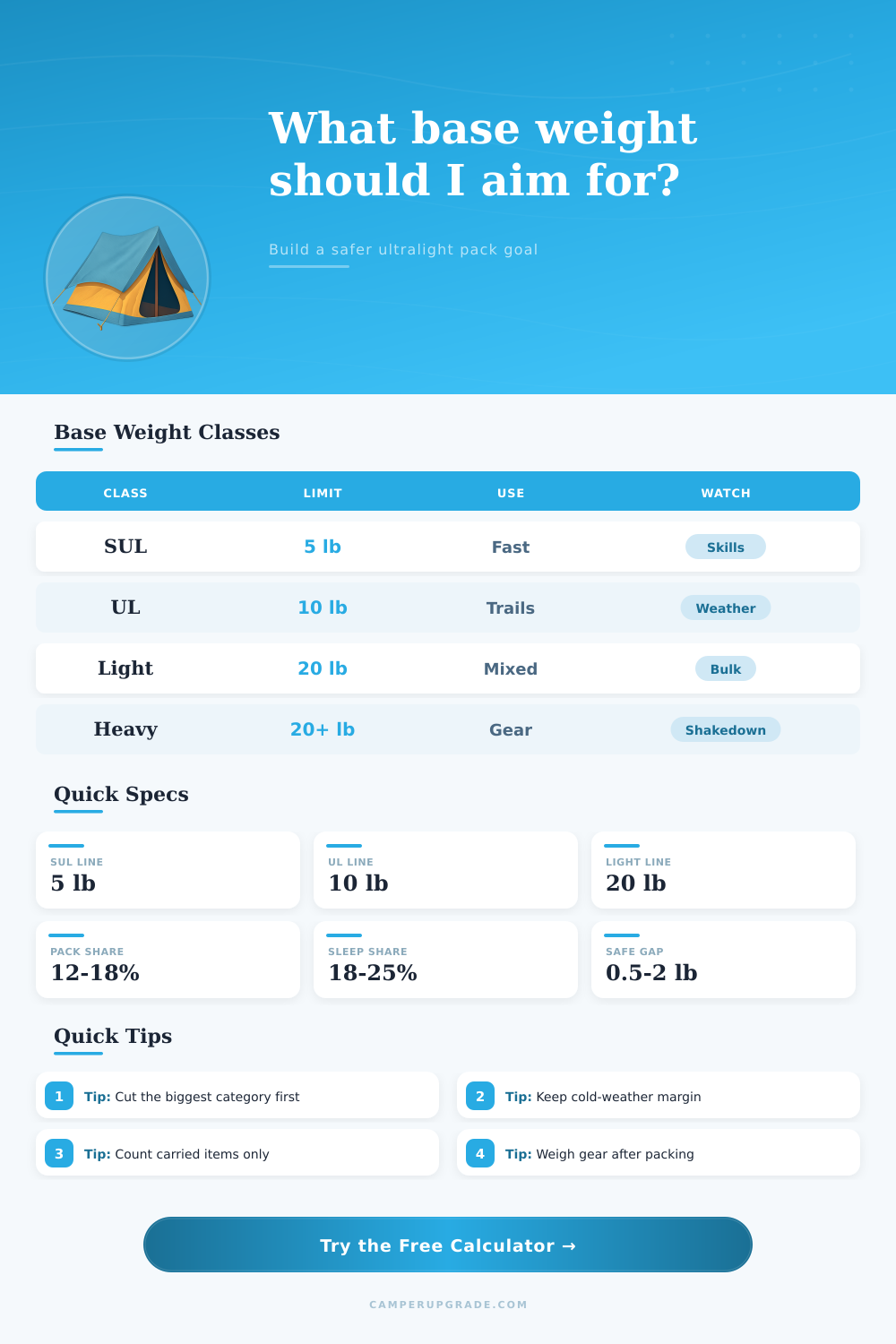
| Class | Typical base weight | Best fit | Planning caution |
|---|---|---|---|
| Super ultralight | Under 5 lb / 2.3 kg | Skilled warm-weather trips with minimal spare gear | Small errors matter more, especially in wind, rain, or cold. |
| Ultralight | 5 to 10 lb / 2.3 to 4.5 kg | Long trails, weekend trips, and most three-season shakedowns | Keep rain, sleep, and navigation margins route-specific. |
| Lightweight | 10 to 20 lb / 4.5 to 9.1 kg | Newer backpackers, colder routes, camera kits, and extra comfort | Focus on the largest categories before trimming tiny items. |
| Traditional | Over 20 lb / 9.1 kg | Heavy framed systems, older gear, and comfort-heavy packing | A shakedown can often remove several pounds without losing safety. |
📊Category Target Share Table
| Category | Efficient share | Common UL range | What usually drives it up |
|---|---|---|---|
| Backpack | 12% to 18% | 16 to 36 oz | Large volume, heavy frame, bulky food carries, or old suspension. |
| Shelter | 18% to 28% | 12 to 40 oz | Double-wall tents, extra groundsheets, many stakes, or solo duplication. |
| Sleep system | 18% to 25% | 22 to 52 oz | Cold lows, lower-fill insulation, thick pads, or heavy bags. |
| Packed clothing | 12% to 22% | 12 to 44 oz | Duplicate layers, wet climates, low temperatures, or camp comfort items. |
| Kitchen and water | 6% to 12% | 6 to 24 oz | Large pots, pump filters, multiple bottles, mugs, and full cook kits. |
| Electronics and safety | 6% to 14% | 8 to 32 oz | Large batteries, camera gear, satellite devices, and oversized kits. |
| Condition | Target add | Why it matters | Typical gear |
|---|---|---|---|
| Warm dry summer | 0 lb | Lowest insulation and rain margin | Light quilt, tarp, minimal layers |
| Three-season | 0.8 lb | Balanced rain and sleep safety | Rain shell, warmer pad, spare layer |
| Wet forest | 1.2 lb | Dryness margin protects sleep system | Reliable shelter, rain mitts, dry bags |
| Cool shoulder | 1.6 lb | More insulation and warm sleep gear | Puffy, warmer quilt, gloves |
| Cold shoulder | 2.8 lb | Safety floor rises quickly | Warmer pad, shell, dry sleep layers |
| Pack volume | Base target clue | Common use | Watch point |
|---|---|---|---|
| 25 to 35 L | Usually SUL to low UL | Fastpacking and tight summer kits | Food bulk can overwhelm small packs. |
| 35 to 45 L | Core ultralight range | Most three-season trail kits | Great shakedown size for long trails. |
| 45 to 55 L | UL with comfort or bear can | Longer carries and mixed weather | Frame weight may be worth keeping. |
| 55 to 65 L | Lightweight or bulky gear | Cold trips, group gear, extra food | Check sleep and clothing bulk first. |
🧭Preset Target Examples
| Preset | Route profile | Target logic | Main shakedown focus |
|---|---|---|---|
| AT summer thru-hike | Humid three-season trail with frequent resupply | Long-trail UL target with moderate rain margin | Shelter weight, sleep system, and packed clothing. |
| PCT desert shoulder | Cool nights, dry exposure, and long water carries | Light pack frame margin despite minimal rain gear | Pack structure, sun gear, and electronics. |
| CDT high country | Alpine exposure, storms, and remote bailout | Mountain UL target with a higher safety floor | Insulation, rain shell, navigation, and repair kit. |
| Weekend tarp test | Short warm route testing a minimal shelter | Lower shelter target, but no cold-weather penalty | Verify groundsheet, stakes, and sleep comfort. |
| First UL shakedown | New lightweight kit with extra margin | Starter ceiling leaves space for learning and comfort | Remove duplicates before replacing expensive gear. |
💡Base Weight Target Tips
Base weight excludes food, water, fuel, and worn clothing. Count carried bear cans, trekking-pole spares, empty fuel containers, and electronics because they ride in the pack.
A base weight target is a calculated estimate of the weight of the gear that an individual will carry within their pack. The base weight target for an individual isnt a fixed numbers. Instead, numerous factor will change the base weight target.
Factors that will change an individual’s base weight target include they’re body weight, the route that they will take, the weather along that route, and the safety margin that they require for their trip. Calculators can be used to determine an individual’s base weight target. These calculators will perform the calculation necessary to determine the individual’s base weight target and will remove the guesswork involved in establishing this target.
What Is a Base Weight Target?
An individual’s body weight is one of the factor that will affect their base weight target. Individuals with lower body weights will be able to carry more weight than individual with higher body weights. Additionally, the hiking route that an individual undertakes will affect the base weight target.
A long-distance hike will require different weights and safety margins then a short overnight hike. Factors related to the hike, such as the weather and temperatures along the hike will impact the base weight target that an individual must establish for their hiking trip. The level of exposure that an individual will have to the elements will impact the type and the amount of gear that they will need to stay safe on their hike.
Individual with high level of exposure will require more gear than individuals with lower levels of exposure. Finally, the shelter strategy that an individual use will impact the base weight target. Individuals that will share a shelter with another individual will carry less weight than individuals that will be camping alone.
The calculation of the base weight target will provide three types of information to the individual that is calculating their base weight target. First, the base weight target will provide a target weight for the individual that includes a safety floor to ensure that the individual does not have gear that is too light for their hiking route. Second, the calculation will compare the individual’s current gear to their target weight to indicate the difference in weight between their gear and their target.
Finally, the calculation will provide individual with information regarding which category of gear is the heaviest for that individual so that they can focus on reducing the weight of that category of gear. The use of a base weight target is helpful in that it allows an individual to see if their gear is too heavy for their hike. Individuals may pay close attention to the weights of individual categories of gear, such as a titanium spork.
However, such a weight does not change the total weight that the individual carries to the same extent that the weight of a heavy shelter or sleeping system do. It is important to remember that a base weight target does not include food, water, or the weight of the clothing that the individual is currently wearing. The base weight target is only for the gear that is to remain within the individual’s pack.
A base weight target does account for many variables, but it does not account for all of the variables that may impact a hiking trip. The change of the weather during an individual’s hike will change the gear that they require. The change in that gear will change their necessary base weight target.
Any change in the number of individuals that are to share the same gear will change the weight of the gear that each individual will have to carry. Finally, individual preferences for the level of warmth and dryness that they require while on the hike will change the amount of gear that each individual must carry. These changes in variables will change the base weight target for each individual.
Before an individual perform a gear shakedown, that individual should of calculated their base weight target. By calculating the individual’s base weight target, the individual will be able to understand their gear weight relative to their target. With this information, that individual can perform a gear shakedown to test their gear.
If the difference between their gear and their target is large, the individual will focus on removing some of the weight of the largest gear category. If, however, the difference in weight is small, the individual will decide for themselves if they would like to keep that extra weight or remove it to reach their base weight target. Checking an individual’s gear against their base weight target will eventually become a habit.
Eventually, the individual will think of their gear in relation to how it will impact their base weight target. For instance, they may consider how a specific type of gear will impact the individuals base weight target for their hike, or they may consider how that gear will help them reach their base weight target. While not a replacement for an individual’s experience and knowledge in hiking, the base weight target will provide that individual a clearer picture of the gear that is require for their specific hiking trip.
Youll find that more moddern gear can help, but the base weight target is actualy more important than alot of other things. The weight of the furnitures might not matter, but the gear does. The weight of the gear depend on many things.
Looking at the packs size is also helpful.