Ultra Drop Bag Planning Calculator
Build a practical drop-bag plan for ultras, stage races, and long trail events by modeling aid gaps, calories, fluids, sodium, caffeine, spare layers, shoes, lighting, bag limits, crew reliability, and segment risk.
1.Race presets
2.Course and access profile
3.Nutrition and hydration targets
4.Drop bag gear modules
Use this as a planning model. Confirm race rules, bag size limits, medical needs, mandatory gear, aid-station menus, crew access, and climate-specific hydration guidance before packing.
Drop Bag Plan Results
5.Planner metrics
6.Suggested bag-by-bag schedule
| Bag | Approx location | ETA | Fuel | Hydration supplies | Gear cue | Bag weight |
|---|---|---|---|---|---|---|
| Enter your course profile to generate the schedule. | ||||||
7.Reference tables
| Planning item | Typical range | Use in this calculator | Watch point |
|---|---|---|---|
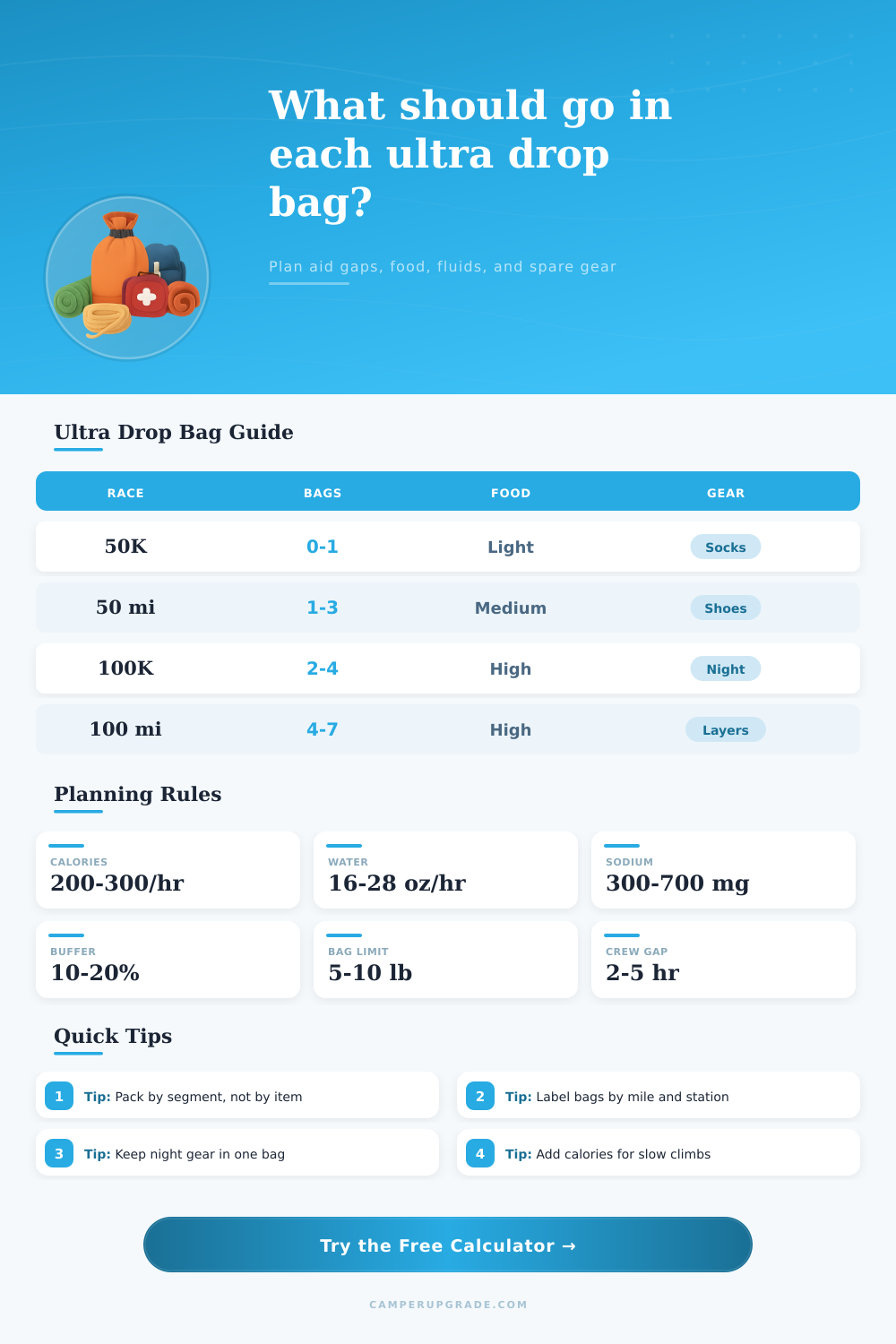
| Calories | 200-300 per hr | Fuel per segment and total staged food | Gut tolerance matters more than spreadsheet precision. |
| Fluid | 16-28 fl oz per hr | Start-carry load and longest aid gap check | Heat, humidity, altitude, and sweat rate change the target. |
| Sodium | 300-700 mg per hr | Capsules or drink-mix sodium count | Use tested personal guidance, especially in heat. |
| Food density | 80-130 cal per oz | Converts calories into food weight | Wet real food can weigh far more than gels. |
| Bag weight limit | 5-10 lb common | Flags bags that may be too heavy | Some races enforce size more than weight. |
| Race format | Useful bag strategy | Strong candidates | Avoid stuffing |
|---|---|---|---|
| 50K to 50 mile | One or two decisive bags | Socks, preferred food, small medical kit | Duplicate clothing you will never stop to use. |
| 100K | Early food bag plus late night bag | Lighting, layer, caffeine, shoe option | Heavy food at stations with good aid menus. |
| 100 mile | Segment bags by course phase | Feet, layers, batteries, comfort food | One giant bag that slows decisions. |
| Loop ultra | One organized base bag | Clear bins, hourly food packs, spare bottles | Loose snacks buried under clothing. |
| Stage or fastpack | Daily bag plus repair reserve | Recovery food, socks, charging, foot care | Untested meals or bulky luxuries. |
| Module | Typical weight | Best placement | Reason |
|---|---|---|---|
| Dry socks | 1.5-3 oz | Wet crossings or halfway | Small weight, high comfort value. |
| Shoes | 18-28 oz | Major crew point or second half | Useful if swelling, mud, or outsole choice changes. |
| Rain shell | 5-10 oz | Before exposed ridge or night | Weather swing can punish minimal packing. |
| Headlamp set | 2-6 oz | Before dusk and pre-dawn | Keep batteries where you will actually change them. |
| Foot-care kit | 1-4 oz | Every long-gap bag | Problems are easier to fix early. |
8.Drop bag packing cues
Any long trail race are built around ultra drop bag planning: What will I carry? How fast can I get through an aid station? Where do I need solutions for problems which won’t stop the clock? How much does that spare layer matter? How important is a handful of right food, stashed in the right place so you’re not even thinking about it?
It is a fraction of an ounce. It is rarely about dramatic gear differences between a bag that lets you keep moving and one that forces a long decision at mile seventy. Mostly, it’s about the right layer, right now (the right food), right when you need it.
How to Plan Your Race Bags
When most people begin planning their races they focus on either total fluid or total calories. While this works well at a broad level, the actualy limiting factor in any run are the maximum amount of time you will go without knowing where the next available source will be.
For example, maybe there’s a remote section that lasts six hours. Even though all of the other sections might be shorter, you still require enough drink mix and fuel to last six hours. Enter your individual fluid/calorie goals, your anticipated finishing time, and the duration of that longest gap. The calculator do the rest.
It distributes whatever supplies/calories remain among the allowable number of bags during the race. This matters because the inputs make you face the tradeoffs you would overlook if left unchecked. If your bag has strict limits on weight, a high density food number help you bring more caloric content with less weight. Wet gels or real food will be heavier for every calorie consumed; that’s reflected by a lower density number. Before you begin packing, the tool informs you how that decision impact the weight of your bags.
Likewise, the terrain and weather settings reflects the same logic. Technical courses or cold temperatures elevate importance of lighting and layered clothing, whereas hot conditions drive up fluid needs. Changing these settings updates your staged weight total and alerts you to bag that exceed the posted limit.
Another low-key but relevant variable is crew reliability: If they’re iffy about access, the buffer increase accordingly. That additional percentage isn’t deadweight; it’s acknowledging that a single delayed crew stop may transform a refuel opportunity into a five-hour carry.
The result? It displays the largest bag modeled for you. This helps you determine if you want to move some extra gear (a spare set of shoes, perhaps) to the next service station or if you would of rather just take your chances and pack lighter.
In real life, there’s no such thing as clean math. Your gut might turn against a flavor it liked during training runs. Weather windows open and close. Aid stations may run out of your favorites. That doesn’t mean the plan isn’t valuable. It provides a baseline that lets you know when the day’s taking an unexpected detour.
It also leaves you with options for what goes into the following bag. When you’re debating whether to consolidate lighting sets or duplicate the socks, the logic behind those decisions (laid out in the reference tables), is helpful.
This is a section on labeling. Labeling is the last part. When a bag is labeled with the exact contents of what you’ll need for the next section, there’s no longer any reason to rifle through your vest in the middle of the night looking for something, thus removing the reason to repack.
It’s a tiny change but somehow those numbers transform from abstract goals into a concrete plan that you can follow once you’re both cold and tired.