🔥 Tent Heater Calculator
Find the exact BTU output and wattage your tent heater needs to stay warm in any conditions.
Under 60 sq ft
60–100 sq ft
100–160 sq ft
160+ sq ft
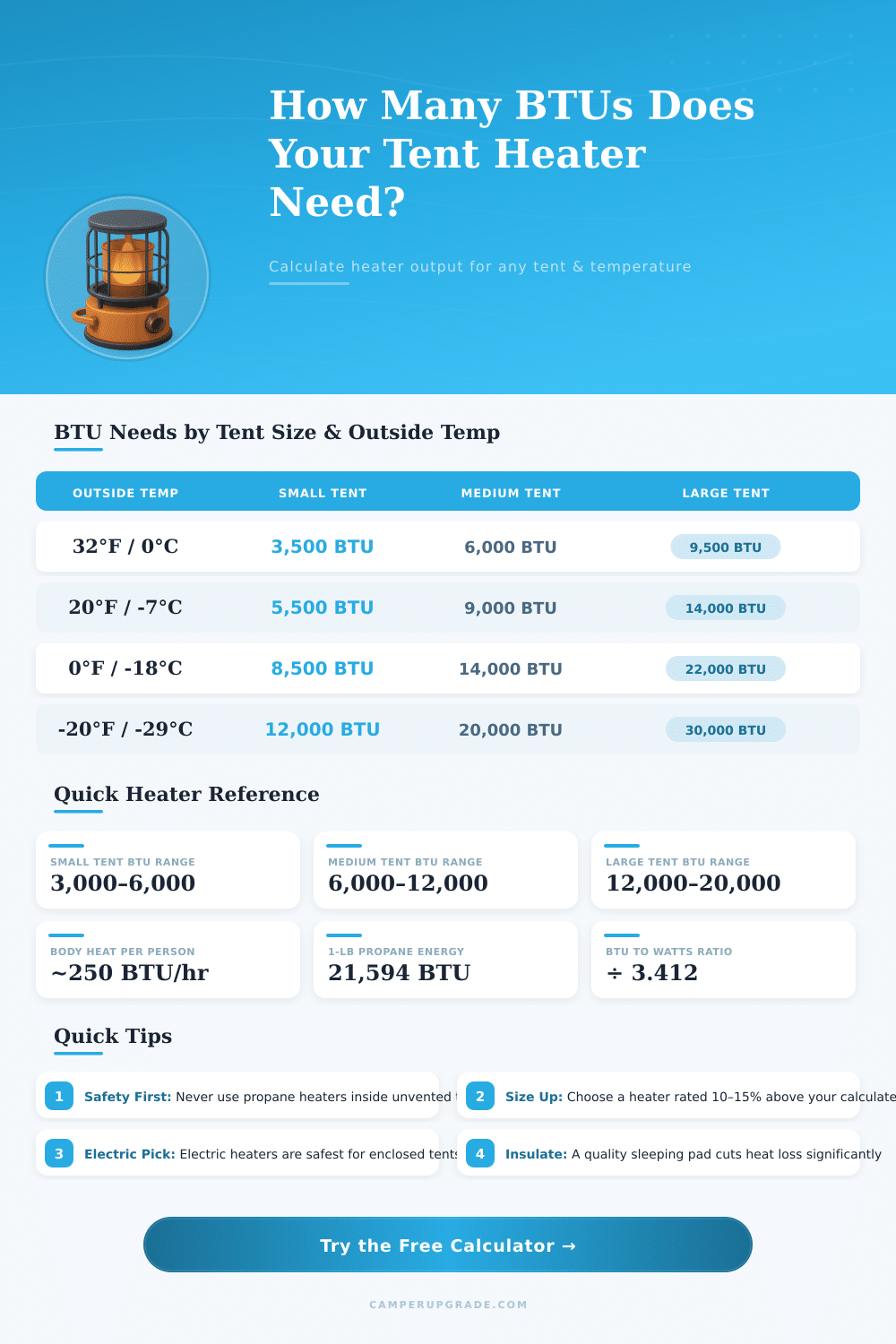
| Outside Temp | Small Tent (~50 sq ft) | Medium Tent (~80 sq ft) | Large Tent (~140 sq ft) | XL Tent (~200 sq ft) |
|---|---|---|---|---|
| 50°F / 10°C | 1,500 BTU | 2,500 BTU | 4,000 BTU | 6,000 BTU |
| 40°F / 4°C | 2,500 BTU | 4,000 BTU | 6,500 BTU | 9,500 BTU |
| 32°F / 0°C | 3,500 BTU | 6,000 BTU | 9,500 BTU | 14,000 BTU |
| 20°F / -7°C | 5,500 BTU | 9,000 BTU | 14,000 BTU | 20,000 BTU |
| 0°F / -18°C | 8,500 BTU | 14,000 BTU | 22,000 BTU | 30,000 BTU |
| -20°F / -29°C | 12,000 BTU | 20,000 BTU | 30,000 BTU | 44,000 BTU |
| Fuel Type | Typical BTU Output | CO Risk | Best For | Notes |
|---|---|---|---|---|
| Propane | 3,000–18,000 BTU | ⚠️ High | Vestibule / outside use | Most powerful; requires ventilation |
| Electric | 1,000–5,000 BTU (300–1,500W) | ✅ None | Car camping with hookups | Safest for enclosed tents |
| Catalytic | 3,000–11,000 BTU | ⚠️ Low–Med | Backpacking / 3-season | Flameless; lower O2 depletion |
Heaters for tents can make camping in cold much more pleasant but they bear risks that one must consider. Tents were not created to keep folks warm; that task returns to sleeping bags and good clothes. Because most tents are made of nylon, that quickly melts and burns, adding heat is risky.
Also exists the danger that carbon monoxide will gather in little space without enough air.
Safe Ways to Heat a Tent
Propane heaters, as for example Mr. Heater Buddy, are very popular among campers. This little device can warm two people in tent of around ten feet, even when the temperature falls to about 20 degrees Fahrenheit. One little propane tank lasts quite a long time.
It quickly produces much heat and is adjustable. Even so, one must turn off propane heater before sleep. Burning propane creates a lot of water vapor, that wets everything in the tent.
When one removes the heater, the tent occasionally feels more colder than if one absolutely not used it.
Detector of carbon monoxide are necessary when one uses gas heater. Never leave Mr. Heater Buddy burning without watch. Canvas tents breathe better than nylon, so they work better for propane.
Also help to keep door or window a bit opened.
Wood stoves is other choice, chiefly in big canvas tents, where the smoke exits by means of metal tube. Compressed fiber logs burn more long. Some folks favor the sound and look of real fire, although it is less practical and more dangerous.
Electric heaters are safer, because they do not produce carbon monoxide nor reduce the oxygen. Radiant heaters work for warming only the person, while oil radiators better heat the whole space. Vornado heaters are known as silent and good for spreading the heat.
Even so, electric heat requires much energy.
Diesel heaters are another alternative. They suck air from outside, mix it with oil, light it and blow warm air where one wants. The main device can stay outside the tent, which makes them safer.
The size of the tent is very important, because smaller tents more easily stay warm. Even simple candle can give heat in very little space. Good sleeping bag and warm covers also help.
Lay bottle with warm water in the sleeping bag before sleep surprisingly well work. Wear thermal pajamas, socks, gloves and woolly hat do big difference. The target is not heat the tent until seventy degrees; reach around forty-five or fifty-five degrees already are quite a lot, and good sleeping bag fill the rest.
Always lay heaters on hard, heat-resistant surface and care do not overturn them.