Tarp Area Coverage Calculator
Estimate the useful dry footprint of a camping tarp from its real dimensions, pitch style, ridgeline length, edge height, weather angle, occupants, gear footprint, and the buffer you want around sleeping or cooking space.
⛺Real Tarp Pitch Presets
⚙Tarp, Pitch, Weather, and Occupant Inputs
This is a planning model for tarp coverage, not a structural wind rating. Confirm anchor loads, guylines, drainage direction, stove clearance, and manufacturer limits before camping in severe weather.
📊Current Pitch Spec Grid
📘Tarp Area Reference Tables
| Pitch | Typical useful area | Best use | Tradeoff |
|---|---|---|---|
| A-frame | 55-75% of flat area | Sleeping and hammock rain cover | Less standing room at edges |
| Lean-to | 45-68% of flat area | Kitchen, view, wind wall | Open side loses storm coverage |
| Flat canopy | 78-92% of flat area | Shade and group dining | Poor wind-driven rain control |
| Pyramid | 48-66% of flat area | Storm shelter and centered gear | Peak pole divides floor space |
| Plow point | 38-55% of flat area | Fast wedge in bad weather | Small living zone |
| Use case | Dry area per person | Gear add-on | Planning note |
|---|---|---|---|
| Minimal bivy | 16-20 sq ft | 5-10 sq ft | Fine for low gear and careful edges. |
| Backpacking sleep | 22-28 sq ft | 10-18 sq ft | Room for pad, bag, shoes, pack nose. |
| Rainy living space | 32-40 sq ft | 18-35 sq ft | Better when cooking and dressing under cover. |
| Group kitchen | 12-18 sq ft seated | 35-80 sq ft | Tables, stove, cooler, and traffic matter. |
| Condition | Coverage loss | Pitch adjustment | Watch item |
|---|---|---|---|
| Calm vertical rain | 0-8% | Normal ridgeline height | Drips from seams and trees |
| Light angled rain | 8-16% | Lower windward edge | Splash near groundsheet corners |
| Wind-driven rain | 16-32% | Shorten ridgeline and add side pulls | Open doors and uphill runoff |
| Beach or ridge gusts | 25-45% | Pitch low, narrow, and well anchored | Sand anchors, abrasion, fabric flap |
| Finished tarp | Flat area | Storm sleep fit | Relaxed fair-weather fit |
|---|---|---|---|
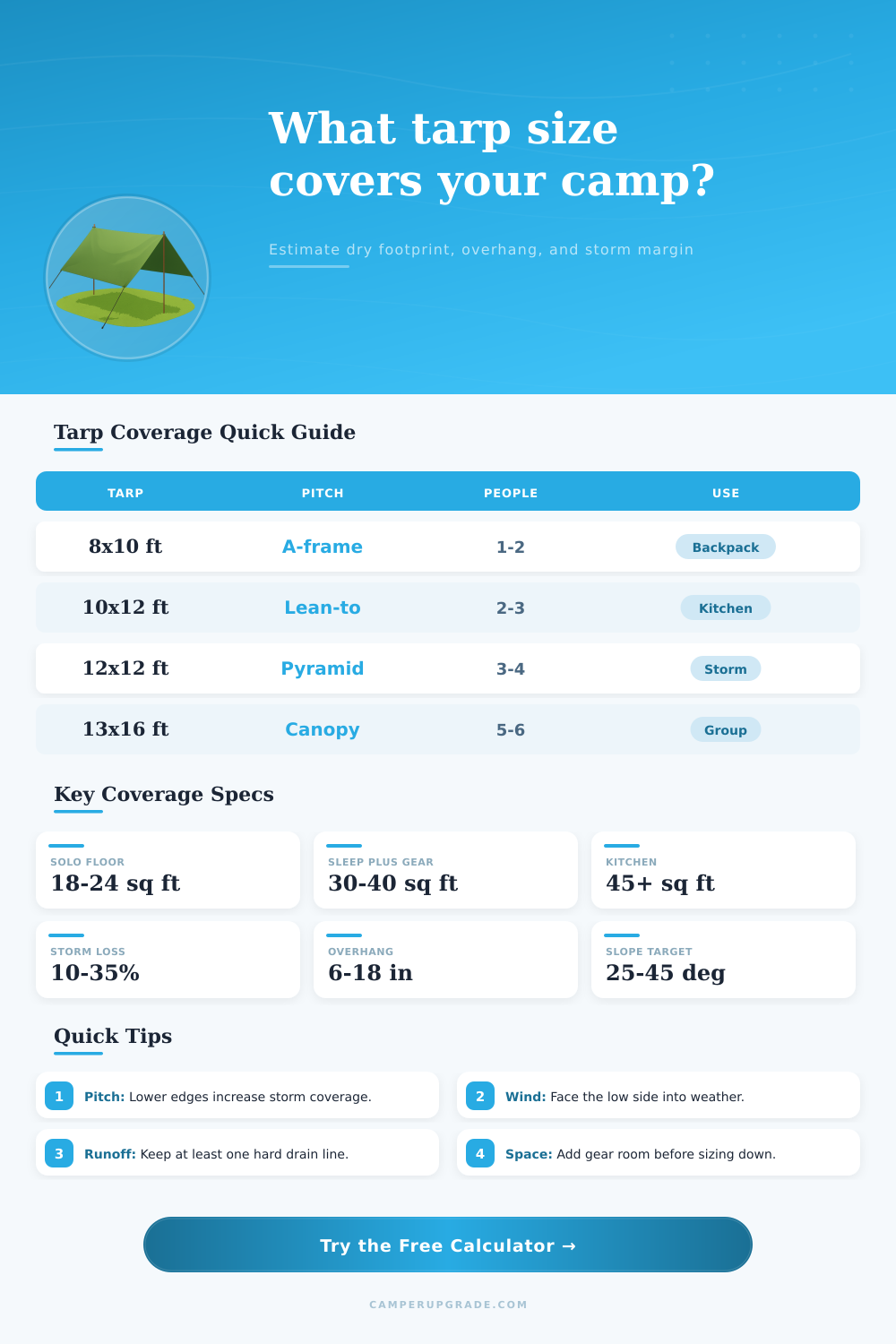
| 7x9 ft | 63 sq ft | 1 person plus small gear | Solo porch or hammock cover |
| 8x10 ft | 80 sq ft | 1-2 careful sleepers | 2 people with compact gear |
| 10x12 ft | 120 sq ft | 2-3 sleepers | Small group kitchen |
| 12x12 ft | 144 sq ft | 3-4 in a low pitch | Four-person rain hangout |
| 13x16 ft | 208 sq ft | 4-6 in a storm pitch | Group dining and gear sorting |
💡Field Coverage Tips
Tarp camping use a tarp to build a sleeping shelter, and all tarp camping requires consideration of the quality of the ground and the size of the tarp. A square tarp may cover alot of ground, but the corner of the tarp have to be folded over to provide shelter from the rain that blow towards the sleeping shelter. Many camping mistakes is made based on the size of the tarp that is advertised to the camper, not the actual size of the tarp that will be usable for camping.
The coverage calculator for tarps allow campers to see the difference between the advertised size of a tarp and the actual size of that tarp that will be usable for camping purposes. The coverage calculator for tarps requires campers to input specific information about the tarp, such as the shape of the tarp and the type of pitch that will be made with the sleeping shelter. Any pitch that include cutting corners of the tarp remove some of the floor space within the shelter.
How to Pick the Right Tarp Size for Camping
Any steep A-frame pitch will allow water to run off the tarp efficient but takes away from the sleeping area by creating areas where people cannot stand or place camping gear. Other variable include the length of the ridge, the height of the peak of the sleeping shelter, and the height of the low edge of the sleeping tarp. These will determine the slope of the sleeping shelter, which will impact both how quick water will drain off of the sleeping tarp and how far the wind will blow the rain underneath the tarp.
These variables is important when determining if the sleeping bag will remain dry during camping trips in the rain. Open meadows and ridgelines will allow the rain to fall more farther onto the sleeping camper than in the protected area of woods. The footprint of the tarp must be reduced according to the type of weather that will be encountered at the camping site to prevent making mistakes in assuming that the weather will be calm during camping.
After determining the size of the sleeping area for each individual, the size of the gear that will be in the shelter, and the number of peoples who will be camping, it is possible to calculate the total amount of living space that will be required of the sleeping tarps. A twenty percent buffer must be added to this calculation to prevent camping sleeping pads from entering the wet zone of the sleeping tarp. Many campers find it difficult to correctly size a sleeping tarp by relying on the assumption that the larger sheet of fabric will cover the ground better than a smaller sheet of the same type of fabric.
However, using a coverage calculator allow campers to see how ineffective this strategy can be with properly size tarps. A sleeping shelter with a lower and narrow pitch will be able to better cover campers from the rain than a sleeping shelter with a high and wide pitch. Reference tables can show campers the efficiency of different pitches and allow them to avoid guessing at whether or not the calculation of the sleeping area requirements are correct.
When choosing the size of the tarp that is to be used for sleeping areas, campers must make certain that they find a balance between the size of the tarp and the weather that will be encountered at the camping site. A tarp that is very large will allow individuals to have extra space to lie down when there is no rain but will act as a sail for the wind to blow against the sleeping individual. A tight wedge for one sleeping individual may allow for the best sleeping experience but will allow no space for cook while camping.
Using a coverage calculator will provide individuals with a coverage margin but requires the decision of whether or not the sleeping space is enough for the needs of the sleeping individuals. Prior to purchasing a tarp or setting up a sleeping tarp at a new camping site, the camper must use the coverage calculator to determine the size of the tarp that is best for sleeping. The actual size of the sleeping tarp should be measured and entered into the calculator rather than the advertised size of the tarp.
This will ensure that no area of the sleeping tarp is wasted on the sleeping individual or camping gear. The rain angle and exposure settings can be adjusted to reflect the weather at the camping spot, and the camper can compare the results with the calculations made. If the margin created by the coverage calculator is too small for an individual’s sleeping and camping needs, there are a few options.
An individual can accept sleeping in a smaller space. Another option is to adjust the sleeping tarp to a lower pitch to increase coverage. The last alternative is to purchase a larger sleeping tarp.
Frequent use of the coverage calculator will train the eye to properly understand the dimension of any sleeping tarp. Eventually, campers will be able to remember the mistakes that will be made when setting up a sleeping tarp for rain without having to rely upon the calculations made by the calculator. This knowledge will prove to be helpful when making decisions about what type of sleeping shelter to pack for camping trips.
While the coverage calculator will calculate the numbers needed to provide adequate sleeping space, it is up to the individual camper to decide what is the correct amount of sleeping space for there camping trip.