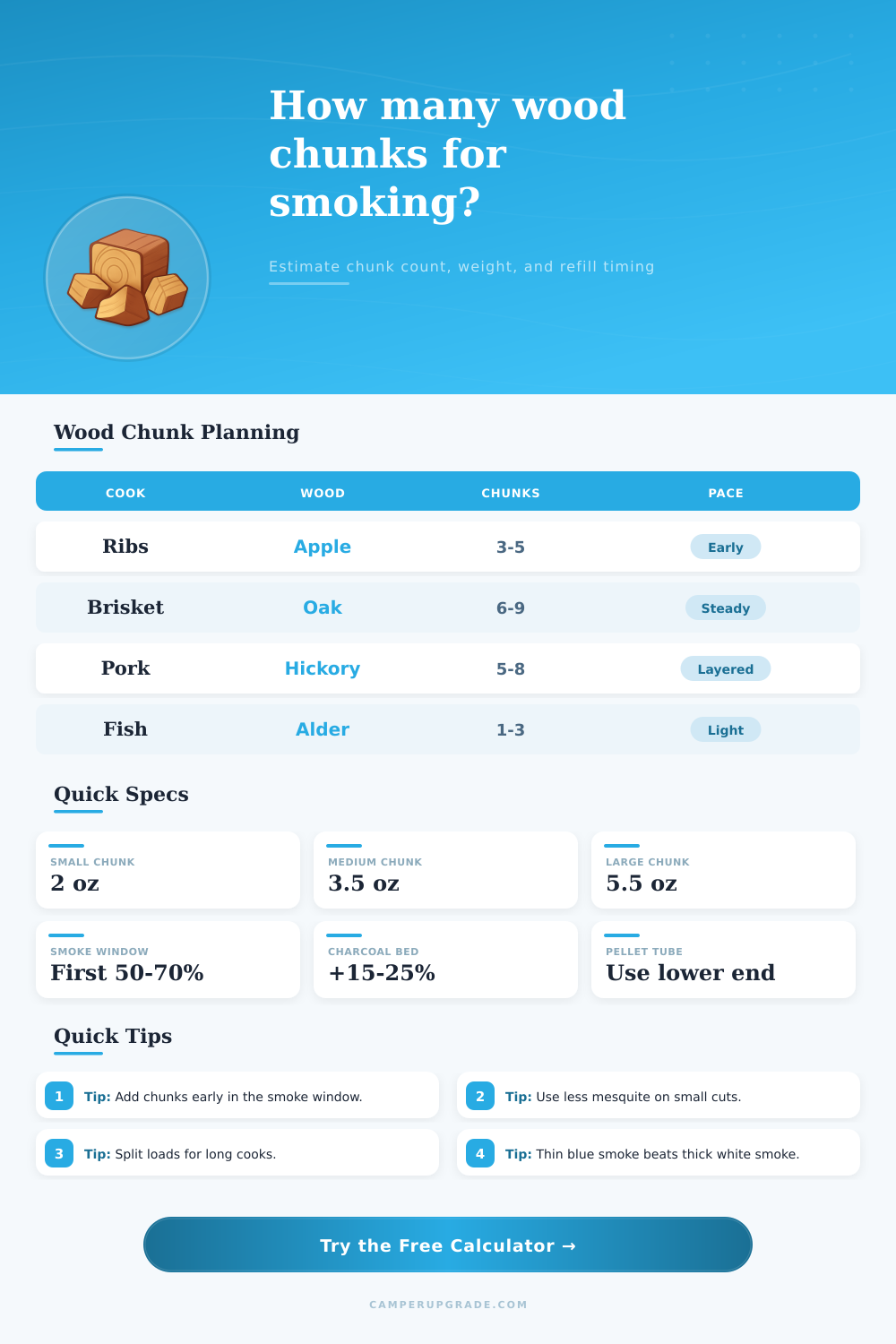
Smoker Wood Chunk Quantity Calculator
Estimate how many wood chunks to use, how much they weigh, when to add them, and whether the smoke load fits your meat, smoker, and cook length.
| Chunk label | Typical weight | Best use |
|---|---|---|
| Mini | 1-2 oz / 28-57 g | Electric trays, fish, short cooks |
| Small | 2-3 oz / 57-85 g | Ribs, chicken, kettle baskets |
| Medium | 3-4.5 oz / 85-128 g | General barbecue chunk planning |
| Large | 5-7 oz / 142-198 g | Long charcoal cooks and cabinets |
| Small split | 7-10 oz / 198-283 g | Offset coal-bed support, not tiny trays |
| Food | Useful smoke window | Flavor caution |
|---|---|---|
| Brisket | First 6-8 hours | Accepts oak or hickory well |
| Pork shoulder | First 5-7 hours | Fruit wood softens hickory strength |
| Ribs | First 2-3.5 hours | Easy to oversmoke with mesquite |
| Poultry | First 1.5-3 hours | Keep smoke clean and moderate |
| Fish | First 30-90 minutes | Light woods and dry surface matter |
| Wood | Intensity | Typical pairing |
|---|---|---|
| Alder | Very mild | Salmon, seafood, cheese |
| Apple / peach | Mild | Pork, poultry, ribs |
| Cherry / maple | Mild-medium | Pork ribs, turkey, game |
| Oak / pecan | Medium | Brisket, beef ribs, pork |
| Hickory / mesquite | Strong | Beef, bacon-style pork, short accents |
| Smoker | Chunk behavior | Planning note |
|---|---|---|
| Offset | High airflow | Needs more frequent, smaller additions |
| Kettle | Direct coal contact | Bury chunks along the charcoal path |
| Bullet | Stable charcoal bed | Chunk count stays predictable |
| Ceramic | Efficient and tight | Use fewer chunks to avoid stale smoke |
| Electric | Small tray volume | Mini or small chunks only |
For long barbecue cooks, put the first half of the chunks in at startup or just before the food goes on, then add the rest during the first half of the cook. After bark color is set and the food is wrapped, extra chunk smoke usually adds less useful flavor.
Do not chase thick white smoke with more wood. If the exhaust smells sharp, reduce the chunk count, open the exhaust, warm the next chunk near the fire, and allow the cooker to return to clean combustion before adding delicate foods.
If you’re a smoker, you know that an excess of thick white smoke will ruin your meat, as it’s acrid and bitter. What you seek is thin blue smoke; it’s sweet and clean. However, most folks guess wildly at adding just the right amount of wood to their fire. Some don’t add enough, resulting in no flavor. Others add way too much and end up with a chemical mess.
The secret isn’t learning a bunch of rules but rather understanding relationship between size of the wood chunks you use and amount of food you are smoking. Plugging in desired cooking duration and amount of meat you’re roasting does all the conversion and coefficient guessing for you, no need to remember numbers from this article (unless you want to).
How Much Wood to Use for Smoking Meat
All you enter is the trim weight of whatever you’re barbecuing; that weight determines maximum amount of smoke that’ll stick to those protein without overpowering your taste buds. So if you’ve got a ten-pound pork butt on smoker, the calculator will give you an approximate quantity of chunks necessary to keep things flavorful but not overpowering, preventing you from adding wood continuously throughout an eighteen-hour cook. That way, you don’t make the rookie error of dumping more wood on top every single hour.
Don’t skimp on the smoke window: Most meats will only accept smoke the first few hours of cooking. Typically for beef, after 6-8 hours the temperature has risen enough that adding more smoke penetrates very little because bark is already formed. You are just coating outside with soot and making things bitter. Your total chunk recommendation should be front-loaded in time chart to match (the calculator does this).
And it varies by smoker type (which affects how much airflow there is). A small tray in an electric cabinet doesn’t burn wood as fast than a tight ceramic cooker, which isn’t as efficient as an offset smoker with good draft; likewise, a kettle grill retains heat differently based off either.
As with any ingredient, how much you add depend on what species of wood. Some woods, such as oak and hickory, have strong flavors, so use them sparingly. Others, such as fruitwoods (cherry, apple), are softer and more forgiving, throw ’em at ya. And then there’s mesquite. Its heat is powerful and quick, which makes it a challenging companion for long cooks if you don’t restrict its amount.
The chart below on the page do the work for starters: It pairs flavors from weakest to strongest (based off intensity) with likely companions. This ensures novice grillers won’t overpower dainty items like fish fillets or chicken breasts with a big dose of heavy mesquite.
Another variable that trips folks up is moisture in their wood. Green or damp wood doesn’t burn cleanly, creating a lot of thick white smoke and creosote no matter how much air you give it. Kiln dried or seasoned chunks is going to burn cleaner with more heat and emit that wanted thin blue stream. The better move often isn’t to increase the number like the calculator suggests when you have damp wood from sitting outside in the rain, but instead to wait until the wood dries.
Opening the lid also matters. For every time you pop the lid to see how things is cooking, you’re dumping smoke and heat out of the chamber which cools down the fire and causes the wood to smolder instead of combust cleanly.
That’s where reserve percentage comes into play. It factors in all that pesky unpredictability in the real world, like weather, different chunk densities, and stalls that take longer than expected. Having a little wiggle room means you’re never without when it really counts. At the very beginning. Nobody wants their smoke to die before the bark sets; rather, it’s preferable to have some leftover, unused chunks on hand.
This nifty tool lets you enter your current bag of wood and see whether it’ll get you through the whole session or requires a refill. You should of checked this earlier.
To sum up, smoking is all about balance. You’re looking for just enough smoke to enjoy it, while not so much as to have only smoked meat. And though numbers give us a place to start, we leave the final judgment up to our noses and eyes. Pull back on the wood if the exhaust is fog-like. If it’s dissapears into thin air, you’re in the sweet spot. Let the meat work its magic. Respect the window, trust the process. And know the secret: thin blue smoke beats thick white smoke any day of the week. And learning exacty how much wood to use will get you one step closer to achieving it.