🛏 Sleeping Bag Temperature Converter
Convert between °C and °F — find the right sleeping bag rating for any conditions
50°F
32°F
19°F
0°F
-20°F
-40°F
Cold Sleeper +5°C
Adds warmth
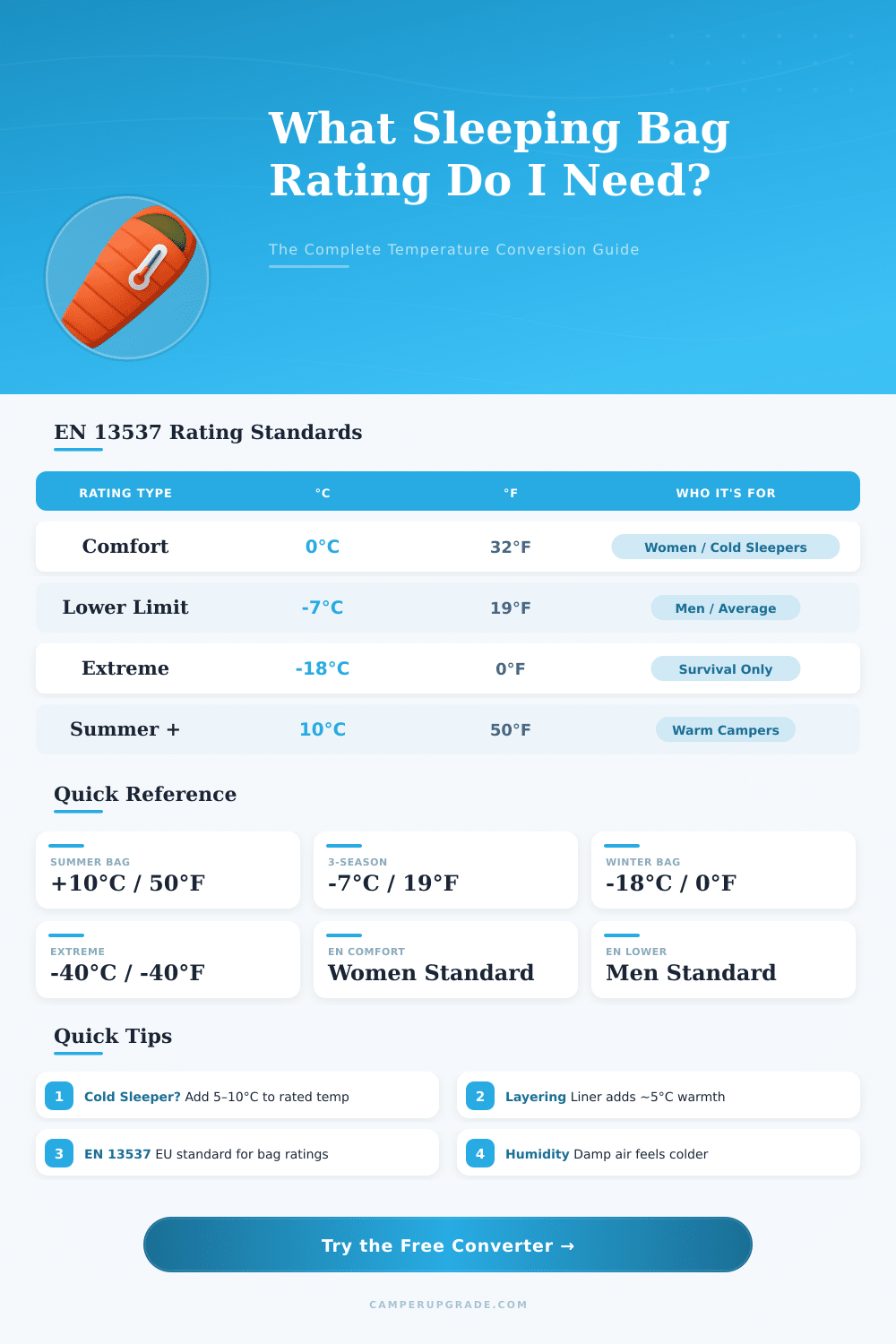
| °Celsius | °Fahrenheit | Bag Category | EN 13537 Rating Type |
|---|---|---|---|
| +15°C | +59°F | Summer | Above Comfort |
| +10°C | +50°F | Summer | Comfort Upper |
| +5°C | +41°F | Summer / 3-Season | Comfort Range |
| 0°C | +32°F | 3-Season | Comfort Lower |
| -5°C | +23°F | 3-Season | Near Lower Limit |
| -7°C | +19°F | 3-Season | Lower Limit |
| -10°C | +14°F | Winter | Below Lower Limit |
| -15°C | +5°F | Winter | Approaching Extreme |
| -18°C | 0°F | Winter / Extreme | Extreme Threshold |
| -25°C | -13°F | Extreme | Extreme Zone |
| -30°C | -22°F | Extreme | Deep Extreme |
| -40°C | -40°F | Arctic | Maximum Extreme |
| Sleeper Type | Description | Adjust Rating By | Example: 0°C Bag Effective To |
|---|---|---|---|
| Warm Sleeper | Tends to overheat at night | Subtract 5°C (9°F) | +5°C / 41°F |
| Average Sleeper | Standard comfort range | No adjustment | 0°C / 32°F |
| Cold Sleeper | Tends to feel cold easily | Add 5–10°C (9–18°F) | -5°C to -10°C |
| Women (EN Standard) | EN comfort = women standard | Use Comfort rating | Per comfort spec |
| Men (EN Standard) | EN lower = men standard | Use Lower Limit | Per lower limit spec |
| With Liner | Sleeping bag liner added | Subtract 3–5°C | -3°C to -5°C better |
| Category | Temp Range (°C) | Temp Range (°F) | Typical Use |
|---|---|---|---|
| Summer | +10°C and above | 50°F and above | Warm camping, festivals, car camping |
| 3-Season | 0°C to -7°C | 32°F to 19°F | Spring, summer, fall backpacking |
| Winter | -7°C to -18°C | 19°F to 0°F | Winter camping, cold weather hiking |
| Extreme | -18°C and below | 0°F and below | Mountaineering, polar expeditions |
| Ultralight Summer | +15°C and above | 59°F and above | Ultralight backpacking, hostels |
| All-Season | -7°C to -12°C | 19°F to 10°F | Year-round camping, RV use |
The good choice of sleeping bag can genuinely make or break your whole experience during camping. Whether you enter the tent set it up quickly or simply recline in the car, it matters a lot to choose the right bag to stay comfortable and warm during the whole night.
Rectangular sleeping bags are almost unbeatable for summer camping. They leave you enough space to move freely, and they breathe well without weighing too much. That helps during the gentle months of heat, keeping you fresh and pleasant.
How to Choose the Right Sleeping Bag
Here is a good idea: many campers tie two such bags by means of zippers to form one big, almost royal size. It is practical for pairs that want more place.
If the temperature drops, mummy bags shine because they keep the body heat more effectively. The tapered design helps to close the haet inwardly. Many models have careful details, for instance nature-friendly foot boxes that make your feet more glad, zippered pockets for little stuff and clothes treated with PFAS-free water repellent.
Two-season bags answer for temperatures between 0°C and 5°C, what makes them ideal from late spring until early autumn. They reach good balance between heat and lightweight weight, without extra burden.
There are certainly budget options if you need them. One can buy flannel-lined rectangular bags for around 30 dollars, that answers well for spring and summer trips. Even so, the listed temperatures for cheap bags commonly are too hopeful.
Here is a sample under 100 dollars with long, wide rectangular form and soft material around the head and neck. But genuinely, it is colder then promised, heavy and thick, and lacks a hood.
Sleeping bags with down have their own fans. Some campers insist about the down internal feeling, it does not cool as much when one enters, and it breathes more than many synthetics. Down absorbs moisture from travel sheets better than domestic materials.
On the other hand, materials for synthetic bags commonly have smooth, surprisingly cold touches and breathe not as well.
Sleep quilts deserve attention as another good alternative. They pack with feathers just as compact as usual sleeping bags. Nice is, that some quilts work well through broad temperature range, quite warm in 30 degrees, but easily opened when the outside warms.
Ultralight bags rule the world of sleeping bag gear. Some weigh only a bit more than half a pound and answer for temperatures of 59 until 77 degrees. Many have two-sided zippers, so the bag can become a quilt or cover when needed.
A full sleep system includes also a cushion under the bag to insulate from the soil. The tent protects you against wind and rain, but the real heat comes from teamwork between bag and cushion.
Big bodied campers commonly struggle to find bags that genuinely answer. They would benefit from models betweenmummy and rectangular styles for that extra moving space.