Ski Wax Type by Temp Calculator
Match snow temperature, air temperature, humidity, snow age, ski type, wax system, glide priority, grip priority, abrasive snow, and outing duration to a practical wax band.
🎿Ski Wax Presets
⚙Snow, Ski, Wax System, and Trip Inputs
This calculator gives a practical wax-selection estimate. Always follow your wax maker's exact iron temperature, scraping, brushing, and skin-care instructions.
🧪Wax and Snow Spec Grid
📊Ski Wax Temperature and Hardness Tables
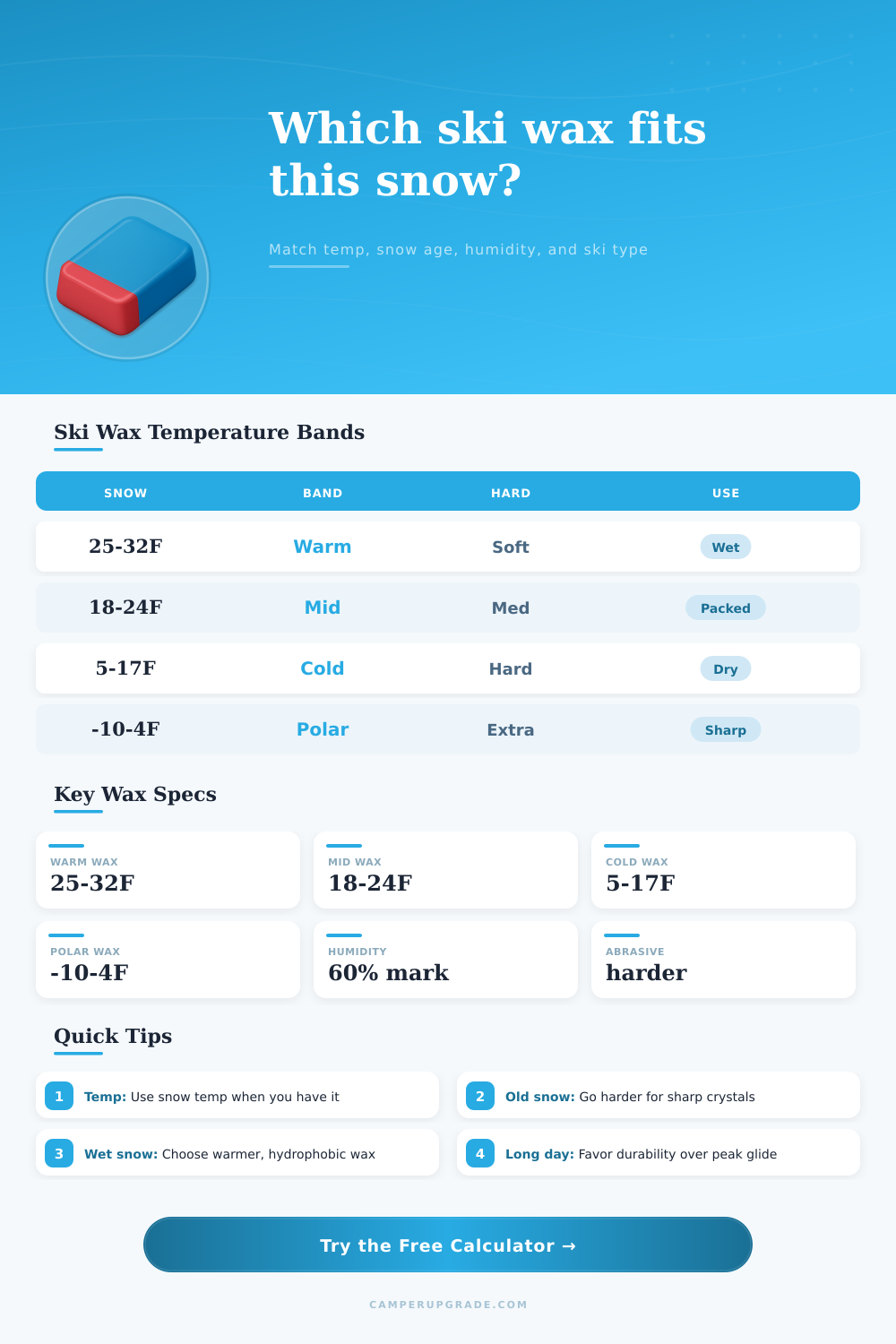
| Snow Temp | Wax Band | Hardness | Typical Use |
|---|---|---|---|
| 30 to 34°F / -1 to 1°C | Wet warm | Very soft | Slush, wet spring snow, high water content. |
| 25 to 29°F / -4 to -2°C | Warm | Soft | Damp groomers, spring mornings, high humidity. |
| 18 to 24°F / -8 to -5°C | Midrange | Medium | Common packed powder and resort grooming. |
| 5 to 17°F / -15 to -8°C | Cold | Hard | Dry snow, squeaky packed snow, cold touring. |
| -10 to 4°F / -23 to -16°C | Polar | Extra hard | Very cold crystals and high abrasion. |
| Below -10°F / below -23°C | Extreme cold | Maximum hard | Static-prone, slow, sharp snow; use coldest wax. |
| Snow Condition | Wax Adjustment | Why | Match Note |
|---|---|---|---|
| New snow | Slightly colder | Fresh crystals can be sharp and dry. | Use hard enough wax to avoid base drag. |
| Packed groomed | Use measured snow temp | Predictable crystal structure. | Best baseline for most resort days. |
| Old transformed | Harder | Rounded grains and dirt can abrade wax. | Favor durability, then refresh glide. |
| Corn snow | Warmer plus durable | Large wet grains create suction and abrasion. | Brush well and consider structure. |
| Man-made snow | Harder | Dense crystals wear wax quickly. | Cold or hard base layer helps. |
| Refrozen crust | Harder | Edges and crystals scrape the base. | Shorten reapply interval. |
| Wax System | Best Strength | Typical Reapply | Notes |
|---|---|---|---|
| Hot wax block | Best durability | 4 to 8 hours | Scrape and brush thoroughly for glide. |
| Liquid glide | Fast top-up | 2 to 4 hours | Good travel option; dry fully before brushing. |
| Rub-on solid | Quick field fix | 1 to 3 hours | Cork or polish for better bond. |
| Paste wax | Casual glide | 1 to 3 hours | Useful for rentals and family skis. |
| Kick wax | Classic grip | 1 to 2 hours | Apply only to the grip pocket, not glide zones. |
| Skin treatment | Anti-icing | 2 to 4 hours | Use skin-safe product, especially in wet snow. |
| Ski Type | Wax Priority | Grip Note | Durability Note |
|---|---|---|---|
| Alpine skis | Glide and edge-to-edge feel | No grip wax. | Hot wax lasts longest on groomers. |
| Snowboard | Glide and flat-base speed | No grip wax. | Wide bases need good brushing. |
| Classic Nordic | Grip pocket plus glide zones | Kick wax or klister may apply. | Keep glide wax off the grip zone. |
| Skate skis | Fast glide | No grip wax. | Clean brushing matters a lot. |
| Touring skis | Durable glide | Skins may need treatment. | Mixed snow shortens wax life. |
| Skin skis | Anti-icing and glide zones | Treat skins separately. | Do not hot wax integrated skins. |
📋Wax Selection Reference Tables
| Humidity | Snow Feel | Wax Bias | Field Sign |
|---|---|---|---|
| 0 to 35% | Dry, squeaky snow | Colder and harder | Static, slow glide, sharp sound. |
| 36 to 60% | Normal winter snow | Use snow temp band | Predictable glide with little suction. |
| 61 to 80% | Damp crystals | Slightly warmer | Snow packs and shines under skis. |
| 81 to 100% | Wet, high water content | Warmer wet wax | Suction, gray base, wet spray. |
| Duration | Hot Wax | Liquid | Rub or Paste |
|---|---|---|---|
| Under 1 hour | Usually enough | Enough | Enough if snow is not abrasive. |
| 1 to 3 hours | Good match | May need top-up | Check at breaks. |
| 3 to 5 hours | Best choice | Carry a refresh option | Likely one reapply. |
| 5+ hours | Use durable layer | Reapply at lunch | Use only as field refresh. |
| Priority | Wax Choice | Tradeoff | Best For |
|---|---|---|---|
| Glide | Closest temp match | May wear faster. | Racing, short resort laps, skate skis. |
| Balanced | Temp match with medium hardness | Good general use. | Most skiers and snowboards. |
| Durability | One step harder if abrasive | May feel slower in wet snow. | Long tours, icy groomers, man-made snow. |
| Grip | Kick wax based on snow temp | Glide zones still need glide wax. | Classic Nordic waxable skis. |
| Result Match | Meaning | Base Sign | Adjustment |
|---|---|---|---|
| Excellent | Inputs point to one wax band. | Smooth glide and clean base. | Use the recommendation. |
| Good | One mild conflict exists. | Minor drag or slight suction. | Choose the adjacent band if conditions change. |
| Mixed | Temp, water, or abrasion disagree. | Wax may feel good only part of the day. | Carry a top-up wax. |
| Tricky | Wet plus abrasive or extreme cold. | Rapid wear, suction, or static. | Favor durability and recheck often. |
💡Ski Wax Calculation Tips
Choosing an correct ski wax requires understanding the snow temperature. The snow temperature is the most important factor in determining the correct ski wax. By looking at the snow temperature, you can understand how the base of your ski will interact with the snow crystals.
The air temperature are not the same than the snow temperature. By measuring the snow temperature at the level of your ski base, you can ensure that the temperature interacting with your ski is the one that determines the glide of your skis. By using the air temperature instead of the snow temperature, you may end up with a wrong wax for your ski conditions.
Use Snow Temperature to Choose Ski Wax
The conditions of the snow can change based on the age of the snow. The age of the snow can change the way you choose your ski wax. New snow is usually sharply and dry.
Old snow and man-made snow often features grit and rounded snowflake. High humidity make the snow feel wetter, and the wax interacts with the snow differently with high humidity. If the humidity is high, there is more moisture in the snow, and the snow makes more suction against your ski base.
In this case, you will need a warmer wax for your ski. The type of ski you use will change the way you apply wax to your ski. Additionally, the length of time you ski will determine the frequency with which you will need to apply wax to your ski base.
Alpine skis use hot wax that you iron into the ski base since the wax will last longer on groomed ski slope than the rub-on wax available for purchase. Classic Nordic skis has a grip zone that requires a different approach to waxing then the ski glide zone. If you plan on skiing for a longer duration, you will need a wax that will last longer than for a short ski trip.
Hard waxes last longer than softer waxes when skiing for long period of time. The calculator will provide you with a recommendation for ski wax based off the information provided. To provide an accurate recommendation, the calculator will ask you about the snow temperature, the humidity in the ski area, the age of the snow, and how long you will be skiing.
Based on your answers to these questions, the calculator will provide you with a wax band, a recommendation for the hardness of the wax, and how often you will need to reapply wax. These three answers will allow you to understand what type of wax to use on your ski base, how hard the wax should be, and after how often you should reapply wax. With this information, you can make a plan for your skiing trip.
Snow conditions can change while skiing and due to the sun and the wind. The sun can warm the snow on the ski slope while the wind can move the new snow onto the ski ridge. The temperature of the snow can change during your skiing trip.
Therefore, you must observe the snow and your ski bases. If you ski for long periods of time or perform tricks with your skis, you should perform maintenance on your skis after each skiing trip to protect the wax that you have applied on your ski base. By following these recommendations and using the wax calculator, you will be able to find the more perfect wax for your skis according to the snow conditions.