Ski Boot Size Calculator
Dial in Mondo size, shell fit, last width, and flex target from measured foot data and skiing profile.
🎿Quick Fit Presets
📏Fit Inputs
📊Ski Boot Spec Grid
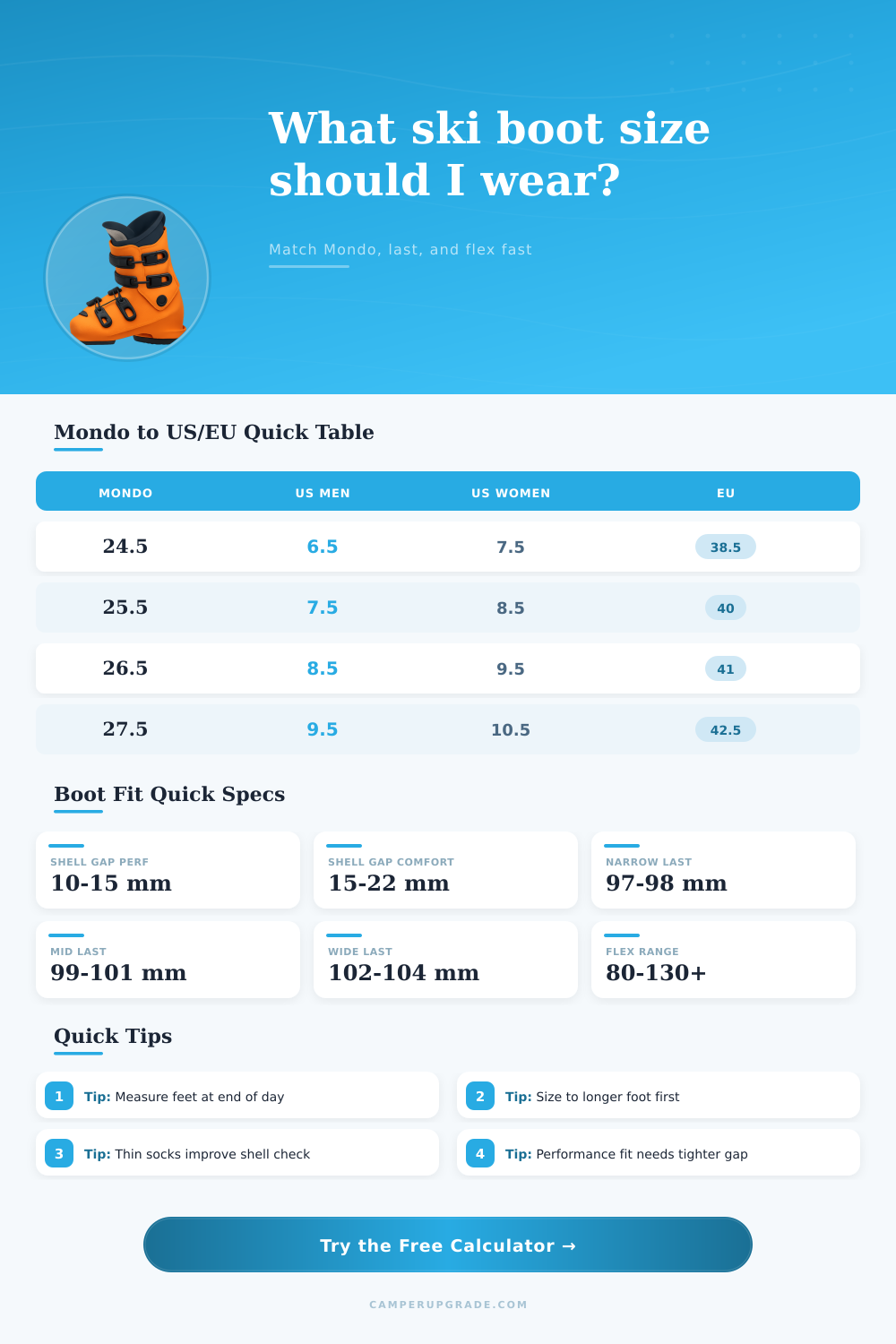
📖Mondo to US/EU Conversion
| Mondo | US Men | US Women | EU | Typical BSL (mm) |
|---|---|---|---|---|
| 23.5 | 5.5 | 6.5 | 37 | 276–282 |
| 24.5 | 6.5 | 7.5 | 38.5 | 286–292 |
| 25.5 | 7.5 | 8.5 | 40 | 296–302 |
| 26.5 | 8.5 | 9.5 | 41 | 304–310 |
| 27.5 | 9.5 | 10.5 | 42.5 | 314–320 |
| 28.5 | 10.5 | 11.5 | 44 | 324–330 |
| 29.5 | 11.5 | 12.5 | 45.5 | 334–340 |
📏Shell Gap Fit Targets
| Fit Goal | Gap (mm) | Heel Hold | Use Case | Notes |
|---|---|---|---|---|
| Race | 8–12 | Maximum | Gates, hardpack | Needs shell work often |
| Performance | 10–15 | High | Aggressive all-mountain | Best control balance |
| Recreational | 15–20 | Moderate | Mixed resort skiing | Easier all-day comfort |
| Comfort | 20–25 | Relaxed | Low intensity cruising | Warmer but less precision |
🎯Forefoot Width to Last Guide
| Forefoot Width | Recommended Last | Volume Class | Instep Match | Fit Direction |
|---|---|---|---|---|
| ≤ 96 mm | 97–98 mm | Low Volume | Low to medium | Precision shell |
| 97–101 mm | 99–101 mm | Medium Volume | Medium | Balanced shell |
| 102–106 mm | 102 mm | High Volume | Medium to high | Roomier forefoot |
| ≥ 107 mm | 103–104+ mm | High Volume+ | High | Punch likely needed |
💪Flex Index by Weight and Ability
| Weight (lb) | Beginner | Intermediate | Advanced | Expert/Race |
|---|---|---|---|---|
| 110–140 | 70–80 | 80–90 | 90–100 | 100–110 |
| 141–170 | 80–90 | 90–100 | 100–110 | 110–120 |
| 171–200 | 90–100 | 100–110 | 110–120 | 120–130 |
| 201–240 | 100–110 | 110–120 | 120–130 | 130+ |
Ski boots are probably the most important part of ski gear that you must have. Choose right downhill ski boot according to the shape of feet and skiing style for comfort and good result whole day Almost nothing matters more than fit.
Right boot gives the maximum impact from any skis. They must fit closely, without any looseness. Those that feel comfortable in store usually fail on snow and cause pain.
How to Choose the Right Ski Boots
Boot fit must be firm and precise, but must not be tortuure for all day skiing. Some skiers needed three tries to find truly right ones.
Best is to visit expert bootfitter and tell him your ski level. A good bootfitter can look at foot and leg to offer right model. Important is to find good bootfitter, do not ask about specific boots.
Plan two hours for the process and go to specialty ski shop with expert. Store that is not boot-specific simply gives average size for crowds, but not always the best for you. If boots are not comfortable from box, ask for other pair.
Own footbed and liner is worth the investment. Intuition liners work for personal use. Every brand has its unique style and attributes, even between brands of same company.
Tecnica, Salomon, Nordica and Rossignol have sizes for men, women and children. Tecnica Mach1 MV 120 is a top pick for many skiers in 2026 season.
Stiff boots help even beginners and intermediates. Between 100 and 120 stiffness works, more than 120 for professionals. Search for four buckles for better control.
Rear entry boots are popular again, easy to enter and exit for beginners, and they are usually warmer. Type of sole also matter. Gripwalk soles work for everyday use, including walking around resort.
Because of camping at ski areas, lay crumpled newspaper in boots after getting wet… It absorbs residual moisture from liners. Some skiers make DIY heaters for ski boots using 12V RV water heater strips in there truck.
Wearing liners of ski boots during camp gives feet rest, while keeping them warm. Boondocking beside ski areas in Utah, Oregon or Washington well mixes RVlife with skiing.