
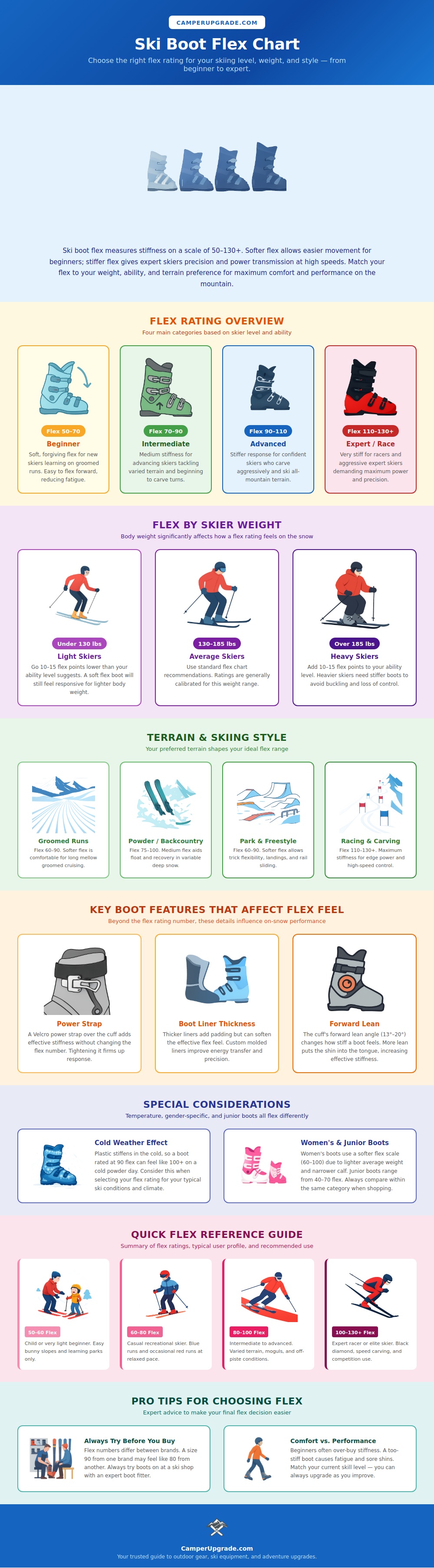
The flex refers to as easily you can twist a ski boot. It measures how much force requires to move the shin forward. The value of flex shows the stiffness of the materials in the boot or of its build type.
That resistance helps to understand how much pressure must apply during a forward lean. Bigger flex index shows that the boot is more stiff and responsive. The higher the number, the more inflexible it is.
What Is Ski Boot Flex and How to Choose It
In most cases, the range of flex indexes range from 60 until 150. Rating of 60 answers for the softest boots. High-performance and race boots commonly reach 140 or more.
Lower flex boots suit beginners and intermediates. For instance, women’s boots usually start around 65 for lighter skiers go until 115 for more casual, and surpass that for expert people. Kids’ boots also have soft flex because children most commonly are beginners, small size or lighter.
A boot too soft can collapse under a skier. On the contrary, too high flex inhibit beginners or intermediate skiers in their development. Stiffer boots cause discomfort or tension on the lower leg for beginners, because they must keep the skier forward.
The best way choose the right flex is consider the weight of the athlete. Add 10 until 30 pounds to the flex value gives the ideal weight range. This adjusts according to the aggressiveness or skill of the person.
Physical stature, height, strength and ankle range of motion also matter. Heavy person requires higher resistance. Big, strong person requires flex at least of 120.
It is important to ski in the stiffest boot, that you yet can flex move comfortably. The goal is flex it without break it.
Flexing a boot in store differs to flexing it on mountain. It is better to flex boots outside in cold, if it is possible. Some plastics become extremely stiff in cold.
Temperature and terrain also affect the feel of boot. While many have same flex rating, they bend differently. Even in same brand, different models have different levels of stiffness.
