Relative Humidity Calculator
Convert temperature and moisture readings into RH, dew point, wet bulb, vapor pressure, and ventilation clues.
💧Humidity Presets
⚙Relative Humidity Inputs
📊Psychrometric Spec Grid
📘Humidity Reference Tables
| Temp | es | AH@100 | Note |
|---|---|---|---|
| 0 C | 6.1 hPa | 4.8 g/m3 | Cold air |
| 10 C | 12.3 hPa | 9.4 g/m3 | Dry start |
| 20 C | 23.4 hPa | 17.3 g/m3 | Comfort zone |
| 30 C | 42.4 hPa | 30.4 g/m3 | Sticky air |
| RH Band | Dew Pt | Feel | Action |
|---|---|---|---|
| 30-40% | -5 to 5 C | Dry | Add moisture |
| 40-60% | 5 to 15 C | Normal | Good range |
| 60-70% | 15 to 20 C | Humid | Watch mold |
| 70%+ | 20 C+ | Muggy | Ventilate |
| Gap | Risk | Dew Pt | Result |
|---|---|---|---|
| 0-1 C | High | Near surf | Condense |
| 2-4 C | Med | Close | Monitor |
| 5-8 C | Low | Farther | Stable |
| 9 C+ | Very low | Dry air | Safe |
| Alt | Press | Sea frac | Use |
|---|---|---|---|
| 0 m | 1013 hPa | 1.00 | Sea level |
| 500 m | 954 hPa | 0.94 | Hill site |
| 1500 m | 845 hPa | 0.83 | High site |
| 3000 m | 701 hPa | 0.69 | Thin air |
Relative humidity are the percentage of an amount of water vapor that is in the air compared to the total amount of water vapor that the air can hold at a given temperature. The warmer the air, the more water vapor the air can hold. If the air temperature drop while the amount of water vapor in the air remains the same, then the relative humidity will increase.
High humidity can cause moisture to condensed into the air and lead to moldy environments. To understand humidity, it is first important to understand the different measurement of humidity such as relative humidity, dew point, and vapor pressure deficit. Relative humidity is expressed as a percentage and indicates the amount of water vapor in the air.
What Is Humidity and How to Measure It
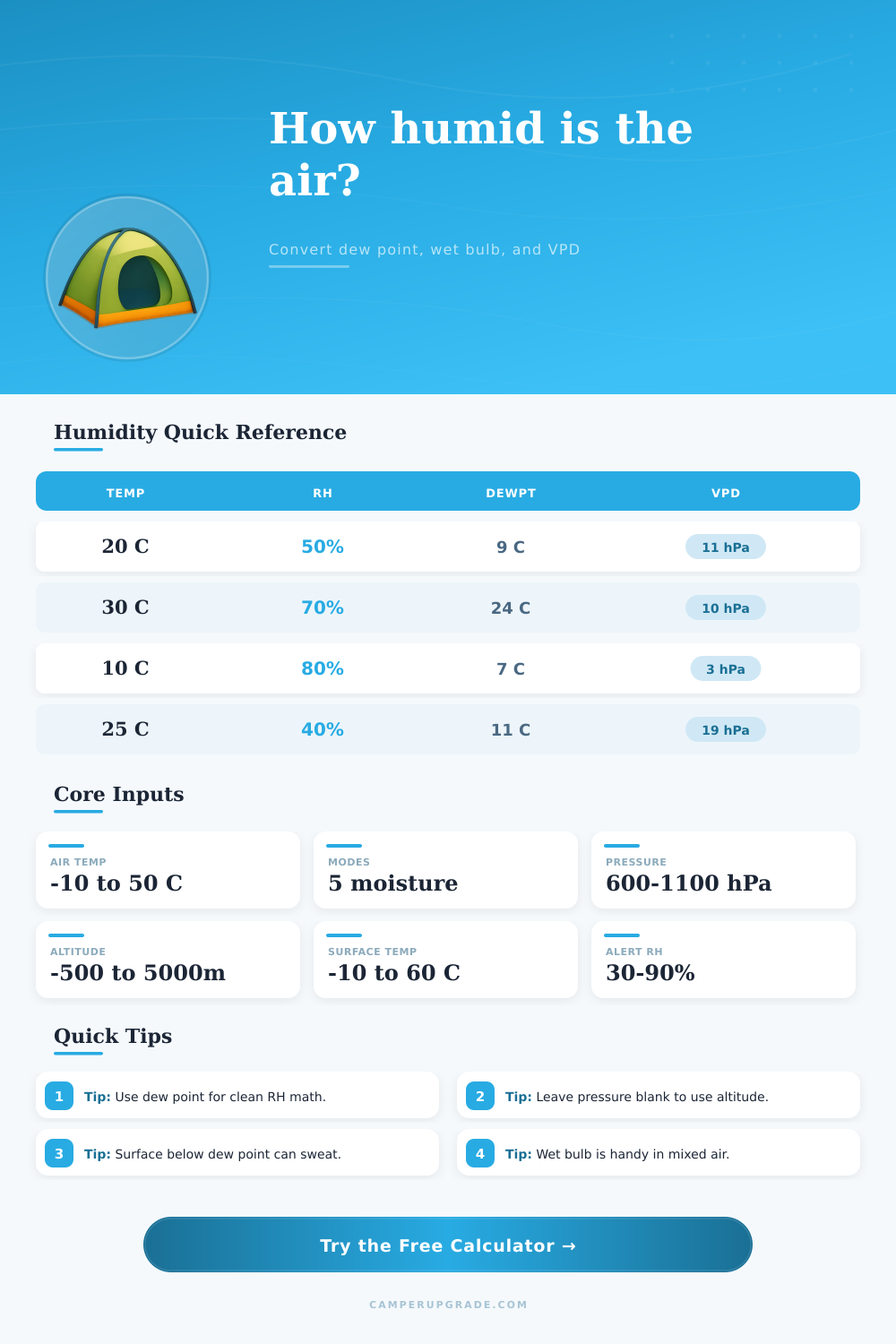
The dew point is the temperature at which the air becomes saturated with water vapor and water begin to condense out of the air. The dew point is a helpful measurement as it allow individuals to understand the amount of water in the air regardless of the current temperature. Additionally, the wet bulb temperature can help individuals understand if there is enough ventilation in a given area.
Vapor pressure deficit (VPD) is a value that indicates how much water a given plant will release through its leaves. VPD is calculated as the difference between the amount of moisture in the air and the amount of moisture that the air can hold at a specific temperature. If the VPD is too low, the air is too saturated with moisture for the plants leaves to release water vapor.
If the VPD is too high, the air is too dry for the plants leaves to retain moisture and will lose too much of there water through evaporation. A VPD between 0.8 and 1.2 kilopascals are generally desired for the plants to effectively grow. One of the other factor that impact relative humidity is atmospheric pressure.
The higher the elevation from sea level, the lower the atmospheric pressure. Since relative humidity calculations depends upon the amount of water vapor that the air can hold, which depends upon air pressure, the relative humidity at high altitudes will not be the same as the relative humidity at sea level. You must adjust these measurements for altitude.
Additionally, if the temperature of a given surface is lower than the dew point in the air, moisture will condense on that surface. To prevent moisture from condensing on an object, the temperature of that object should remain more higher than the dew point of the environment. Certain range of humidity are considered ideal for specific environments.
For most individuals, the relative humidity between 40 and 60 percent is comfortabley. If the relative humidity remain above 70 percent, mold can begin to grow in the environment, especially if the dew point is above 20 degrees Celsius. If the relative humidity falls below 40 percent, the air will feel dry and may lead to dry skin or even nosebleed.
There are a variety of tool that can be used to measure the different humidity levels in an environment. A hygrometer is a device that measure relative humidity. However, you should not place the device in direct sunlight as the humidity measurement can be inaccurate.
A sling psychrometer measures the relative humidity using the wet bulb and dry bulb temperatures of the environment and is more accurate than a cheap hygrometer. These tools allow individuals to effective manage the amount of moisture in greenhouses and other buildings.