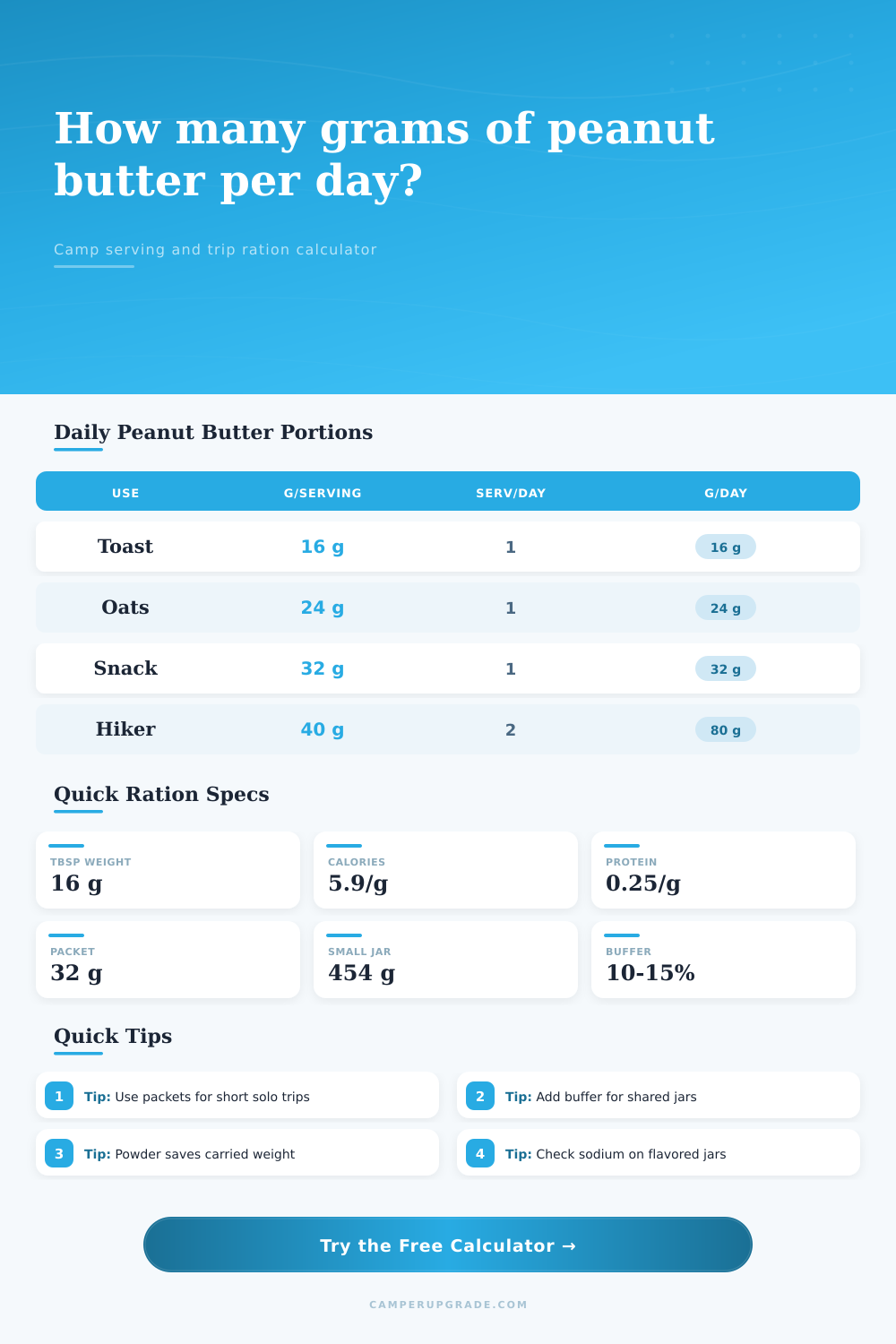
Peanut Butter Grams Per Day Calculator
Estimate daily peanut butter portions, trip totals, calories, protein, fat, jars, packets, and powder equivalents for camp meals.
Peanut butter ration result
| Serving style | Peanut butter grams | Approx tablespoons | Typical camp use |
|---|---|---|---|
| Thin toast spread | 12 to 16 g | 0.75 to 1 tbsp | Light breakfast, kids, snack plate |
| Oatmeal spoon-in | 20 to 24 g | 1.25 to 1.5 tbsp | Breakfast calories without a heavy jar scoop |
| Standard snack serving | 30 to 32 g | About 2 tbsp | Apples, tortillas, crackers, or pretzels |
| Sandwich layer | 36 to 45 g | 2.25 to 2.8 tbsp | One hearty peanut butter sandwich |
| Endurance top-up | 50 to 70 g | 3.1 to 4.4 tbsp | Long hiking, paddling, cycling, or cold days |
| Type used in calculator | Calories per gram | Protein per gram | Fat per gram |
|---|---|---|---|
| Classic creamy or crunchy | 5.90 kcal/g | 0.25 g/g | 0.50 g/g |
| Natural no-stir peanut butter | 5.88 kcal/g | 0.24 g/g | 0.50 g/g |
| Peanut butter powder, dry weight | 3.90 kcal/g | 0.45 g/g | 0.15 g/g |
| High-protein peanut spread | 5.20 kcal/g | 0.32 g/g | 0.38 g/g |
| Honey peanut butter blend | 5.50 kcal/g | 0.20 g/g | 0.38 g/g |
| Reduced-fat peanut spread | 5.30 kcal/g | 0.28 g/g | 0.34 g/g |
| Single-serve squeeze packets | 5.90 kcal/g | 0.25 g/g | 0.50 g/g |
| Unsalted natural peanut butter | 5.88 kcal/g | 0.24 g/g | 0.50 g/g |
Values are practical planning averages from common nutrition panels. Check your exact label when sodium, sugar, or protein targets matter.
| Scenario | People | Serving plan | Group grams per day |
|---|---|---|---|
| Solo day hike snack | 1 | 1 serving x 32 g | 32 g/day before buffer |
| Weekend couple breakfasts | 2 | 1.5 servings x 24 g | 72 g/day before buffer |
| Family toast and fruit | 4 | 1 serving x 20 g | 80 g/day before buffer |
| Scout patrol sandwiches | 8 | 1 serving x 40 g | 320 g/day before buffer |
| Thru-hiker calorie boost | 1 | 2.25 servings x 32 g | 72 g/day before buffer |
| Cold-weather pair | 2 | 2 servings x 36 g | 144 g/day before buffer |
| Container format | Typical grams | 32 g servings | Best use |
|---|---|---|---|
| Single squeeze packet | 28 to 32 g | About 1 serving | Solo snacks and no-mess day packs |
| Small trail pouch | 170 to 198 g | 5 to 6 servings | Overnights, bikepacking, shared oatmeal |
| Standard small jar | 454 g | About 14 servings | Weekend couples or small families |
| Large family jar | 794 to 907 g | 25 to 28 servings | Group camp kitchen or longer base camp |
| Peanut butter powder bag | 184 to 227 g | Weight varies by mix | Lower carried fat weight, mix with water |
Spoonfuls can vary a lot when you use them to measure servings of peanut butter. Instead of eyeballing it, get yourself a scale that measures in grams. It will help you calculate amount of protein and fat your group require depending on size, activity level and length of trip. No more guessing what to bring when it’s time to cook up a storm in the backcountry.
A tablespoon sounds like a basic measurement, right? Nope! Depending on if you heap food in or make the tablespoon level, a tablespoon could be anywhere from 16-32 grams. Multiply that by a few weeks of backpacking and additional calories quickly adds up.
Why You Should Weigh Your Peanut Butter
By entering your portion sizes into the calculator, you are translating your appetite into something concrete: how many grams of food do I actualy need? If your portions is too heavy, you waste energy carrying extra weight before hike even begins. If they are too light, you will be hungry and cranky on the trail.
The tool lets you toggle between different types of peanut butter to adjust for slight variations in nutrition. However, most of change is dictated by adjusting amount you serve yourself. Calorie burn changes based off your activity level. Paddling all day burns more then sitting around a campfire and reading a book. An intensity factor allow you to adjust the tool’s recommendation for the days activity level. That way, you don’t accidentally under-eat on a big hike day or paddle trip where breakfast isn’t enough to get you through the day.
When you are busy, you has to be even busier. Is that peanut butter going into your lunch or will that last you until dinner? If you’re not sure, you’re either eating too much or too little. The math is done for you with this calculator so all you have to do is see if the numbers looks right.
What you will eat depends entirely on what’s in your containers. If you have pre-measured packets, each serving is predictable and there is zero waste (32 g per packet). Jars are flexible for shared meals, but they’re heavy and always leave a layer of residue at the bottom that never makes it into your mouth.
A 10-15% buffer helps cover extra scoops (when you’re really hungry), spoon residue, and spills. It also serves as insurance: if you run out part-way through a trip, it give you some time to resupply.
You’ll notice that the reference table allows you to view grams in terms of packets or jars. From snacks to group meals, here are some common use cases. The problem with natural peanut butter is that it separates: The protein sinks to the bottom while the fat floats to the top. This means you need to stir it up in order to get even portion. If not, some of your first servings will mostly be oil, while later ones will be all pasty goodness.
To get around this issue, you can weigh out your portion sizes. That’s far more accurate than trying to eyeball it with a spoon. Ultralight hikers looking to shave ounces off their fat content can tries powdered varieties instead, although those should of been mixed with water. There are pros and cons to every one of these product, weight, convenience, and satiation factor into each. Think about what matters most to you for your particular trip.
A good ballpark is all it takes to pack enough food. You don’t need to be exact; you just need a place to start. With a grams-per-day number in hand, you can add and subtract to match. It’s better to have a reasonable guess from the get-go, so you’ll never find yourself out of an jar with miles left to go.
Panic becomes a thing of the past. Confidence abounds.