Pasta Water Camp Calculator
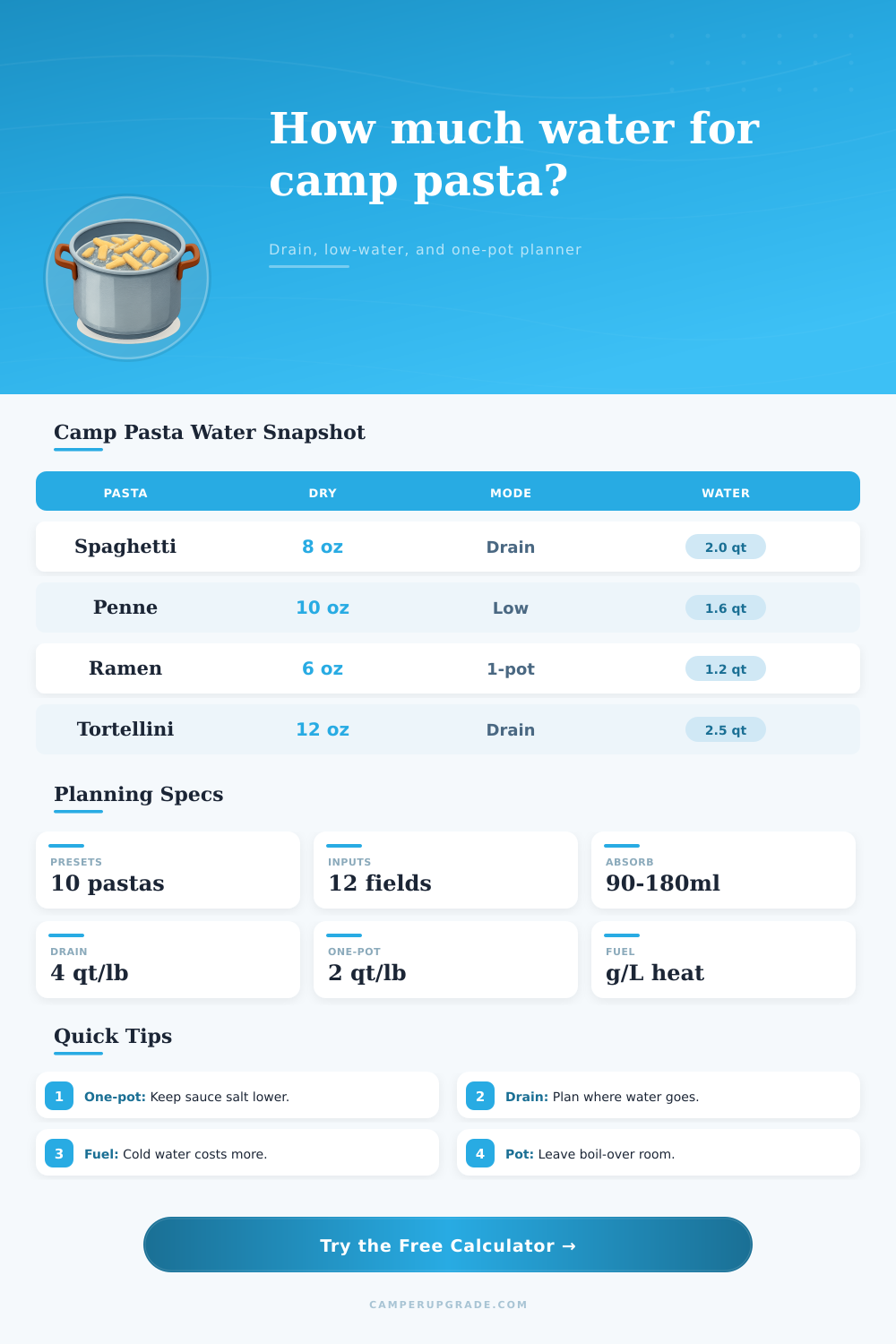
Estimate pasta cooking water for camp meals, including absorption, boil-off, drain loss, one-pot sauce water, pot fit, and fuel used to heat the water.
🍝Pasta Camp Presets
⚙Water, Pasta, and Stove Inputs
Formula: cooking water = dry pasta x water ratio; absorbed water = dry pasta grams x absorption rate; drain water = heated water minus absorption and steam loss, except one-pot and no-drain modes keep most water in the meal.
📊Pasta Water Spec Grid
📋Reference Tables
| Mode | Ratio | Best Use | Drain |
|---|---|---|---|
| Classic drain | 4 qt/lb | Long shapes, easiest stirring | High |
| Low-water drain | 2.5 qt/lb | Backcountry pot savings | Medium |
| One-pot sauce | 1.6 qt/lb | Mac, shells, orzo, sauced pasta | Very low |
| No-drain soak | 1.1 qt/lb | Couscous and instant noodles | None |
| Pasta | Absorb | Cook Time | Camp Note |
|---|---|---|---|
| Spaghetti | 135 mL/100g | 9-11 min | Needs stir room |
| Penne | 145 mL/100g | 10-13 min | Works low-water |
| Macaroni | 150 mL/100g | 7-9 min | Good one-pot |
| Ramen | 180 mL/100g | 3-5 min | Keeps broth |
| Tortellini | 115 mL/100g | 10-12 min | More fragile |
| Gluten-free | 125 mL/100g | 8-11 min | Stir gently |
| Water Heated | Canister Fuel | Windy Fuel | Pot Advice |
|---|---|---|---|
| 0.75 L | 7 g | 11 g | Solo cup pot |
| 1.5 L | 14 g | 22 g | 2 qt pot |
| 2.5 L | 23 g | 36 g | 3-4 qt pot |
| 4 L | 36 g | 58 g | Crew pot |
| Preset | People | Mode | Dry Pasta |
|---|---|---|---|
| Solo spaghetti | 1 | Classic drain | 4 oz |
| Pair penne | 2 | Low-water | 8 oz |
| Family mac | 4 | One-pot | 14 oz |
| Crew pasta | 8 | Low-water | 32 oz |
💡Camp Pasta Tips
To cook pasta while camping, you must consider the amounts of water you can carry and the amount of fuels you can use. Although pasta is a simple food to cook while camping, the water require to cook pasta create decisions regarding the size of the pot you use and the fuel you must use to boil the water. You must decide how much water to carry and how much water to discard.
If you will drain the pasta after cooking, you need to use a large amounts of water so that the pasta can easily moving in the pot while boiling. Using this method require that you have a large enough pot and a location to empty the water that you boil. Alternatively, if you will cook the pasta in one pot, you must use only enough water to soak the pasta.
How to Cook Pasta While Camping
In the one pot method, you will use the water left in the pot after cooking your sauce. The calculator included with the cooking methods provides mathematical computations for each method to calculate the amount of water that remain in the pasta and the amount of water you will need to discard. The shape of the pasta you use impact how much water the pasta will absorb.
Long strands of pasta and filled pasta will take up less water by weight than small or instant pasta. The weight and the shape of the pasta you use will impact how much water you have to heat. If you use cold water, you will need to use more fuel to bring the water to a boil than if you use warm water.
The calculator determine the amount of fuel needed to heat the water to boiling and also includes an allowance for simmer the pot of pasta. The size of the pot in which you cook your pasta limits the amount of pasta you can cook. You need to allow enough space in the pot for the pasta to expand while boiling and for bubbles to rise to the top of the pot without boil the water over.
The headroom setting in the calculator allow you to adjust the size of your pot to determine whether you have enough space for one pot of pasta. If the size of your pot is too small for the amount of pasta you wish to cook, you can cook the pasta in stages in two or more pots. However, cooking the pasta in stages will use more fuel to cook the pasta and create more difficult cleanup of pot.
The weight of the water you carry limit you on long camping trips. You have to add a percentage of water to account for spills of water while cooking pasta and to provide extra water for additional serving of pasta. Additionally, if you are camping in a location that requires you to carry all of your gray water, such as the water used to cook pasta, out of the camping area, you will need to use the low water drain mode.
Using this mode will limit the amount of water you have to carry out of the campsite and carry back down the trail to the camping area. The seasoning for your pasta will change according to the method with which you cook your pasta. If you cook the pasta in one pot, the water will remain in the pot with the pasta, and the seasoning should account for that.
Additionally, you will have to add the seasoning in small amounts because adding all of the seasoning at once while the pasta is boiling may make the pasta too salt. The cooking method you will use to cook your pasta will change based on the situation that you are in while camping. For instance, if you are a solo hiker with a small camping stove, you should use the method that requires no drainage of water from the pot (no-drain method) because this method uses less water and fuel.
However, if you are camping with a group and have a large enough pot to cook in, you can use the classic draining method of cooking pasta. The cooking method calculator allow you to determine the best cooking method that will work for your situation before you leave home. You dont have to reach the exact number of water measurements needed to prepare one pot of pasta.
However, you should understand why the amount of water needed change according to the cooking mode that you use, the temperature of the water that you use, and the number of people you are cooking the pasta for. Once you understand these variables, you will be able to effectively plan your pasta cooking while camping.