Kayak Trailer Weight Calculator
Estimate loaded kayak trailer weight, rack system load, tongue percentage, axle group load, tire load, and payload margin for single kayak, family, fishing, touring, and fleet trailer setups.
🛶Kayak Trailer Presets
Kayak Trailer Load Snapshot
⚖Trailer Ratings And Balance Inputs
🛠Rack, Hull, And Gear Load Inputs
📊Rack Material And Spec Comparison
📘Kayak Trailer Reference Tables
| Hull type | Typical dry weight | Common trailer load | Weight note |
|---|---|---|---|
| Recreational sit-inside | 38 to 55 lb | 2 to 6 hulls | Shorter hulls often fit on a low single-tier rack. |
| Touring or sea kayak | 50 to 70 lb | 1 to 4 hulls | Longer hulls may shift the rack center aft if overhanging. |
| Fishing or pedal kayak | 85 to 140 lb | 1 to 3 hulls | Pedal drives, seats, batteries, and crates should be included. |
| Tandem kayak or canoe | 70 to 110 lb | 1 to 4 hulls | Long, wide hulls may limit how many tiers are practical. |
| SUP or inflatable | 20 to 45 lb | 2 to 8 boards | Soft gear may hold water, sand, or pump weight after use. |
| Trailer style | Empty weight range | Typical GVWR | Use case |
|---|---|---|---|
| Light single kayak trailer | 180 to 350 lb | 600 to 1000 lb | Solo or pair of recreational hulls. |
| Multi-sport rack trailer | 350 to 650 lb | 1200 to 1800 lb | Family, touring, SUP, and mixed loads. |
| Fishing kayak trailer | 450 to 850 lb | 1500 to 2500 lb | Heavier hulls with gear boxes and bunks. |
| Fleet shuttle trailer | 750 to 1800 lb | 2500 to 5000 lb | Rental, club, or outfitter rack systems. |
| Check | Planning target | Concern sign | Calculator output |
|---|---|---|---|
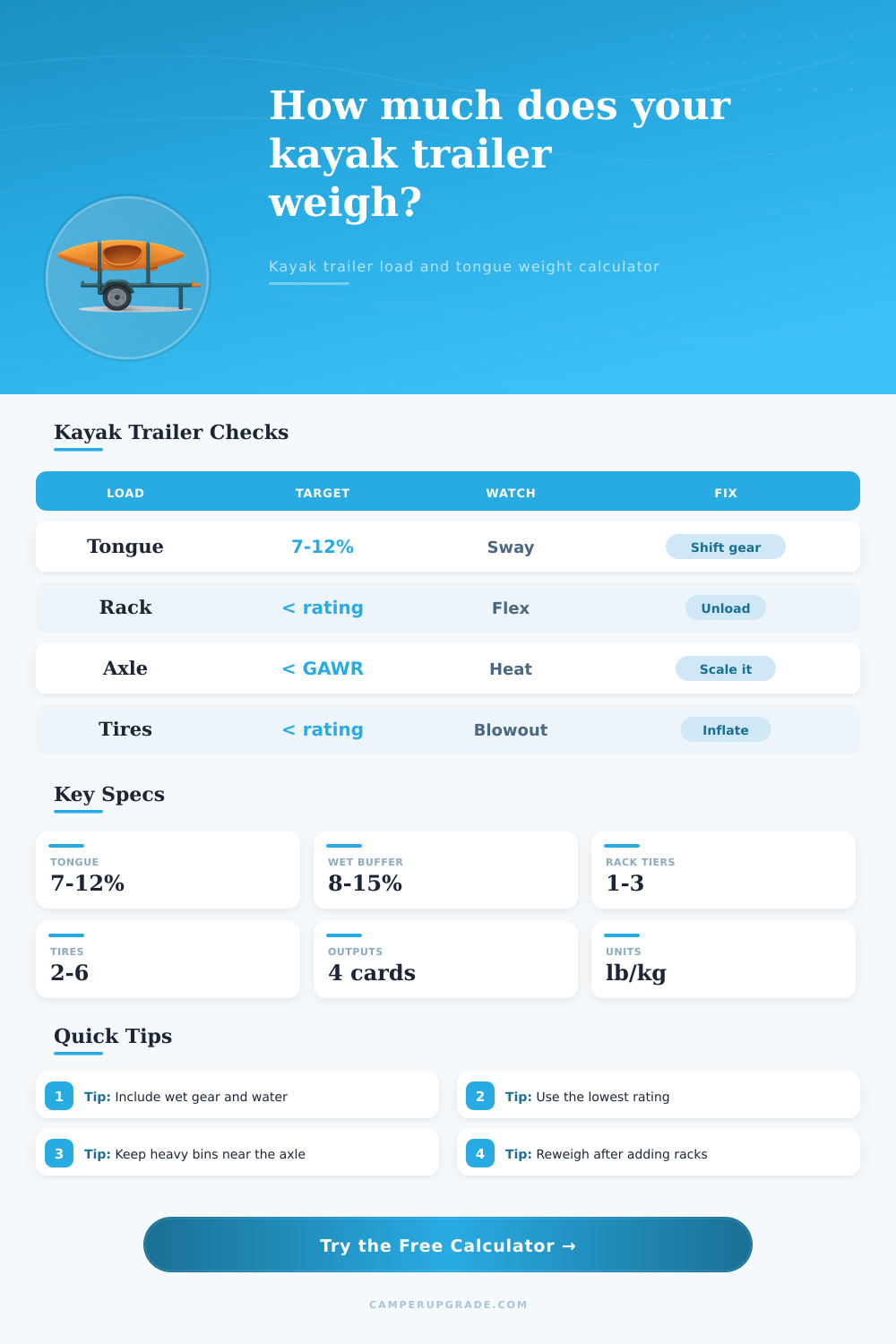
| Tongue percentage | About 8% to 12% for many highway kayak trailers | Too light can sway; too heavy consumes tow vehicle payload | Tongue weight and selected target band |
| Rack load rating | Hull load plus wet buffer below rack rating | Crossbar flex, loose mounts, or overloaded upper tiers | Rack load use percentage |
| Axle rating | Axle group load below GAWR with margin | Hot hubs, uneven tire wear, or sagging springs | Axle group load and GAWR use |
| Tire rating | Per tire load below sidewall rating at correct pressure | Heat, bulging sidewalls, or overloaded small tires | Worst per tire load with bias allowance |
| Example load | Hulls | Added load range | Trailer planning note |
|---|---|---|---|
| Solo fishing setup | 1 heavy kayak | 180 to 300 lb | Include pedal drive, battery, crate, and wet gear. |
| Family lake day | 4 rec kayaks | 280 to 450 lb | Rack weight can equal one or two extra kayaks. |
| Touring weekend | 2 sea kayaks | 230 to 380 lb | Dry bags and water often drive the wet buffer. |
| Fleet shuttle | 8 to 12 hulls | 700 to 1400 lb | Scale tickets matter once racks and tiers stack high. |
💡Kayak Trailer Weight Tips
What the hitch won’t do is tell you why you’re doing it. And we mean the trailer hitch. Nobody likes weighing their fully-loaded rig out prior to a trip. Back the truck up. Plug in the ball and cross your fingers. Hope ain’t no structural engineering plan. Add racks, add hulls, add coolers, add wet lifejackets and now you’ve got some serious shifting going on with center of gravity. Now increase your speed, throw some traffic at ‘er and boom; you got yourself some sway happening there. That’s where the calculator comes in.
It helps you quantify the fear by turning vague “oh I’m worried about…” stuff into cold hard numbers. How much tongue weight? How much tire reserve? That’s really just half the battle. The other half is how evenly distributed all this weight are.
Why You Need a Weight Calculator
The downward pressure on the hitch ball is called tongue weight. Ideally, that should be within the seven- to 12-percent range of gross trailer weight. Too little and the trailer swishes far back there in a dangerous way. Too much and the rear tires of your tow vehicle digs into road. The front ones begin losing traction, and you feel an odd sensation when turning the wheel.
This tool takes into account what you’re putting on the rack relative to where axles are located. For instance, sliding a heavy cooler off the tongue box and up onto the rack will take a few pounds off the hitch without affecting overall weight of the load. Oh and then there’s all that stuff you put up there on those cross bars. Even in a single pedal drive fishing kayak, it weighs at least twice as much than a couple of recreational sit-inside hulls. You have beefy seat mounts, battery boxes, and rod holders. The list goes on if you get into today’s offshore models.
It breaks down your load by hull too. The difference between a hundred-and-ten pound angler special and a fifty pound touring boat affects how they rides on a rack. It also offers a wet buffer option. After hauling out from a sandy beach or fighting the rain, dry straps are nothing but a fantasy. Add a few percentage points for absorbing moisture and even a tight load can be pushed past its rating. That’s why you should of check this before leaving the driveway.
A second silent weak link is rack strength. Just because your boat’s trailer frame supports up to 1500 lbs doesn’t mean your aluminum cross bars will also hold that much concentrated weight across only three rows. Even steel stackers are heavy (adding to unloaded trailer weight) yet rigid. They’re great at supporting all your gear, but while steel stackers is stiff, they’re heavy, whereas foam bunks is light and easy on gel coats but limit how high you can stack without risking instability.
On the other hand, foam racks is lightweight, gentler on gel coat, and less likely to flex with lots of stuff in them. However, stacking multiple hulls high may cause tipping issues. The charts above show some of these strengths by materials, compared to common loading scenarios. Now you know if your existing rack can handle your current collection. You can also decide if it makes sense to upgrade to something stronger before starting an extended mission.
Finally, don’t overlook tire ratings. They are often ignored until a problem occurs. Tires provided on trailers is rated for carrying a certain load under certain conditions, in this case air pressure. Decrease just ten pounds of air because of overnight temperature changes and those numbers goes way down. The calculator then splits the axle load by how many wheels you have. It factors in bias allowances recognizing real world errors such as worn out suspension components or unevenly loaded trailers.
If you push more weight than the sidewall says each tire can handle, you can’t just drive slowly to avoid problems. You will still get excessive wear and likely blow-outs on long highway trips. “Manage your weight, don’t try to get rid of it.” Heavy stuff goes near the axle. Lighter stuff goes more towards the front/rear. And make sure you check it all after a wet haul.
Once you know how it all works together, that trailer doesn’t feel like a jumble of random metal and plastic parts anymore. It’s an expected part of car. And that’s what gives you that confidence, which transforms a tense set-up time into a casual pre-trip routine. Then finally, make sure the only thing going through your head as you pull up to the launch is which spot is going to give me the best fish catch.
It feels naturaly better when you’re prepared and don’t have to worry about luxurios equipment failing. The moddern way to travel is being ready for anything. Actually, most people just forget that weight matters more then they think.