Ice Screw Rack Calculator
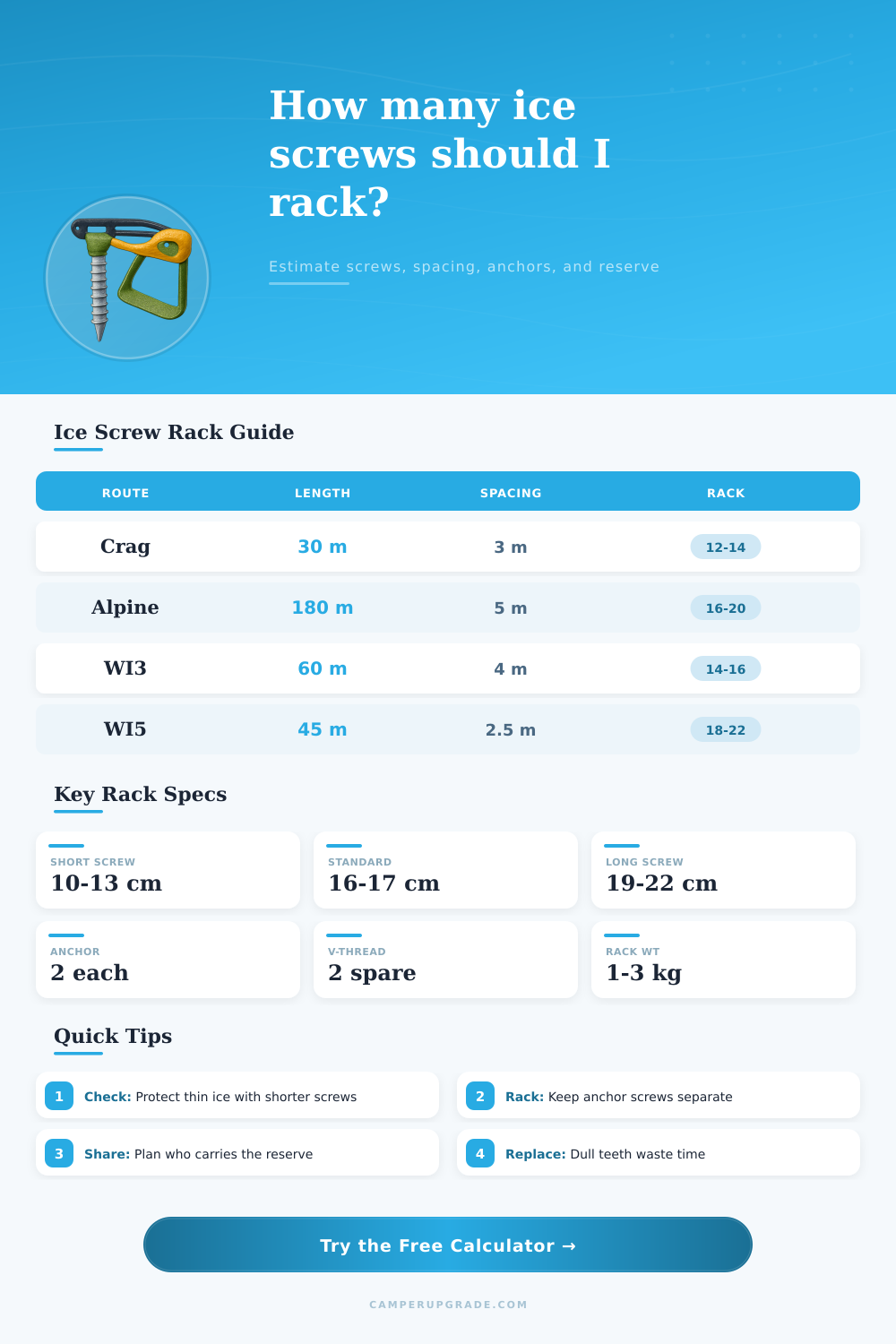
Estimate how many ice screws to carry for lead protection, belay anchors, rappels, v-thread reserve, and team sharing from route length, pitch count, ice quality, spacing style, and screw mix.
🧊Ice Route Presets
⚙Route, Ice Quality, Spacing, and Team Inputs
This calculator is a planning aid only. Final screw choices depend on ice depth, screw sharpness, local conditions, routefinding, anchor options, and partner judgment.
🔧Suggested Screw Mix
Short Screws
--10-13 cm screws for thin features, curtains, and shallow blobs.
Standard Screws
--16-17 cm screws for most lead placements and routine anchors.
Long Screws
--19-22 cm screws for anchors, threads, and thick reliable ice.
Clippers
--Rack slots needed if each screw rides on an ice clipper.
📐Ice Screw Specification Grid
📊Ice Screw Rack Tables
| Route Type | Typical Pitch | Spacing | Lead Rack |
|---|---|---|---|
| WI2-WI3 cruiser | 35-55 m | 4-6 m | 8-12 screws |
| WI3-WI4 standard | 40-60 m | 3-5 m | 12-16 screws |
| WI5 sustained | 30-50 m | 2-3.5 m | 16-22 screws |
| Alpine ice | 50-70 m | 5-8 m | 10-16 screws |
| Mixed smears | 20-40 m | varies | 6-12 screws |
| Ice Quality | Short | Standard | Long |
|---|---|---|---|
| Fat blue ice | 10% | 65% | 25% |
| Hero plastic | 10% | 70% | 20% |
| Thin featured | 45% | 45% | 10% |
| Aerated ice | 25% | 55% | 20% |
| Alpine variable | 30% | 50% | 20% |
| Anchor Plan | Screws | Best Length | Reserve Note |
|---|---|---|---|
| 2-screw belay | 2 each | 16-19 cm | common |
| Marginal belay | 3 each | 16-22 cm | heavier |
| Mixed belay | 1 each | 13-19 cm | rock gear helps |
| Fixed station | backup | 16 cm | verify in place |
| V-thread | 2 spare | 19-22 cm | plus cord |
| Rack Size | Use Case | Weight | Clipper Slots |
|---|---|---|---|
| 8-10 | short easy ice | 0.8-1.6 kg | 4-5 |
| 12-14 | normal crag | 1.2-2.4 kg | 5-7 |
| 16-18 | multipitch | 1.6-3.1 kg | 7-9 |
| 20-24 | steep or thin | 2.0-4.0 kg | 9-12 |
| 24+ | large team | 2.4 kg+ | 12+ |
💡Rack Planning Tips
Selecting the correct number and variety of ice screws to carry on an ice climbing trip is another important part of preparing for teh trip. If there are too few ice screw in the ice screw rack, there will be instance where the leader has to skip placing ice screws in spots that are more better spots for the placement of ice screws. On the other hand, if there are too many ice screw in the rack, the rack will add to the weight of the leader’s harness, which could make the harness uncomfortably to wear for the duration of the climb.
The total length of the ice will determine the number of placement that will be needed for the leader to climb the ice face. This length will determine the number of ice screws that is needed to be carried on the climb. The number of pitches and the length of the longest pitch will also factor into this decision.
Choosing the Right Ice Screws for Ice Climbing
The number of pitches and the length of the longest pitch will determine the number of ice screws that will be left unused for possible ice anchors. The distance between placements of ice screws will depend on the condition of the ice. If the ice is thick and reliable, the placements can be further apart.
On the other hand, thin or aerated ice will require the placements of ice screws to be more close together. The quality of the ice will change the requirements of the ice screw rack. Thin or featured ice will require ice screws that is shorter in length.
Such thin or featured ice allows for less certain placement of ice screws. Consequently, the ice screw rack will have to contain the number of short ice screws rather than long ice screws. The steepness of the ice climb will also change the type of ice screw that are used.
For low angles of ice climbs, there will be more comfort between placements of ice screws. Therefore, the distance between ice screws will be wider on these climbs. For vertical and overhanging ice screws, each placement of ice screws is more important than other.
Thus, there will need to be a greater frequency of placements of ice screws on these climbs. Finally, the number of people in the climbing team will factor into the choice of ice screws. This determine the distribution of the weight of the ice screws between team member.
You must also account for the anchor styles and the number of rappels. The anchor styles and the number of rappels requires extra ice screws that are not used for lead protection. The lengths of the ice screws to be used are just as important as the total number of ice screws that will be needed for the climbing route.
Short ice screws are used for thin ice curtains and shallow ice blobs since short ice screws will not punch through thin ice. Standard ice screws are used for most of the lead placements for the climbing route. Long ice screws are used for solid belays and for creating v-threads on the ice walls, as well as during the descent down the route.
A calculator will provide a suggestion for the number of each type of ice screw that should be in the rack based on the facts of the climbing route. Having the correct mix of ice screws of each length is just as necessary as having the correct total number of ice screws. The weight of the ice screw rack is the third consideration for ice screw racks.
While the weight of the ice screws is a secondary consideration after the number of ice screws that are to be used, the weight of aluminum ice screws is less than steel ice screws. However, steel ice screws are heavier than aluminum ice screws, but are more confident on aerated ice and ice that is likely to dinner plate. The average weight of the ice screws will be calculated when planning the ice screw rack, but the actual weight of the rack will vary depending on the actual weight of each individual ice screw.
Many people make mistake when they plan their ice screw racks. One mistake is to treat every climbing route the same way. However, routes can include different types of ice and require different ice screw racks.
Another mistake that many people make is to mix reserve ice screws with the lead ice screws. People should not mix these ice screws together since the leader should always be able to quickly find the reserve ice screws if they need to create an anchor or a v-thread. The ice screw rack calculator cannot account for change in the weather or problems that may develop with the ice that the climber will encounter.
However, the calculator does provide a starting point for the climber based on the facts of the route. By knowing the length of the route, the number of pitches that will be climbed, the quality of the ice on the climbing route, and the size of the climbing team, the leader can create a plan for the number of ice screws of each length that will be needed. Based on these facts, the ice screw rack calculator will provide for the leader the total number of ice screws, the mix of ice screw lengths, and the weight of the rack.
Depending on how the leader finds the actual climbing conditions to be different than the expected conditions, the leader may have to make adjustments to the plan that the ice screw rack calculator was create.