Humidity Comfort Calculator
Estimate heat index, dew point, comfort score, tent condensation risk, and hydration priority from campsite weather and gear conditions.
This field tool uses standard heat-index and Magnus dew-point formulas, then applies campsite modifiers for wind, shade, activity, clothing, ventilation, and condensation buffer.
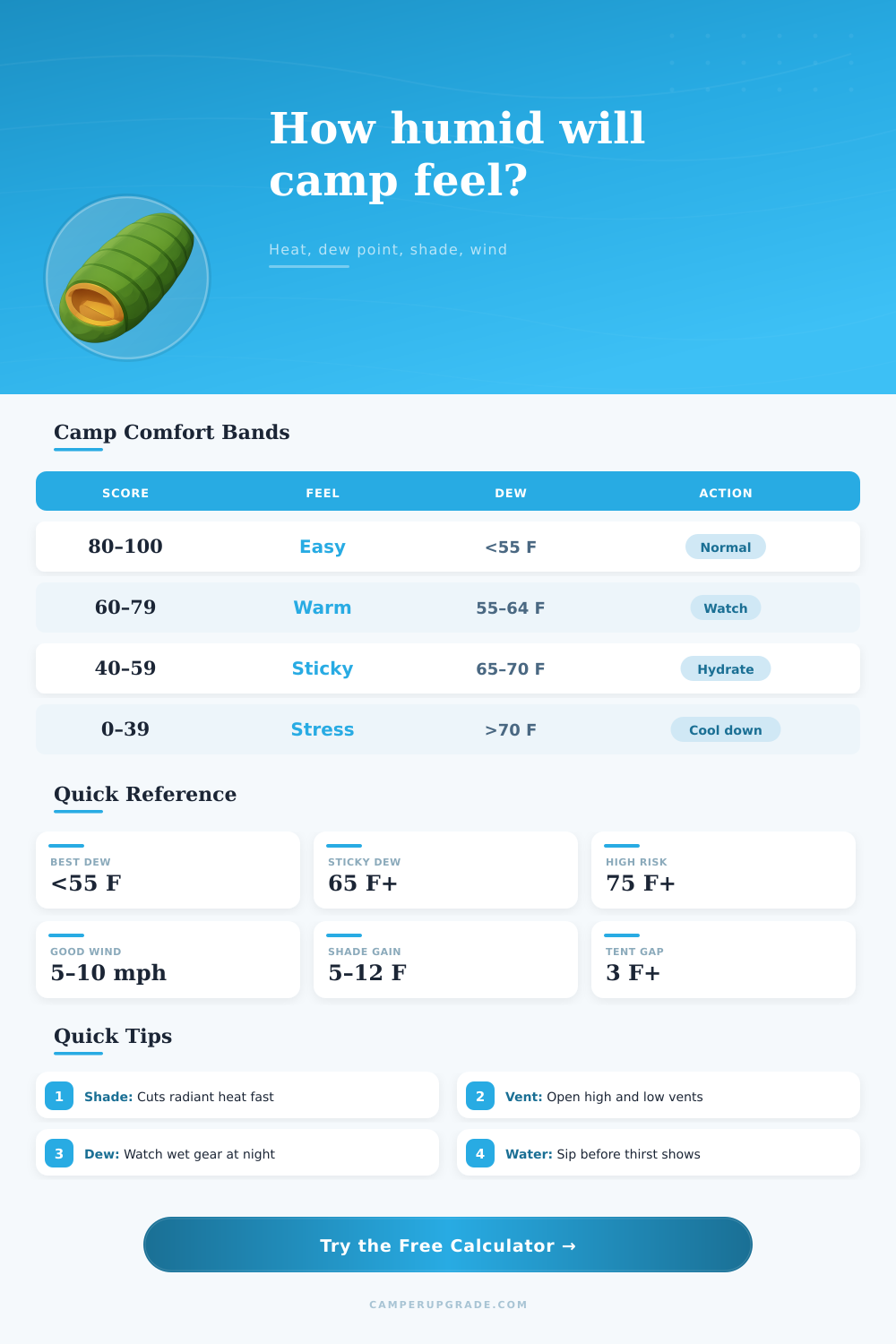
| Score band | Camp feel | Likely condition | Practical response |
|---|---|---|---|
| 80 to 100 | Comfortable | Air moves sweat away and dew point stays modest. | Normal water rhythm and ordinary tent venting are usually enough. |
| 60 to 79 | Warm or damp | Humidity is noticeable during chores or inside a tent. | Add shade, keep mesh open, and drink before the next activity block. |
| 40 to 59 | Sticky or draining | Heat index, dew point, or low wind is limiting comfort. | Shift work to shade, slow pace, increase airflow, and check sweat loss. |
| 0 to 39 | Heat stress range | High heat index with poor evaporation or hard activity. | Stop hard tasks, cool skin, seek breeze, and prioritize hydration. |
| Dew point | Outdoor feel | Tent condensation clue | Ventilation move |
|---|---|---|---|
| Below 50°F | Dry and crisp | Low risk unless wet gear is stored inside. | Normal roof vent or small crossflow. |
| 50 to 59°F | Pleasant to mild | Light morning moisture possible on cold fly panels. | Crack high vents and keep damp gear separated. |
| 60 to 69°F | Humid and sticky | Moderate risk when fabric cools overnight. | Open high and low vents, pull fly away from inner wall. |
| 70°F or higher | Tropical or oppressive | High risk, especially with closed fly or crowded tent. | Maximize mesh, use site airflow, reduce interior moisture sources. |
| Input | Comfort direction | Typical swing | Calculator use |
|---|---|---|---|
| Deep shade | Cooler skin load | 5 to 12°F perceived relief | Subtracts radiant stress from adjusted comfort temperature. |
| Wind 5 to 10 mph | Better evaporation | 3 to 8 score points | Raises comfort unless heat index is extreme. |
| Hard activity | More body heat | 10 to 22 score point penalty | Lowers score and escalates hydration flag. |
| Low breathability | Trapped sweat | 6 to 14 score point penalty | Raises adjusted stress and lowers evaporation credit. |
| Flag | Trigger pattern | Camp action | Recheck timing |
|---|---|---|---|
| Normal | Score above 75, dew point below 60°F, light activity. | Drink on a steady schedule and keep water accessible. | Every few hours or before a hike. |
| Watch | Warm score, moderate humidity, or chores in low wind. | Add electrolytes for longer work blocks and monitor urine color. | About hourly during activity. |
| Hydrate | Heat index above 90°F, sticky dew point, or active setup. | Pause in shade and replace fluids before continuing hard work. | Every 30 to 45 minutes. |
| Cool down | Heat index above 103°F or comfort score below 40. | Stop hard activity, cool skin, and move to airflow or air conditioning. | Immediately and repeatedly. |
Camping comfort is based off two things: how air feel on the skin and how air feels within a tent. Camping comfort is unrelated to the temperature that is displayed on the weather application that is installed upon the phones of most camping trip. Humidity alters the way that sweat evaporates from the skin, alters the rate at which camping gear become damp, and even impacts whether condensation drop onto the sleeping bag.
The calculator incorporate specific inputs to determine a comfort score within the camping trip. The temperature of the air, the relative humidity of the air, the wind speed within the camping area, the shade level within the camping area, the activity level of the camper, the clothing of the camper, and the ventilation within the tent determine this camping trip comfort score. In addition to the comfort score, the camping trip calculator also incorporates information regarding the heat index, the dew point, the condensation risk within the tent, and the hydration flag for the camper.
Plan a Comfortable and Dry Camping Trip
These pieces of information will allow the camper to determine in advance the camping trip that will feel easy for the camper versus the camping trip that will feel more stressful for the camper prior to beginning to set up the camping trip. The dew point within the camping area is a more important value for the camper than the relative humidity of the camping trip. A high dew point within the camping area will make it difficult for the body to cool itself, as well as lead to the camping tent’s fabric becoming covered in water.
The camping trip calculator can determine the dew point through a set of standard formulas. Furthermore, the difference between the temperature of the air and the dew point can adjust the comfort score of the camping trip. This difference is called the buffer, and the buffer indicates whether the camper needs to increase the amount of air movements within the tent or whether the camper only needs to open a tent vent.
The smaller the buffer between the air temperature and the dew point, the more greater the risk of condensation forming within the tent, especially within crowded camping setups that include wet gear within the tent. Wind and shade can alter the way that air feels to the camper, but many campers do not consider the impact of these two factor on the camping trip. Movement within the camping area will make it easier for the body to release moisture, but wind also creates the sensation of cooler temperatures for the body.
Shade will allow the body to avoid the additional heat that is radiated from objects within the camping area, which many thermometer measurement do not reflect. The camping trip calculator calculates the comfort temperature that accounts for these two factors to allow campers to compare the comfort of different locations within the camping area. Furthermore, the activity level and breathability of the clothing of the camper can also impact how comfortabley the camper feels within the camping area.
However, the effect of activity and clothing have the opposite effect of wind and shade. The camper tends to feel hotter within the tent while performing camping activities with non-breathable clothing compared to when resting. Another function of the camping trip calculator is to calculate the condensation risk within the camping tent.
The relationship between the dew point within the camping area and the temperature of the tent fabric, which is taken before the camping trip, calculates the condensation risk. If the condensation risk within the tent is high, both the high and low vent of the tent should be opened, as well as wet items should be stored outside of the tent. However, if the condensation risk within the tent is low, there is still a benefit to adding air movement to the tent, but the air movement isnt required to be performed for every object within the tent.
Furthermore, the camping trip calculator also incorporates information regarding the hydration flag of the camper. This hydration flag changes from “normal” to “watch, hydrate, or cool down” according to the heat index of the camping trip as well as the activity level of the camper. This hydration flag indicates to the camper that water should be drunk on a schedule during the camping trip; otherwise, the body will become dehydrated.
Finally, many campers focus upon the temperature that is experienced during the daytime of the camping trip. However, many campers are unaware that the climate change once the sun sets and the camping trip enters into the nighttime portion of the trip. The camping trip calculator can be used to input a second set of parameters regarding the overnight portion of the camping trip.
The overnight portion of the camping trip will typically have a lower heat index with a smaller buffer between the air temperature and the dew point. These two features together indicate the risk of condensation within the tent while sleeping. Thus, by recalculating the camping trip prior to sleeping, the camper can decide whether to leave the tents fly open, especially if the calculated risk indicate the condensation of water within the tent.