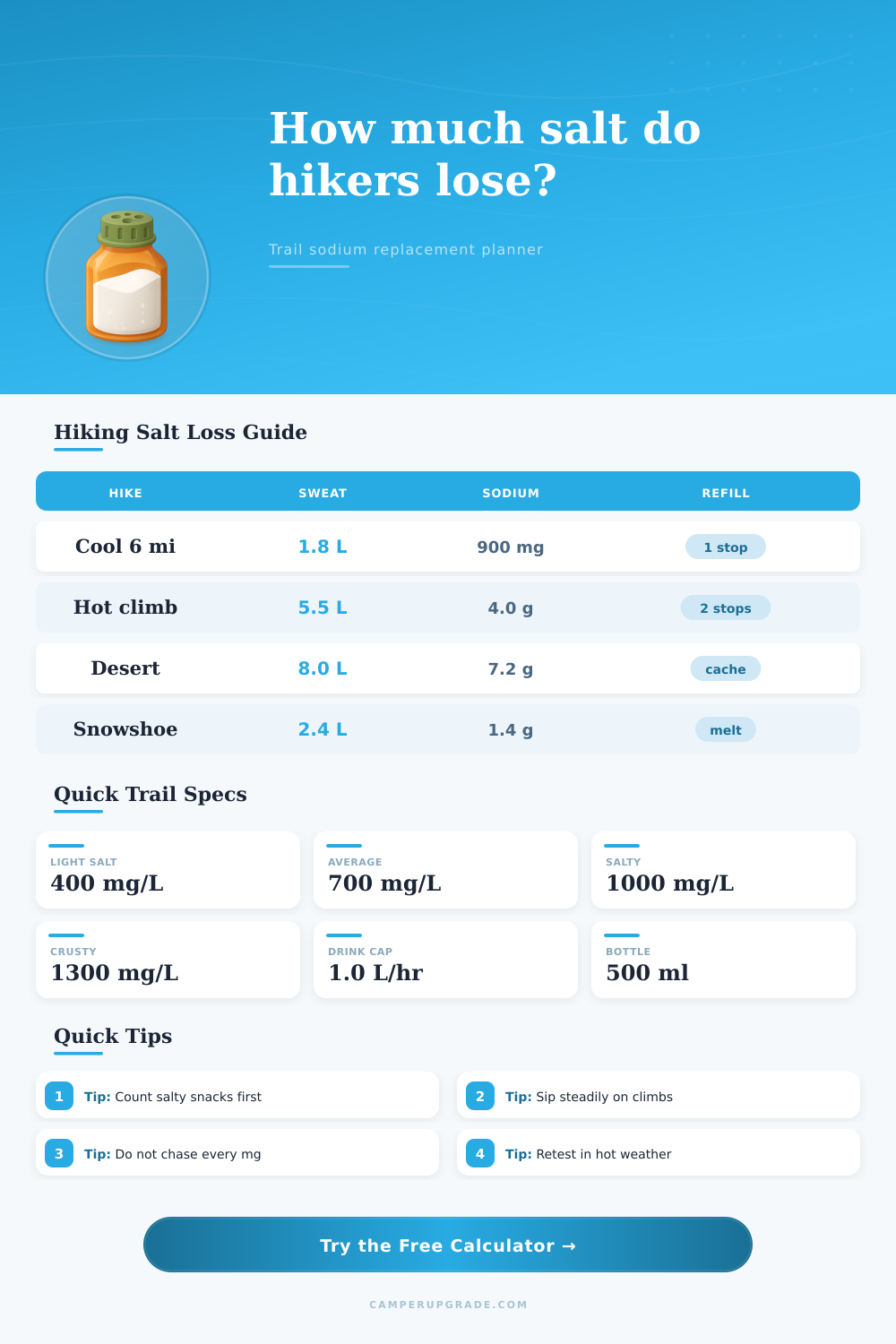
Hiking Salt Loss Replacement Calculator
Estimate sweat sodium loss, on-trail salt replacement, electrolyte servings, drink concentration, bottle spacing, refill pressure, and recovery sodium for hiking days with heat, altitude, pack load, and terrain.
⛺Trail Scenario Presets
📍Hike And Environment Inputs
Used only to read dehydration pressure and pack-load strain.
Include water and food carried at the start.
Use hiking time, not total time at camp.
Pace affects the sweat-rate adjustment.
Long climbs raise sweat rate even in cool weather.
Use the warmest sustained work period.
Humid air reduces cooling efficiency.
Sun glare and wind both change fluid planning.
Altitude can raise respiratory water loss.
Used to size bottle capacity between reliable refills.
🧂Sweat Salt And Replacement Inputs
A weighed field test is better than any preset.
Enter only if measured profile is selected.
White shirt marks and stinging eyes often point higher.
Sweat sodium varies widely between hikers.
Most plans replace part of sweat sodium on trail.
Count jerky, broth, salted nuts, ramen, chips, or soup.
Use the label for one tablet, packet, scoop, or capsule dose.
Used for bottle-strength and refill counts.
Include bladder and bottles leaving the trailhead.
Recovery sodium is usually food first, not extra tablets.
This hiking calculator estimates planning ranges from published sports hydration principles and field sweat-rate methods. It is not medical advice; heat illness, hyponatremia risk, kidney, heart, blood pressure, endocrine, or medication questions need a qualified clinician.
Hiking Salt Replacement Plan
📊Trail Planning Specs
📘Reference Tables
| Sweat sodium profile | Planning value | Common field clue | Calculator use |
|---|---|---|---|
| Light salt sweater | 400 mg/L | Little salt crust, food usually covers short hikes | Use conservative replacement unless heat is severe |
| Average hiker | 700 mg/L | Typical sweat marks after long climbs | Good default when no test result is available |
| Salty sweater | 1000 mg/L | White marks, stinging eyes, salty skin | Spread sodium between drink mix and food |
| Crusty salt marks | 1300 mg/L | Heavy visible salt after drying | Pack more servings and verify with a field test |
| Adjusted sweat rate | Trail meaning | Drink planning note | Salt planning note |
|---|---|---|---|
| Under 0.4 L/hr | Low | Cool hike or easy pace | Food sodium often covers most needs |
| 0.4-0.8 L/hr | Moderate | Common day-hike range | Use steady sodium on hikes over 3 hours |
| 0.8-1.2 L/hr | High | Heat, humidity, climb, or heavy pack | Pre-plan bottle concentration and snacks |
| Over 1.2 L/hr | Very high | Refill access becomes critical | Avoid both plain-water overload and late catch-up |
| Replacement target | Best use | Why not 100% | Field check |
|---|---|---|---|
| 35% of sodium loss | Cool weather or salty meals | Normal food can fill the rest | Good for lower sweat days |
| 50% of sodium loss | Balanced hiking default | Simple and stomach-friendly | Pair with real food |
| 65% of sodium loss | Hot, long, or humid routes | Still leaves room for meals | Split by hour or bottle |
| 80% of sodium loss | Very salty sweater in heat | Full replacement can be too strong | Use tested products and watch comfort |
| Trail cue | Possible meaning | Calculator adjustment | Safety note |
|---|---|---|---|
| Salt crust on clothes | Higher sweat sodium | Try salty or crusty profile | Confirm on another hike |
| Sloshy stomach | Fluid rate too high | Lower hourly drink target | Do not force plain water |
| Dark urine after hike | Fluid deficit possible | Add refill margin next time | Use thirst and medical context |
| Headache or confusion | Could be serious | Stop relying on estimates | Seek help for heat illness signs |
🏔Salt Loss Quick Cards
🧭Trail Salt Planning Tips
Dehydration and sodium loss may not seem like a big deal on the trail…until your head throbs in the heat and your legs cramp up on a last minute hill climb.
When you sweat, you lose sodium as well as water, and how much you lose varies based off pack weight, effort, and temperature. Maintaining a general balance of both keep you moving instead of sitting there wondering why your food taste off. Sweat volume isn’t the only key variable, it’s also how much salt you’re sweating out. You know, some people is leaving a white crust on their shirt within an hour or two, whereas others stay almost unmarked. Why? Sweat-sodium content vary greatly from person to person. And then within one individual, it can change depending upon pack weight, humidity, etc.
How to Plan Your Salt Needs
These conditions gets captured by the input variables for the calculator so that its output reflect what you’ll experience on any given day instead of some generic average. Even in moderate temps, a high heart rate mean you sweat more: The harder your body works, the more it sweats. So if you have an especially steep climb in the morning versus a flat section in the afternoon (same temp), you might need to drink up more water. The tool factors in your body’s workload by considering not just total gain but gain-per-hour. Sun and humidity play a similar role. Muggy air doesn’t cool as effectively; you’ll sweat relative to thermometer reading. Same goes for full sun or reflective rock: those things increases your radiant heat load.
It isn’t a substitute for hunger and thirst. Instead, it provides a range to help you plan how much sodium you need while moving, whether from your diet or from electrolyte products. Different targets is explained in reference tables. Generally, normal meals covers most losses during a cool day in a forest, but on a hot, exposed climb, you lose more then just food can replace, so you must take more in. Once you describe the conditions, the calculator make these trade-offs for you.
Remember: The body will keep replenishing lost sodium for several hours even when you’re no longer exercising, which is why it shows up as a separate number in the calculator. This one’s typically easy to satisfy with a small amount of sodium from dinner. However, if you’ve had multiple hot days in a row, you’ll be fatigued the following morning and may need to supplement with salted nut or broth. You should of used the recovery number to determine if you want to make those additions to dinner.
Flexibility is key for sodium planning. While the calculator offer a starting map, the true test come from checking if you’re holding your energy or if you’re drinking so much plain water that your fingers are swelling. Listen to those signs and adjust your next calculation accordingly rather than trying to make one plan work for all hikes.