Heat Acclimatization Days Calculator
Estimate a gradual heat exposure ramp for campground work, RV setup crews, trail maintenance, event staffing, and other hot outdoor tasks.
☀ Real Outdoor Presets
🧭 Workday Inputs
This planning tool estimates schedule conservatism; it does not diagnose heat illness or replace a site-specific heat safety plan.
Recommended Acclimatization Plan
📊 Heat Load Factor Grid
🗓 Reference Table: Exposure Ramp
| Worker status | Day 1 exposure | Ramp pattern | Typical full schedule |
|---|---|---|---|
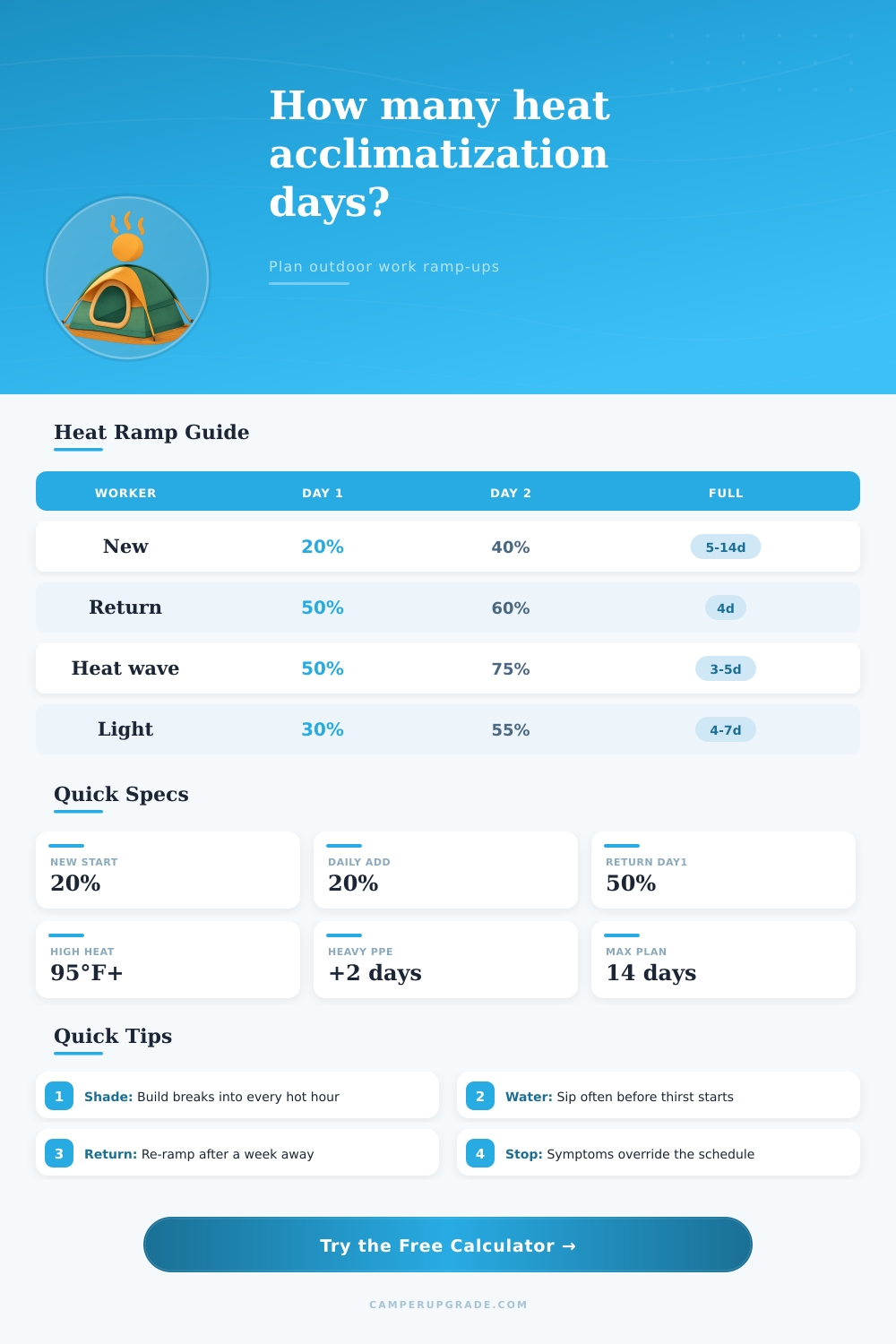
| New to hot work | 20% of usual hot shift | Add no more than 20% per day | 5 to 14 days |
| Experienced returner | 50% of usual hot shift | 60%, 80%, then 100% | 4 days |
| Recently acclimated | 75% to 100% if conditions match | Use controls if heat increases | 1 to 3 days |
| Sudden heat wave | About 50% on first hot day | Step back up over several days | 3 to 5 days |
🌡 Reference Table: Heat Index Bands
| Heat index | Metric approx. | Planning band | Schedule response |
|---|---|---|---|
| 80-90°F | 27-32°C | Warm | Use normal ramp and water breaks |
| 91-102°F | 33-39°C | High | Shorten exposure and add shade |
| 103-115°F | 39-46°C | Very high | Use conservative ramp and frequent breaks |
| 116°F+ | 47°C+ | Extreme | Consider rescheduling heavy hot work |
🛠 Reference Table: Outdoor Work Intensity
| Intensity | Camping examples | Heat load | Ramp adjustment |
|---|---|---|---|
| Light | Site checks, guiding, flagging | Lower | May use base ramp |
| Moderate | Raking gravel, setup, carrying coolers | Moderate | Add caution in high heat |
| Heavy | Digging, hauling, roof service | High | Add 1 to 2 ramp days |
| Very heavy | Sustained shoveling or loaded carries | Very high | Reduce hours and split shifts |
🧥 Reference Table: Clothing and Controls
| Condition | Typical effect | Calculator factor | Planning note |
|---|---|---|---|
| Breathable clothing | Lowest retained heat | 0 added days | Still ramp new workers |
| Sun hoodie and gloves | Some heat retention | 0 to 1 added day | Watch humidity and wind |
| Coveralls or rain gear | Reduced evaporation | 1 added day | Use more recovery breaks |
| Heavy PPE | Major cooling barrier | 2 added days | Use supervision and shorter bouts |
💡 Field Tips
On hot days like the first day of camp set up, it can be hard to get going. It’s easy to have grand ideas about moving pads and gravel around, but the heat will come on fast.
It’s easy for the environment to make your body feel like it doesn’t belong here, and that’s when you need to respect its biological limits. When folks think they need to force themselves into exhaustion, most project outdoors don’t last very long. You’ll risk injury or cause problems for yourself.
How to Stay Safe in Hot Weather
Use the tool to determine what pace your team can works without risk to their safety. It takes time (as in days) for your body to acclimated to heat. In other words: You has to train your body to sweat more effectively and cool itself down. For someone who have never worked in hot weather, it can take up to two weeks for their body to make this adjustment. Rushing it? Then expect yourself to give in to heat exhaustion before the workday start.
Once you plug in your own set of circumstances, the calculator does all the hard work in terms of adjusting to those variables. It’ll translate safety rules into something you can follow on a day-to-day basis, and one that acknowledges how far humans can go. The key to getting good results is knowing where you are starting from. If you have taken a break and want to get back into it, you won’t adjust as quickly than if you were starting from scratch in July. The body has what they call “memory” regarding how well we adapted to heat during the previous week. Once this period lapses, you’re essentially beginning again. That little bit on form makes a big difference in the output curve. It helps experienced people avoid thinking they’re at lower risk, and it also protects newcomers who might jump right in without getting used to things first.
Many people fail to consider the heat generated by clothing and equipmnt. Thick sun wear or other PPE can block evaporative cooling and trap heat next to the skin. If you are wearing any of this, the calculator will reduce suggested time of exposure. It assumes your body must work harder to keep its temperature down because there is no airflow. For example, a person in sealed coveralls produces more internal heat than one in loose, open cotton shirts. Failure to consider this results in dangerously high levels of overexposure.
A second multiplier is shade access. Your safety buffer is much smaller if you’re working in an area with little shade and strict deadlines. Breaks in the shade don’t fully lower your core temperature. To account for this, the tool will reduce allowable work time with poor cooling options. Moving away from direct radiant heat is necessary to truly rest, otherwise it’s possible that accumulated stress will compound at greater rates then expected.
No spreadsheet can ever anticipate anyone’s perfect level of tolerance and symptoms always trump the math. Confusion, nausea, or dizziness will make all work stop instantly. The plan is conservative and averages out a physiological response, while accounting for nothing like sleep quality or degree of hydration. Medication interaction impacts heat tolerance too so you need to keep close tabs on your crew and listen to them more than the plan.
It’s far more about working together with the heat than taming it. You do this by chunking big jobs into digestible portions that can fit in your day, conserving your energy while avoiding injury. Instead of uncontrolled heat exposure, it becomes an exercise in controlled training. This ramp-up is designed so employees develops their tolerance but never tip over into distress. Going slow doesn’t mean spending less time on the job throughout the week; it just means getting smart about how you work when it’s at its peak.
In the end, patience is a big part of heat safety; if you back off a bit today, the sun will be right there tomorrow. Taking care of your team’s well-being means they’ll be able to complete the work without keeling over halfway through. Respect your body’s own internal clock and use the guide as a way to have realistic expectations. Make sure first day of setting up camp feels challenging, not punishing, and plan for adapting to win the long game with the heat. You should of considered that the heat can be extremly difficult.