GORP Mix Ratio Calculator
Design a trail mix batch by nut, dried fruit, chocolate, extras, and salt ratios, then estimate calories, protein, carbs, fat, sodium, servings, and pack weight.
⛺GORP Mix Presets
⚙Mix Ratio Inputs
Formula: ingredient weight = batch weight x normalized ratio. Calories and macros come from each ingredient's per-100 g values. Salt sodium = added salt grams x 393 mg sodium per gram of salt.
📊Mix Spec Grid
📘GORP Ratio Tables
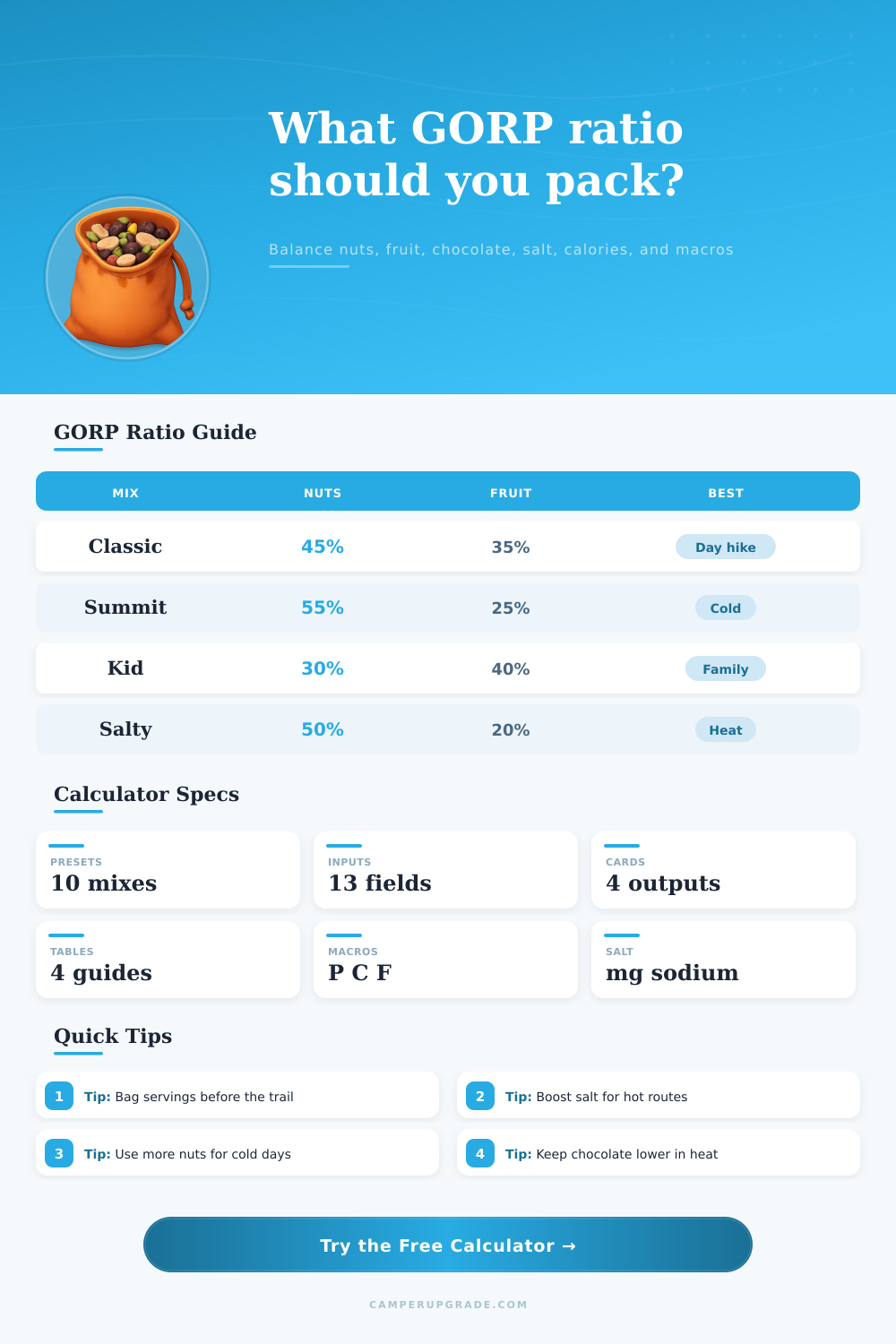
| Mix goal | Nuts | Fruit | Chocolate and extras |
|---|---|---|---|
| Classic day hike | 40 to 50% | 25 to 35% | 15 to 25% |
| Cold summit | 50 to 60% | 20 to 30% | 15 to 25% |
| Hot weather | 45 to 55% | 25 to 35% | 10 to 20%, low melt |
| Family snack | 25 to 40% | 35 to 45% | 20 to 30% |
| Ingredient | Calories/100 g | Protein | Best use |
|---|---|---|---|
| Roasted peanuts | 585 | 24 g | Dense, salty base. |
| Almonds | 579 | 21 g | Firm crunch, high fat. |
| Raisins | 299 | 3 g | Quick carbs, low mess. |
| Semisweet chips | 479 | 5 g | Sweet boost, melts in heat. |
| Sunflower seeds | 584 | 21 g | Small dense crunch. |
| Serving size | Weight | Typical calories | Trail use |
|---|---|---|---|
| Small nibble | 1.0 oz / 28 g | 120 to 160 | Short stops. |
| Standard snack | 1.5 oz / 43 g | 180 to 240 | Hourly hiking. |
| Big climb | 2.0 oz / 57 g | 240 to 320 | Long uphill push. |
| Meal bridge | 3.0 oz / 85 g | 360 to 480 | Late lunch backup. |
| Added salt | Sodium/100 g | Sodium/2 oz | Route cue |
|---|---|---|---|
| 0.2 g | 79 mg | 45 mg | Mild weather. |
| 0.6 g | 236 mg | 134 mg | Balanced trail mix. |
| 1.0 g | 393 mg | 223 mg | Warm sweaty day. |
| 1.5 g | 590 mg | 335 mg | Hot desert push. |
💡GORP Packing Tips
Making trail mix require considering the ratio of ingredients to the energy needs of your body. Trail mix is made of many different kind of food items, each of which provide a different type of energy to your body. Nuts contains a high amount of fat and calories, and the fat in the nuts will provide long-lasting energy to your body.
Dried fruit contain carbohydrates, which will provide quick energy to your body. Chocolate contain extra energy to your body, but it may melt if the temperature of the trail mix is high. Lastly, the other ingredient in trail mix, such as seeds and salt, provide extra nutrients to your body, with the salt helping to replace the sodium that you lose in your sweat.
How to Make Trail Mix
You must consider the ratio of ingredients for trail mix because the ratio will impact the energy that you experience while on the trail. If there are too many nut, they may become too heavily for you to consume while on the trail. If there is too much dried fruit, the energy from the fruit may wear off too quick.
If there is too much chocolate, the chocolate may melt in your trail mix. If there is too little salt, you may develop cramps due to a lack of sodium replacement in your body. Therefore, you must consider the weather and the difficulty of the trail when you are making trail mix.
For instance, if the weather is cold, you can include more fat from nuts in your trail mix. If the weather is warm, you can include more carbohydrates from dried fruit. Once you have decided on the ingredients that will be present in your trail mix, you must calculate the total amount of trail mix that you need to pack.
To determine the total amount of trail mix that you need, you must determine the number of ounces of trail mix that is needed for one serving, as well as the number of servings of trail mix that are needed for the entire trip. The total amount of trail mix that you need to calculate is based off the length of your trip and the number of individual that will be going on the trail trip. Lastly, you should also include a buffer amount of trail mix to account for spills or for situations where the trail trip may last longer then you originally planned.
Many people often make mistake when they are planning trail mix. Many people dont consider the nutritional purpose of the ingredients when they are making trail mix. For instance, many people include too much chocolate because they know that chocolate taste good when eaten, but it does not provide the fuel needed for your body.
Other people include too many nuts in trail mix when the weather are warm because they do not consider that they may become thirsty due to the need to drink water to digest the nuts. Therefore, people can avoid these mistake by using reference tables to ensure that the percentages of ingredients in their trail mix are appropriate for their needs. The reference tables will show how many percentage of each ingredient are needed in the trail mix based upon the goals of the maker of the trail mix, as well as the temperature that will be experienced while on the trail.
The nutritional data for trail mix will provide you with important information for planning your day. The calorie content will tell you if the trail mix will provide you with enough energy to last for the day, or if you will need to consume more trail mix throughout the day. The amount of macronutrient will tell you if the trail mix contains enough protein and carbohydrates to sustain your energy for the day.
Lastly, the sodium content will tell you if the trail mix will help to replace the sodium that you lose in your sweat, which will help you to avoid feeling nauseated or developing cramps in your muscle. Therefore, by using these number to prepare your trail mix, you can ensure that your trail mix will meet your physical requirement for the day.