Gear Ratio Climbing Calculator
Estimate gear inches, development, cadence-based climbing speed, target cadence, and crank torque demand from chainring teeth, cassette cog, wheel size, tire width, grade, rider weight, crank length, and target speed.
Gear ratio climbing estimate
| Preset | Gear combo | Wheel and tire | Best use |
|---|---|---|---|
| Loaded bikepacking | 30 x 42 | 29 x 50 mm | Moderate loaded dirt climbs |
| Gravel compact | 34 x 34 | 700 x 40 mm | All-road climbing with light bags |
| Road endurance | 34 x 32 | 700 x 28 mm | Paved mountain roads |
| MTB trail | 32 x 50 | 29 x 61 mm | Steep singletrack and rough pitches |
| Cargo touring | 38 x 46 | 27.5 x 56 mm | Heavy loads and utility bikes |
| Sub-compact gravel | 30 x 36 | 700 x 45 mm | Steep gravel with lighter cargo |
| Rando triple low | 26 x 34 | 650b x 42 mm | Classic low touring gear |
| Mullet adventure | 38 x 52 | 29 x 55 mm | Wide-range drop bar adventure |
| City hill gear | 42 x 36 | 700 x 38 mm | Urban climbs without big luggage |
| Gear inches | Climbing feel | Typical setup | Planning note |
|---|---|---|---|
| Under 18 in | Very low | MTB or expedition gearing | Useful for heavy loads, rough grades, and very slow cadence control |
| 18-22 in | Low | Bikepacking or cargo touring | Good target for steep dirt climbs with loaded bags |
| 23-28 in | Moderate low | Gravel compact or touring double | Works for fit riders on moderate paved or firm gravel climbs |
| 29-34 in | Road low | Compact road drivetrain | Common on endurance road bikes, but hard with cargo on grades above 10% |
| 35 in and up | Tall for climbing | Standard road or city gearing | Better for rolling terrain than sustained loaded climbing |
| Wheel size | BSD | Example tire | Approx outside diameter |
|---|---|---|---|
| 700c road | 622 mm | 28 mm | 26.7 in / 678 mm |
| 700c gravel | 622 mm | 45 mm | 28.0 in / 712 mm |
| 29er MTB | 622 mm | 61 mm | 29.3 in / 744 mm |
| 650b gravel | 584 mm | 47 mm | 26.7 in / 678 mm |
| 27.5 MTB | 584 mm | 56 mm | 27.4 in / 696 mm |
| 26 in MTB | 559 mm | 50 mm | 25.9 in / 659 mm |
| Grade band | What dominates | Torque cue | Gearing response |
|---|---|---|---|
| 3-5% | Aero and rolling still matter | Usually cadence-limited | Pick a gear that keeps normal spin |
| 6-8% | Gravity becomes primary | Moderate seated torque | Low road or gravel gear helps |
| 9-12% | Gravity dominates | High torque for heavy riders | Loaded bikes benefit from 18-25 gear inches |
| 13-18% | Traction and balance matter | Very high torque spikes | Use MTB-range gearing and steady cadence |
| Over 18% | Starts and wheel grip matter | Peak torque can exceed sustainable range | Plan a bailout gear or walking pace |
| Development | 60 rpm | 75 rpm | 90 rpm |
|---|---|---|---|
| 1.4 m/rev | 3.1 mph | 3.9 mph | 4.7 mph |
| 1.8 m/rev | 4.0 mph | 5.0 mph | 6.0 mph |
| 2.2 m/rev | 4.9 mph | 6.2 mph | 7.4 mph |
| 2.6 m/rev | 5.8 mph | 7.3 mph | 8.7 mph |
| 3.0 m/rev | 6.7 mph | 8.4 mph | 10.1 mph |
When choosing climbing gear for a bicycle, the gear must be chosen based off the type of terrain and the strength of the riders leg. On a steep grade, a gear that allow for a steady pedaling rhythm is best for riders. A slow cadence for the pedals increases the torque that is placed into the crank of the bicycle.
Additionally, the high level of torque that the climb creates will determine whether or not the climb with the bicycle is difficult to ride. The calculator require the riders to enter several parameters of their bicycle for the calculator to determine the math for them. The parameters include the chainring size, the cassette cog size, the wheel size, the tire width, the total system weight of the bicycle and the rider, the crank length, the target speed, the target cadence, and the grade of the climb that is to be ridden.
How to Choose Bike Gears for Climbing
A bike and rider that is heavier than others will require more force to be pulled backwards on the terrain that is being ridden by the bicycle. A crank that is longer than others will require the rider to place more force into the pedals to produce the same amount of torque. A tire that is wider than others will change the diameter of the wheel, which will change the gear inches and the development of the bicycles current setup.
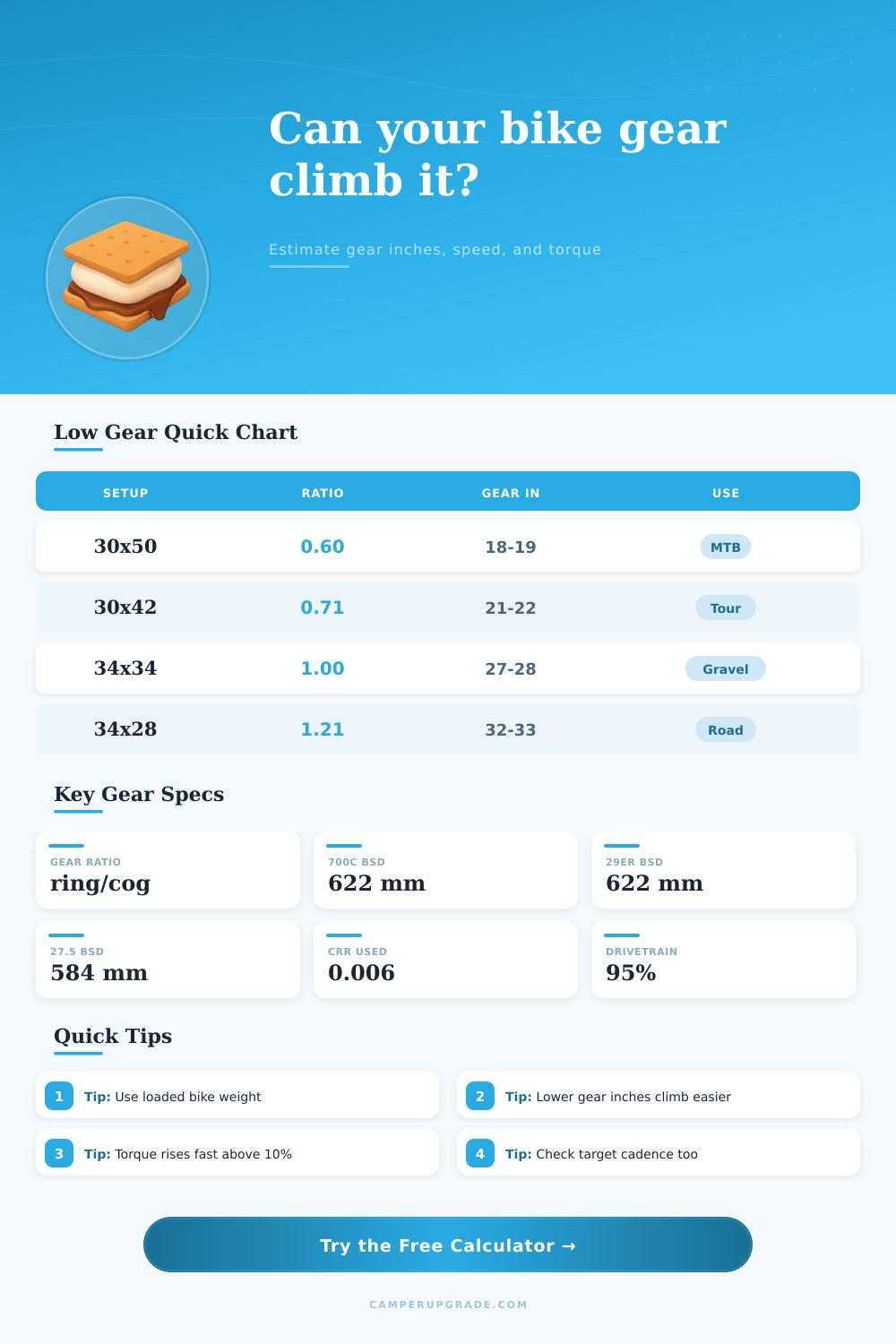
Gear inches allows for the comparison of different setups for the bicycles with different wheel sizes. The calculator calculates the gear inches by multiplying the diameter of the wheel by the gear ratio. A lower number of gear inches will require less force to be used to move the bicycle upwards on the terrain.
Development is another metric for measuring the distance that the bicycle travels in relation to the number of revolutions of the crank. This is used by roadies and those who ride long distances on there bicycles. Both gear inches and development is provided to the riders to allow for comparisons of their bicycles specifications.
The torque demand for a bicycle can be calculated to show how much effort the rider must produce in order to maintain the speed of the bicycle. A gear may look good on paper, but the torque demand may be extremely high for the rider at the specified target speed on the chosen grade. The effect of gravity on the bicycle is shown in the value of the torque demand.
The effect of the rolling resistance of the bicycle is also adjustable in the calculator. The rolling resistance factor will impact the number that is calculated for the required torque for the bicycle. The torque demand will provide a measurement of the mechanical work for the bicycle before the rider becomes fatigue.
Cadence, gear inches, and torque demand is directly related. A very low gear can create a slow cadence if the target speed is set to be low. A slightly taller gear will allow the riders crank to create a more natural spin at the target cadence.
The calculator will show the cadence that is required to achieve the target speed with the gear that is chosen for the bicycle. Additionally, the calculator can show the difference between the required cadence of the pedals and the cadence that is currently entered by the rider. This will allow the rider to understand whether or not the cadence will feel natural when ridden.
Terrain features have many different impacts on the bike and rider system. For example, a short steep climb may indicate that a bailout gear is needed for that particular ride. The loaded weight of the bike will require more strength from the rider to propel the bike upwards on the grade.
The total system weight includes any additional load on the bicycle, such as bags or water containers. The total system weight has to be used to ensure that the rider does not under estimate the total weight of the bicycle that is to be ridden. Wheel and tire sizes can have many effects on the performance of the bicycle.
For example, a wider tire can allow for increased comfort in longer rides, but may increase the rolling resistance of the bicycle. Additionally, a wheel diameter that is smaller than the standard wheel size will reduce the development of the bicycle with the same gear ratio. Some riders may want to use 650b wheels with a wider tire to distribute there body weight more evenly over the tires.
The calculator allows modifications to be made to the size of the wheel and tire width of the bicycle. However, other decisions include frames and the type of terrain to be ridden. Riders of bicycles can make many mistakes with their chosen gear ratios and settings.
For example, some may choose the lowest gear on the bicycle to maximize their pedaling speeds on flat terrain. Other individuals who may choose the gear ratios and specs for road cycling may not have enough strength in their legs to overcome the high torque demands of the climbs; they may have to walk most of the way uphill on their bicycles. A good gear allows a rider to maintain a cadence that is comfortable for that individual with their strength of their legs.
The tables provide information that can be immediately compared to the raw calculations of the bicycle. The tables show the gear inches ranges that are experienced with the bike loaded or unloaded. The tables also show the relationship between the size of the wheel and the outside diameter of the wheel.
Additionally, the tables show the effect that the terrain grade has on the terrain. The raw calculations will be more useful when compared to the data in these tables. The goal for the bicycle and rider is to understand the relationship between the numbers and the effort that will be required to ride the bicycle up the specified terrain.
The calculator cannot replace the feel of the terrain while on the bicycle, but it will eliminate the guesswork in creating gear specifications. Through using the bicycle gear specification calculator and the information provided within the calculator, the rider will have a complete understanding of the terrain that lies before them on there ride.