Freeze Dried Dog Food Calculator
Estimate daily food energy, cups, grams, meal split, and rehydration water from body size and feeding profile inputs.
🐕Preset Feeding Profiles
⚙Dog And Food Inputs
📊Feeding Spec Grid
📘Freeze Dried Feeding Reference Tables
| Life Stage | Life Factor | Typical Range | Use Case |
|---|---|---|---|
| Senior | 1.35x | 1.2 to 1.5 | Lower activity, preserve lean mass |
| Adult | 1.60x | 1.4 to 1.8 | General maintenance planning |
| Puppy | 2.40x | 2.0 to 3.0 | Growth-focused energy demand |
| Pregnant/Lactating | 3.00x | 2.5 to 5.0 | High-output reproductive periods |
| Adjustment | Multiplier | Energy Effect | Planning Note |
|---|---|---|---|
| Low Activity | 0.90x | -10% | Short walks and low training load |
| Normal Activity | 1.00x | Baseline | Typical family-dog rhythm |
| Sport Profile | 1.30x | +30% | Agility, tracking, repeated sessions |
| Working Profile | 1.45x | +45% | Long duty or frequent field effort |
| Lose Fat Goal | 0.85x | -15% | Conservative deficit target |
| Gain Lean Goal | 1.12x | +12% | Controlled surplus for recovery |
| Dog Weight | Daily kcal | Cups at 460 kcal/cup | Grams at 110 g/cup |
|---|---|---|---|
| Calculate to generate a weight ladder from your current profile. | |||
| Dry Food | Standard Water | Extra Moisture | High Moisture |
|---|---|---|---|
| 0.5 cup | 3.8 fl oz / 112 ml | 4.6 fl oz / 135 ml | 5.1 fl oz / 152 ml |
| 1.0 cup | 7.5 fl oz / 222 ml | 9.0 fl oz / 266 ml | 10.1 fl oz / 300 ml |
| 1.5 cups | 11.3 fl oz / 333 ml | 13.5 fl oz / 399 ml | 15.2 fl oz / 450 ml |
| 2.5 cups | 18.8 fl oz / 555 ml | 22.6 fl oz / 666 ml | 25.3 fl oz / 750 ml |
Freeze-dried dog food contain a dense source of nutrition due to the fact that manufacturers make freeze-dried dog food by removing the moisture from raw or cooked dog food ingredients. Because freeze-dried dog food contains very little moisture, it contains more calories per cup than kibble food. Because of the high-calorie content of freeze-dried dog food, however, it is important to measure the amount of food that is provide to each dog precisely.
Providing too much freeze-dried food to a dog will result in that dog gaining excess weight. In order to determine how much freeze-dried dog food a dog should be provided, you must first calculate the resting energy requirements of the dog. A dog’s resting energy requirements is dependent upon its body weight and its life stage.
How Much Freeze-Dried Dog Food to Give Your Dog
Puppies will require more energy than adult dogs due to the growth of the puppies. However, senior dogs may require a more different amount of energy than adult dogs in order to maintain there muscle mass without gaining excess fat. Additionally, the activity level of the dog will play a role in determining how much freeze-dried food the dog should be provided.
An active dog will require more freeze-dried food than a sedentary dog. In addition to calculating the energy needs of the dog, you should subtract the calories provided by any treats provided to the dog from the total amount of calories that the dog should consume. The amount of calories contained in the freeze-dried food will vary according to the ingredients contained in the food.
For instance, some recipes for freeze-dried food contain less fat than other recipes for freeze-dried food. Freeze-dried food that contains more fat will contain more calories per cup of food than recipes that contain fewer fat. You should check the calorie count for the food on the packaging of the freeze-dried dog food in order to calculate the portion of the food that should be provided to the dog each day.
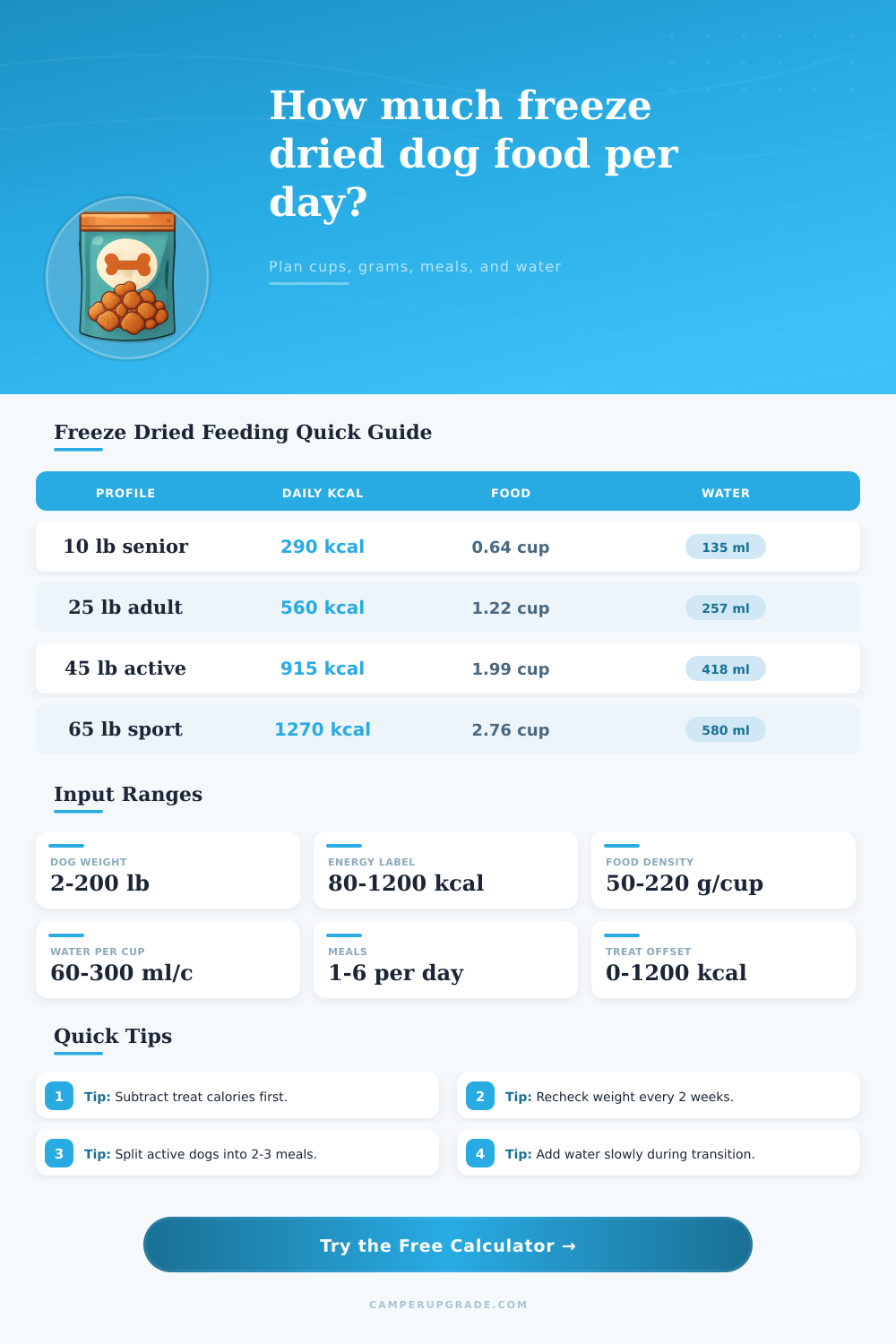
In order to rehydrate the freeze-dried food for the dog, you must add water to the food. The ratio of water to freeze-dried food should be maintained in order to ensure that the dog can easily digest the food. Seven fluid ounces of water should be provided for every one cup of freeze-dried food.
Providing more water will make the food more liquid, while providing less water will make the food more crumbly. The amount of water that is provide must be sufficient to rehydrate the food but should not be provided in such amount as to dilute the nutrients contained in the food. To introduce a dog to freeze-dried dog food, the dog should be introduced to the food slowly over a period of seven to ten days.
You should mix the freeze-dried dog food with the dogs old food during this period in order to prevent any upset stomach in the dog. The quality of the dogs stool can provide information regarding whether the freeze-dried dog food is appropriate for that dog. If the dogs stool is loose, it may be necessary to reduce the amount of freeze-dried food or the amount of water that is provided to the food.
However, if the dogs stool is firm, it is likely that the amount of freeze-dried food provided to the dog is appropriate. Additionally, you should weigh the dogs weight every two week in order to ensure that the amount of freeze-dried food that is being provided to the dog is appropriate. Some mistake that should of been avoided when feeding freeze-dried dog food to a dog are blindly following the guidelines for freeze-dried food that are provided on the bag of food.
The guidelines for freeze-dried food on the bag of food do not account for the calories that are provided by treats that may be provided to the dog, for instance. Additionally, it is important to not overhydrate the food to the point where the flavor of the food is lost, and to not underhydrate the food if the dog lives in a hot climate. It is also important to monitor the body condition of the dog.
For instance, you should feel the ribs to ensure they are easily felt through a thin layer of fat on the dog, and the dog should have a visible waistline when view from its side. The amount of freeze-dried dog food that should be provided to the dog may need to be adjusted according to the changes in the season that occur each year. Finally, precise measurement of freeze-dried dog food should be used to continue to ensure the health of the dog and to ensure that the dog maintain its weight.