Firewood Split Calculator
Estimate split counts, output volume, and drying surface from rounds, chunks, or stack prep.
Full breakdown
| Species | Density | Split factor | Dry note |
|---|
| Purpose | Target width | Typical use | Split pace |
|---|
| Round size | Volume per log | 4 in splits | 8 in splits |
|---|
| Stack type | Ft3 | m3 | Use case |
|---|
Tip: Keep your target width matched to the stove, not the species.
Tip: Knotty rounds often need a split width one step larger.
To prepare firewood for a stove or a boiler, the size of the wood splits must being planned. The size of the wood splits will ultimataly have an impact on the amount of wood that will be produced from the logs, as well as the quality of the burning of that wood. Planning for the size of the splits that will be made from the logs is a necessary step in the firewood preparation processes.
The type of wood that is utilized, the amount of moisture that is contained within the logs, and the grain of the logs will impact the number of splits that may be made from each logs. Therefore, if an individual dont plan the size of the splits from the logs, they may not have enough firewood to last through the winter month, or their stove may not be able to fit the logs that are split from the logs. One of the factors that will have an impact on the number of splits that can be made is the diameter of the logs.
How to Plan the Size of Firewood Splits
The wider and thicker the logs are, the more work that will be required to split those logs. However, the thicker the logs are, the more wood that may be produced from those logs. The downside to splitting thick logs is that the amount of wood that is produced may be less if the logs have numerous knots within the logs, or if the logs have a grain that is twisting.
The moisture content within the logs will also have an impact on the splitting process. Green wood logs are softer and will split more easy than dry logs. However, the dry logs will continue to dry, which will shrink the logs.
Thus, the individual must account for the shrinkage of the logs with the dryness within the logs when estimating the number of splits that can be create. The species of the wood will have an impact on the splitting process of the logs. Different species of wood has different densities.
For instance, oak is a dense type of wood that will hold heat well, but will dry slow. Thus, the individual will need to cut the logs of oak into smaller splits to increase the surface area of the oak logs. Soft woods, such as pine, will split more easily than hardwoods.
However, pine logs may contain resin that will adhere to the cutting tool. Additionally, each of the different species of wood has a split factor associated with the species that indicates the factor that the wood will behave when splitting. For instance, hickory logs contain stringy fibers that make the splits of hickory logs difficult to split.
Black locust logs are also a very dense wood that will require a lot of effort to split. Another factor to consider is the width of the splits of the logs. The width of the splits will depend upon the purpose for which the firewood will be used.
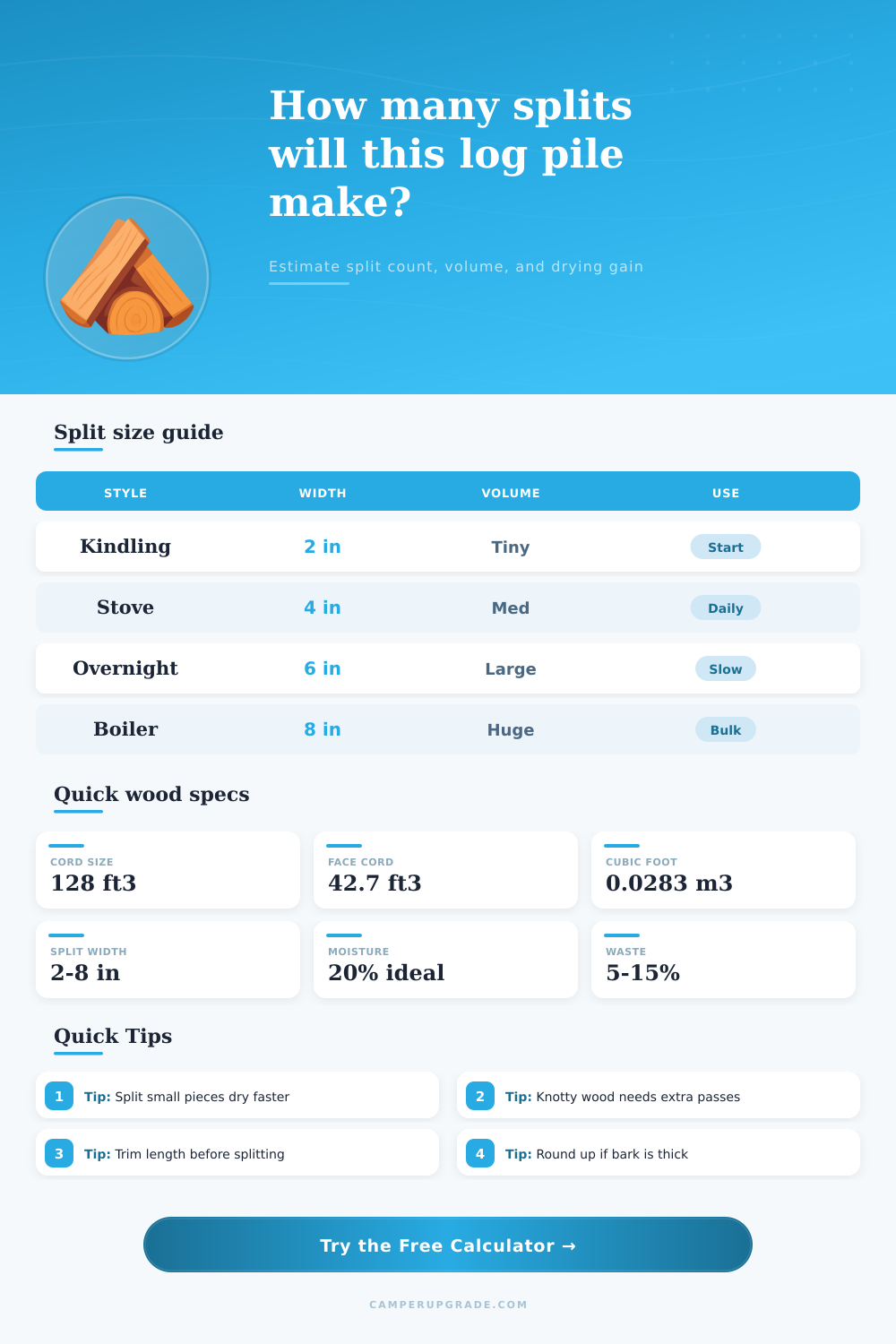
For instance, kindling will have splits that are relatively narrow in size, such as 2 inches in width. Wood that is to be used in a stove every day may have splits that are approximately 4 inches in width. Wood splits that are 6 inches in width will burn for longer periods of time and may be used overnight to heat the home.
Boilers that are relatively large may require splits of 8 inches in width to allow for the splits to be easily moved through the hopper of the boiler. Another factor that will influence the width of the splits is the size of the stove in which the firewood is to be burned. If the splits are too large for the stove, the stove will not be able to efficient burn the wood.
In addition to the factor of the width of the splits, another factor to consider is the volume that is produced from the logs that are split. A full cord of wood contains 128 cubic feet of wood splits. The unit of measure is produced by stacking the logs to be 4 feet in width, 4 feet in height, and 8 feet in length.
However, the logs will not always stack into the firewood split in perfect fashion. Additionally, some of the volume can be lost in the conversion of rounds of logs into splits. The more splits that are made of logs, the greater the surface area of the logs.
Increased surface area allows the logs to dry. Thus, the more splits that are made, the faster that the logs will season. However, the individual will have to work more to split logs into the increased split.
The grain of the logs may have an impact on the number of splits of logs that are made. If the wood logs have straight grain, they may split more easily. However, if the logs have knots within the logs, they may be more difficult to split into splits.
Additionally, some logs may have regions referred to as crotch wood. These splits of logs are from areas where the branch of the log meets the trunk of the log. These areas of logs may be difficult to split due to the grain.
The more difficult the grain of the logs is to split, the more passes that will be required to split each log. Thus, there will be less wood to be harvested from the logs with difficult grains. To avoid mistakes in the splitting of logs, there are steps that the individual that is splitting the logs can take.
One mistake is to split the logs to a width that does not fit the firebox within the stove. Such a mistake may require the individual to continually reload the stove with firewood. Another mistake is to not consider the grain of the logs prior to splitting.
If the logs are difficult to split with their grain, the splitting tools may get stuck within the logs. The individual will lose some of the logs to trimming the logs to the desired split widths. Thus, the trim logs will reduce the amount of logs that are available for burning.
Finally, the individual must remember that the logs require time to dry. The logs must have enough surface area for them to dry to the ideal level of 20% moisture.