Firewood Seasoning Time Calculator
Estimate when split wood reaches burn-ready moisture by species, split size, climate, and stack setup.
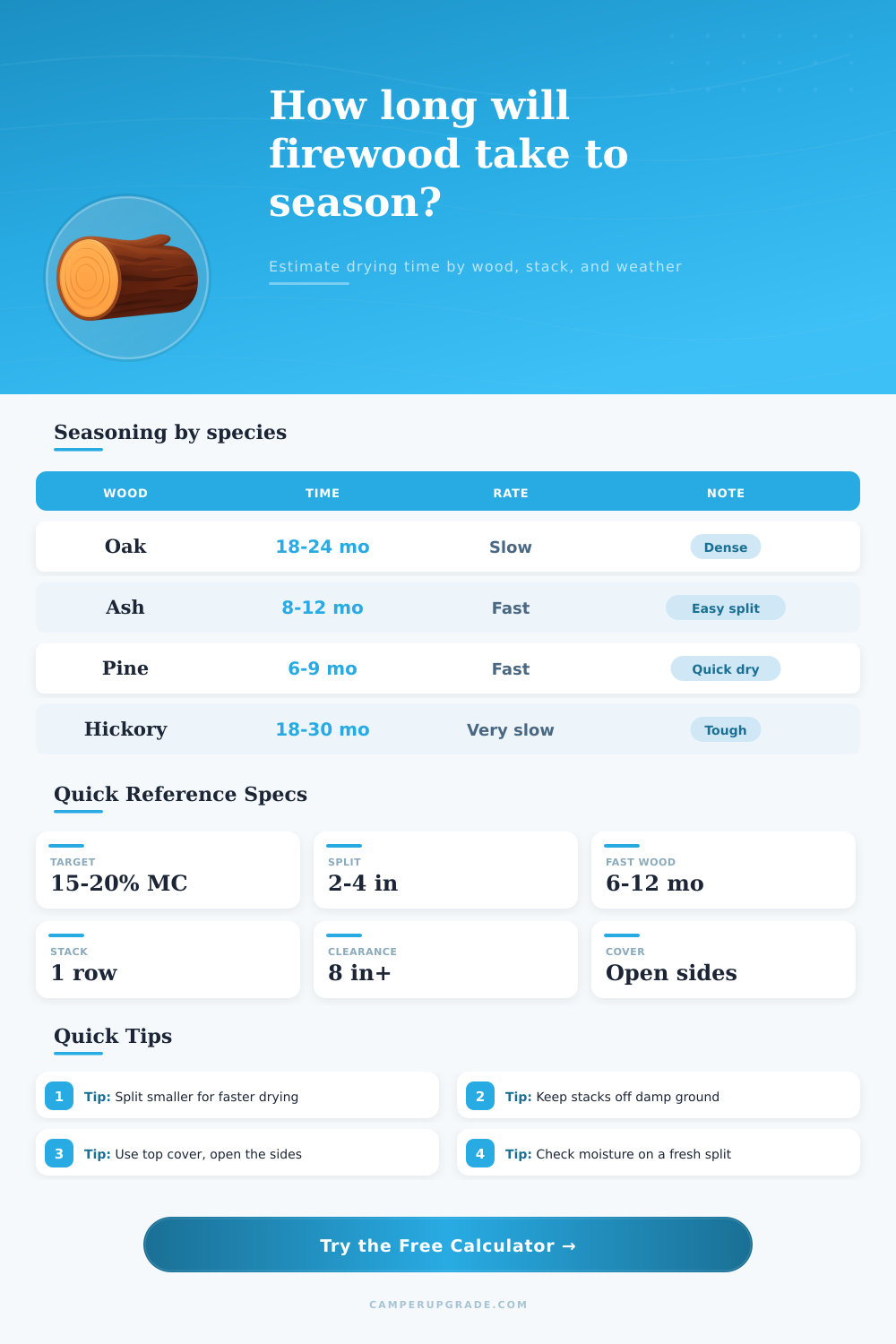
| Species | Drop rate | Typical time | Drying note |
|---|---|---|---|
| Oak | 2.0 pp/mo | 18-24 mo | Slow, dense |
| Ash | 3.1 pp/mo | 8-12 mo | Fast drying |
| Hickory | 1.7 pp/mo | 18-30 mo | Very dense |
| Maple | 2.6 pp/mo | 10-16 mo | Steady dry |
| Cherry | 2.3 pp/mo | 12-18 mo | Moderate pace |
| Birch | 3.0 pp/mo | 8-12 mo | Quick split dry |
| Pine | 3.7 pp/mo | 6-9 mo | Softwood fast |
| Locust | 1.6 pp/mo | 20-30 mo | Very slow dry |
| Split size | Factor | Speed | Best use |
|---|---|---|---|
| 1 in | 1.18 | Very fast | Kindling |
| 2 in | 1.00 | Fast | Everyday |
| 3 in | 0.84 | Medium | Mixed stacks |
| 4 in | 0.70 | Slow | Long burns |
| Climate | RH feel | Factor | Drying note |
|---|---|---|---|
| Arid | Low | 1.18 | Very fast |
| Dry inland | Medium low | 1.08 | Fast |
| Temperate | Average | 1.00 | Baseline |
| Humid | High | 0.82 | Slower dry |
| Coastal | Very high | 0.72 | Slowest |
| Stack method | Airflow | Factor | Best note |
|---|---|---|---|
| Single row | Best | 1.12 | Fast drying |
| Raised row | Very good | 1.00 | Safe default |
| Crib stack | Good | 0.92 | Stable wall |
| Loose pile | Poor | 0.76 | Needs restack |
Freshly cut wood contain a high amount of moisture. Because freshly cut wood must be seasoned before use in a stove, wood with high moisture content waste fuel when burned. When wood with high moisture content is burned, the wood produce excessive smoke, and the fire uses the energy to evaporate the moisture in the wood.
Additionally, burning wet wood in a fire produces creosote in a chimney of the house in which the fire is occurring. Because creosote can lead to chimney fires, it is important to use seasoned wood in the fires in a stove. Seasoned wood contains a low amount of moisture and burns without producing excessive smoke.
How to Dry Firewood for Safe Burning
The moisture content of fresh wood can be between 50 and 60 percent. However, you must reduce the moisture content of wood to between 15 and 20 percent for best combustion efficiency. Seasoning involve the evaporation of the moisture content of the freshly cut wood.
The larger the pieces of wood that are to be seasoned, the longer it will take for the moisture to evaporate from the wood. If you split the wood into thinner pieces before seasoning, the thinner pieces of wood will dry faster then thick logs of wood. This is due to the fact that the moisture has less of a distance to travel to the surface of the wood when the pieces are thin.
Several environmental factors will influence the rate at which moisture leave the wood. The climate in which the wood is seasoned will affect how quickly the seasoned wood dries. In arid climates, wood dries quick.
However, wood seasons slowly in humid or coastal climates. If you season the wood in areas with direct sunlight, the temperature of the wood will increase. Higher temperatures increases the rate of evaporation of the moisture from the wood.
Finally, the wind will aid in the seasoning of the wood. The wind will remove the humid air that surrounds the wood, allowing the wood to be exposed to dry air. The species of the wood will also influence the drying rate of the seasoned wood.
Wood that is classified as softwoods, such as pine and cedar, will dry faster than other types of wood due to the lower density of these woods. Wood species that contain high levels of density, like oak and hickory, will hold onto the moisture in the wood for a longer period of time. Additionally, you cant rely upon the appearance of the wood to determine whether it is dry or not.
The surface of the wood may appear dry, yet the center of the wood could still be wet. To accurately determine whether the wood is dry, you should use a moisture meter to measure the moisture content of the wood. The way in which you stack your seasoned wood is important.
The way in which you stack your wood will impact the amount of airflow that your wood will receive. You want to ensure that air can move through your stacked wood piles; too tight of a stack will cause the wood to become too moist. Additionally, you should elevate your wood stack off the ground.
Using pallets to elevate the wood will keep the wood off of the ground, and will prevent moisture from the ground from negatively impacting your seasoned wood. Seasoning wood in contact with the ground will lead to the wood rotting due to the moisture in the ground. You can cover seasoned wood with a tarp to protect it from the rain; however, you should not cover the seasoned wood completely.
Instead, covering the top of the wood pile with a tarp will protect the seasoned wood from the rain while allowing air to still circulate around the wood. If the tarp covers the sides of the wood, the seasoned wood will become too moist because the tarp will trap moisture within the wood stack. When seasoning your firewood, aim for a moisture content below 20%.
If you are planning on burning hardwoods, aim for a moisture content of around 15%. If the moisture content is correct, seasoned wood will readily light and burn steady with little smoke. If the seasoned wood does not have the proper moisture content, the seasoned wood will hiss when it is lit, emit pops when burning, and produce a lot of ash.
By following the steps noted above regarding the stacking of seasoned wood, you will have more control over the moisture content of your seasoned firewood. You should of checked the moisture levels more frequentley.