Equine Water Needs By Weight Calculator
Estimate daily horse, pony, mule, donkey, and mini water needs from body weight, herd count, temperature, humidity, workload, sweat, forage moisture, salt, travel, pregnancy, lactation, and trough reserve.
🐴Equine Water Presets
Your Equine Water Plan
⚙Horse Weight, Weather, And Work Inputs
📊Water Planning Snapshot
📘Equine Water Reference Tables
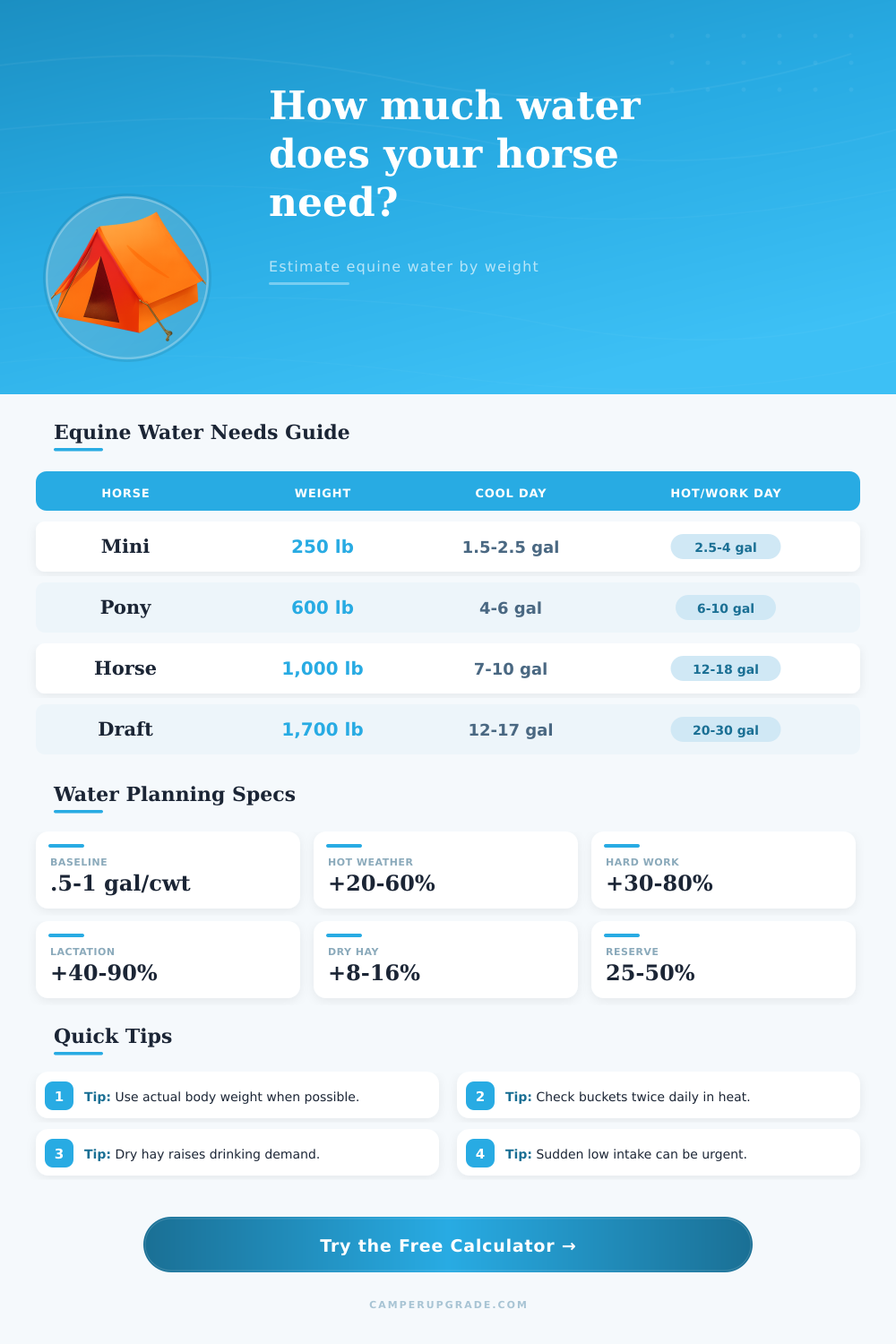
| Equine Size | Common Weight | Cool Maintenance Day | Hot Or Moderate Work Day | Planning Note |
|---|---|---|---|---|
| Miniature horse | 150 to 350 lb | 1 to 3 gal | 2 to 5 gal | Small buckets empty faster than expected in heat. |
| Pony | 500 to 800 lb | 3.5 to 7 gal | 6 to 12 gal | Watch ponies on dry lots and hay-only diets. |
| Average riding horse | 900 to 1,200 lb | 6 to 10 gal | 11 to 20 gal | A 1,000 lb horse often drinks about 5 to 10 gal at maintenance. |
| Draft horse | 1,500 to 2,200 lb | 11 to 18 gal | 20 to 35 gal | Large body mass and heavy work require larger trough reserves. |
| Mule or donkey | 400 to 1,100 lb | 2.5 to 8 gal | 5 to 14 gal | They may drink less in cool weather, but still need constant access. |
| Condition | Typical Water Effect | What To Watch | Calculator Input |
|---|---|---|---|
| Dry hay or pellets | Higher drinking demand | Manure moisture, impaction risk, slow intake | Main forage and grain fields |
| Hot humid turnout | Higher sweat and cooling demand | Respiration, attitude, refill speed | Temperature and humidity |
| Hard work or endurance | Large short-term increase | Recovery drinking, electrolytes, gut sounds | Workload and sweat level |
| Lactating mare | Milk production can sharply raise intake | Mare condition, foal nursing, clean water access | Life stage |
| Travel or show day | Timing can be irregular | Refusal of unfamiliar water, delayed drinking | Travel hours and reserve |
| Water Setup | Useful Capacity | Best Use | Field Note |
|---|---|---|---|
| 5 gal bucket | 4 to 5 gal usable | Stall checks, travel, short events | Many full-size horses need multiple bucket fills per day. |
| 20 gal tub | 16 to 20 gal usable | One horse day lot or small paddock | Works well when checked at least twice daily. |
| 50 to 100 gal trough | 40 to 90 gal usable | Small herd turnout | Size for the refill interval plus weather reserve. |
| Automatic waterer | Flow based | Daily management with less carrying | Still track consumption and inspect function every day. |
| Hauling tank | Tank rating minus slosh reserve | Camping, trailheads, remote barns | Plan extra for rinsing, soaking feed, and delays. |
💡Water Intake Notes
Dehydration in horses isn’t rocket science, yet forethought and simple math can go further to prevent problems than guesswork applied after the fact. The majority of us use the “I ran out yesterday” rule, which only works if workload or weather remains constant. A hydration calculator help manage multiple variables and gives you time to make sure water stays available and fresh.
Metabolic rate is proportional to body weight, so it makes sense to start there. A 500-pound pony drink differently than a 1,000-pound horse. That difference in weight becomes important whether you ride trails all summer or keep your horses in a barn during cold winters. The tool instantly accounts for that baseline and adds other environmental factors on top of it.
How to Keep Horses Hydrated
To begin: heat and humidity combine to rob horses of fluid via both breathing and sweat. Humidity hinders evaporation, which leads to increased panting and dehydration (even at rest). Once the day starts reaching the eighties with a stickiness to the air, you’ll notice the daily estimate spike. That doesn’t mean something went wrong; it means biology is working hard to avoid overheating an internal engine.
Weather isn’t the only thing that affects the math; food also plays a role. If the diet consist of lush pasture, it reduces the demand for drinking water since the grass provides some moisture. However, if you’re feeding cubes, pellets or dry hay, the horse will have to consume a lot of water to break down fiber and avoid impaction. Because many owners observe a horse grazing contently on green grass and think all is well with his water intake they fail to consider this factor. When they transition to dry hay come winter, water access stays the same and boom! Intake plummets because the horse simply cannot drink sufficient amounts of water to compensate for lack of moisture in diet. To compensate for this change, you’ll want to consciously increase your reserve inputs whenever feeding dryer rations.
Life stages and workload is other multipliers in the equation. Pregnant and lactating mares bear tremendous energy loads and can double their water requirements at their peak milk production periods. The hard work pulls electrolytes out of storage and demands they be replaced. This replacement might be delayed after exercise, while the gut continues to divert blood away from digestion. It’s smarter to plan for a buffer rather than wait for horse to drink back up.
While the page has reference tables showing typical ranges, real life is hardly ever average. A young gelding in the cool pastures are different than a senior on dry hay on a hot trail ride. A horse may refuse to drink due to an unfamiliar water source or stress from travel. Your horse is a creature of habit and will balk if he’s accustomed to drinking out of a bucket made of a certain material or with a certain taste (minerals). When we haul we have no control over what kind of water source they’ll encounter on the other end, so having a margin for error is never optional.
Properly sizing troughs or buckets ensures you’re not scrambling to fill up an empty container in the middle of nowhere. For example, a draft horse in July needs more than a twenty gallon tub, but that may be plenty for a pony in cooler temperatures.
The last thing is observation; no calculator can take its place. Pay attention to how their manure looks, do they lose weight quickly, are their eyes sunk? All these things indicate dehydration long before any behavioral changes. A sudden decrease in intake should of been considered an emergency situation, not just a bad day. Decreased drinking is often the first sign of colic or dental pain.
Plan for the worst case and then build your setup out from there with these numbers. Then take a step back and observe what happens next. If they’re looking well hydrated and easily finishing off their water, then you’ve got it dialed in. It’s all about managing without being noticed, keeping them safe while avoiding the need to step in during a crisis.