Emergency Shelter Size Calculator
Estimate covered tarp area, usable sleeping space, and weather buffer for field shelters, evacuation staging, and backcountry emergencies.
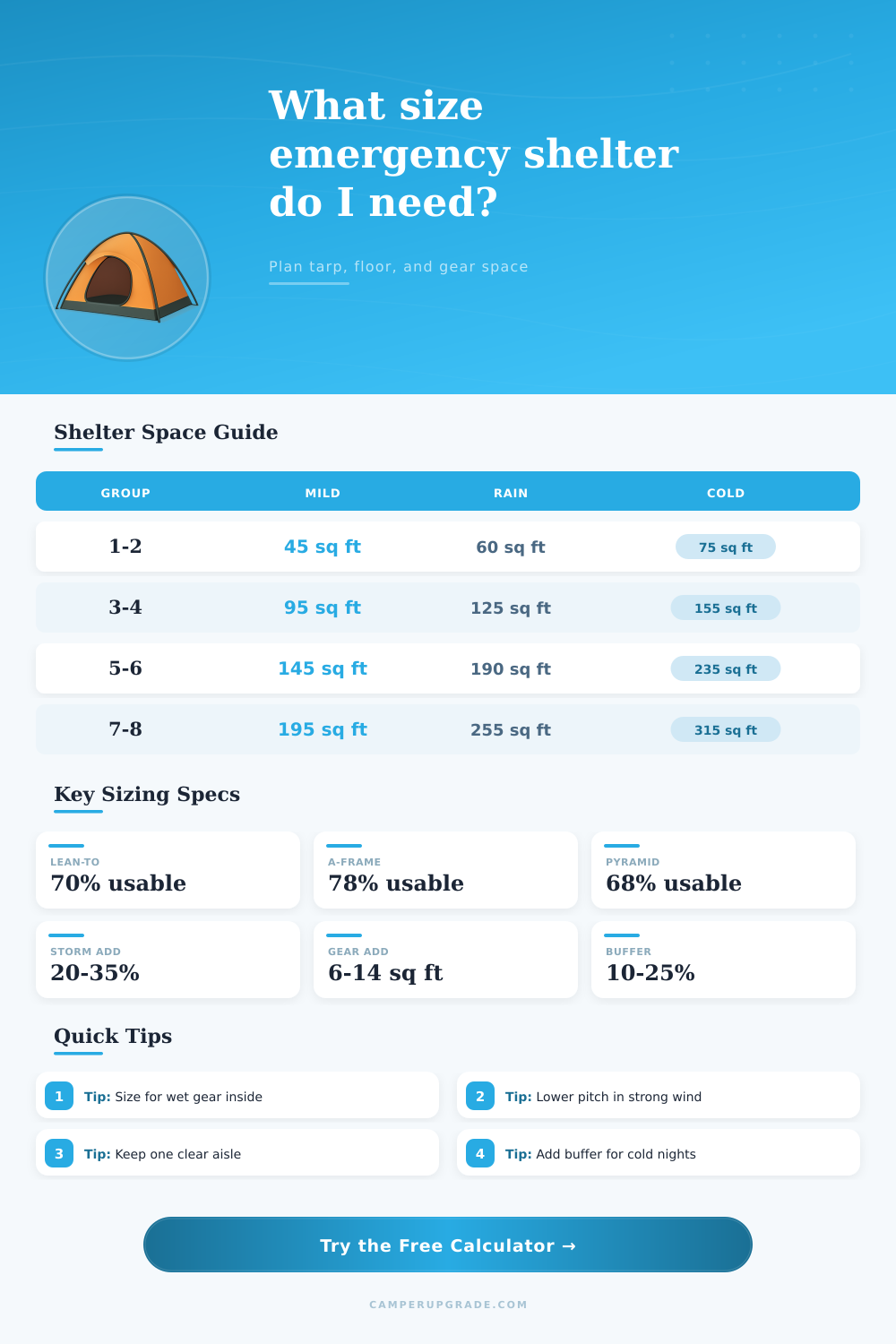
| Occupants | Mild hold | Rain overnight | Cold / wet gear | Medical access |
|---|---|---|---|---|
| 1 adult | 32 sq ft | 45 sq ft | 55 sq ft | 70 sq ft |
| 2 adults | 55 sq ft | 75 sq ft | 95 sq ft | 120 sq ft |
| 4 adults | 105 sq ft | 145 sq ft | 180 sq ft | 225 sq ft |
| 6 adults | 155 sq ft | 215 sq ft | 265 sq ft | 330 sq ft |
| 8 adults | 205 sq ft | 285 sq ft | 350 sq ft | 440 sq ft |
| Tarp size | Fabric area | Flat canopy usable | A-frame usable | Lean-to usable |
|---|---|---|---|---|
| 8 x 10 ft | 80 sq ft | 68 sq ft | 62 sq ft | 56 sq ft |
| 10 x 12 ft | 120 sq ft | 102 sq ft | 94 sq ft | 84 sq ft |
| 12 x 16 ft | 192 sq ft | 163 sq ft | 150 sq ft | 134 sq ft |
| 16 x 20 ft | 320 sq ft | 272 sq ft | 250 sq ft | 224 sq ft |
| 20 x 30 ft | 600 sq ft | 510 sq ft | 468 sq ft | 420 sq ft |
| Weather condition | Area multiplier | Edge allowance | Pitch note | Best use |
|---|---|---|---|---|
| Mild shade | 1.00x | 6-12 in | High airflow | Short rest stop |
| Steady rain | 1.18x | 18-24 in | Drip line outside gear | Overnight camp |
| Wind-driven rain | 1.28x | 24-30 in | Low windward edge | Open terrain |
| Cold exposure | 1.32x | 18-30 in | Room for insulation | Hypothermia prevention |
| Snow load | 1.42x | 24-36 in | Steeper roof angle | Winter emergency |
| Gear footprint | Light kit | Rain kit | Winter kit | Rescue cache |
|---|---|---|---|---|
| Per adult | 4-6 sq ft | 8-10 sq ft | 10-14 sq ft | 12-18 sq ft |
| Per child | 3-4 sq ft | 5-7 sq ft | 7-9 sq ft | 8-12 sq ft |
| Group supplies | 8-12 sq ft | 15-24 sq ft | 24-36 sq ft | 40-70 sq ft |
| Stove-safe zone | Outside only | 10 sq ft clear | 15 sq ft clear | Separate bay |
The tarp size calculator will help you determines the amount of floor space that a tarp will protect from the weather. You can use the tarp size calculator because the tarp size calculator collect several different pieces of information about the shelter that you would like to construct with your tarp. The information that you will need to provide includes the number of individual that will be using the shelter, the weather that will be occurring in the shelter, the pitch that you will use for the tarp, and the amount of gear that will need to remain dry in the shelter.
Each of these factors have the ability to change the amount of floor space that the tarp will provide. The number of individuals that will use the shelter will have a primary effect upon the required size of the shelter. Each individual will require some amount of floor space within the shelter.
How to use the tarp size calculator
The weather that will occur within the shelter will also have a primary effect upon the size of the shelter. Different weather conditions may require different amounts of tarp coverage of the area within which individuals will lie down and sleep. The pitch that you select for the tarp will impact the amount of floor area that the tarp can provide and the efficiency of the tarp.
Finally, the amount of gear that will need to be kept dry will also impact the size of the shelter; the more gear that must remain dry, the more space that will be required within the shelter for those item. The tarp size calculator will calculate the amount of floor space that is required based off the number of individuals that will use the shelter. The tarp size calculator will calculate the amount of space that will be required for sleeping pads for the individuals, gear zones for the gear of the individuals, shared supplies for the gear that belongs to the group, and an aisle for the movement of the individuals within the shelter.
After calculating each of these area, the tarp size calculator will apply weather multipliers to the area to account for the effect of weather upon the shelter. Finally, the tarp size calculator will account for the cold temperatures that will be present within the shelter. The pitch that you will use for the tarp will impact the efficiency of the tarp and the amount of usable area that the tarp will provide.
If lean-to pitches are used, the tarp will provide less usable area than if an A-frame, flat canopy, or pyramid pitches is used. A lean-to pitch will provide less usable floor area for the same amount of tarp fabric than an A-frame pitch, because a lean-to tarp will allow for water to enter the shelter. An A-frame tarp will allow more of the tarp to remain above the individuals than a lean-to tarp.
A flat canopy tarp will provide a high amount of usable area relative to the amount of tarp fabric that is used to form the shelter, but will not provide protection from the wind or water as well as the other types of pitches. Pyramid pitches will use less tarp fabric to reach the same height as the other pitches, but will provide dead space in the area of the pyramid. The tarp size calculator will provide each of the different types of pitches as an efficiency percentage to the tarp size calculator so that you are aware of the amount of additional tarp fabric that you will require to create the shelter of the desired size.
The gear that will be used within the shelter can impact the size of the shelter. For instance, if the gear that will be used within the shelter is wet, then more area will be required within the shelter. Another example would be if any of the gear is winter gear or a stove that will be used within the shelter.
This gear will take up area within the shelter. In the tarp size calculator, there is a field in which you can enter the amount of gear that the individuals that will use the shelter will share. The tarp size calculator will calculate for each of the individuals the amount of space that will be required for the sleeping pads, gear zones, and shared supplies area.
The tarp size calculator will also provide a gear allowance for the gear that will be used within the shelter. The exposure of the shelter to the wind will have some effect upon the size of the shelter that is constructed with the tarp. For instance, if the shelter will be exposed to the wind, then the pitch of the tarp and the number of anchor points to which the tarp is secure will change.
Additionally, the effect of the wind upon the shelter will reduce the amount of usable area of the shelter. The location of the shelter over time will also impact the amount of space that is required for the individuals that will use the shelter. If you will construct the shelter for only a short period of time, fewer individuals will be required to stay in the shelter for longer periods of time.
For instance, if the shelter will be used for an overnight stay, more space will be required within the shelter for the sleeping individuals. The tarp size calculator will help to ensure that you do not design your shelter as one that only provides space for sleeping bodies. Space will be required within the shelter for an aisle for the individuals to move within the shelter.
An aisle will be required within the shelter both to allow for the individuals to exit the shelter during the night, or to move to reach the gear that belongs to each of the individuals. Additionally, the aisle may be required to allow the medical teams to move a stretcher into the shelter. The tarp size calculator will provide a measurement for the size of the shelter that will result from the information that you enter into the calculator.
The reference tables will provide additional information for you about the different sizes of tarps and how much usable area each size will provide. These tables can help you to both cross-check the calculation of the tarp size calculator, or to construct a shelter without utilizing the tarp size calculator, if you are aware of the dimensions of the tarp. Thus, the reference tables will help to ensure that you have a sufficient amount of dry space within your shelter when the weather changes.
You should of used the calculator to be sure. Its important to get it right. The tarp size calculator is actualy very usefull.