Electrolyte Mix Calculator
Estimate sodium need, bottle strength, fluid volume, and carb grams from your sweat rate, trip duration, temperature, and chosen mix.
Mix results
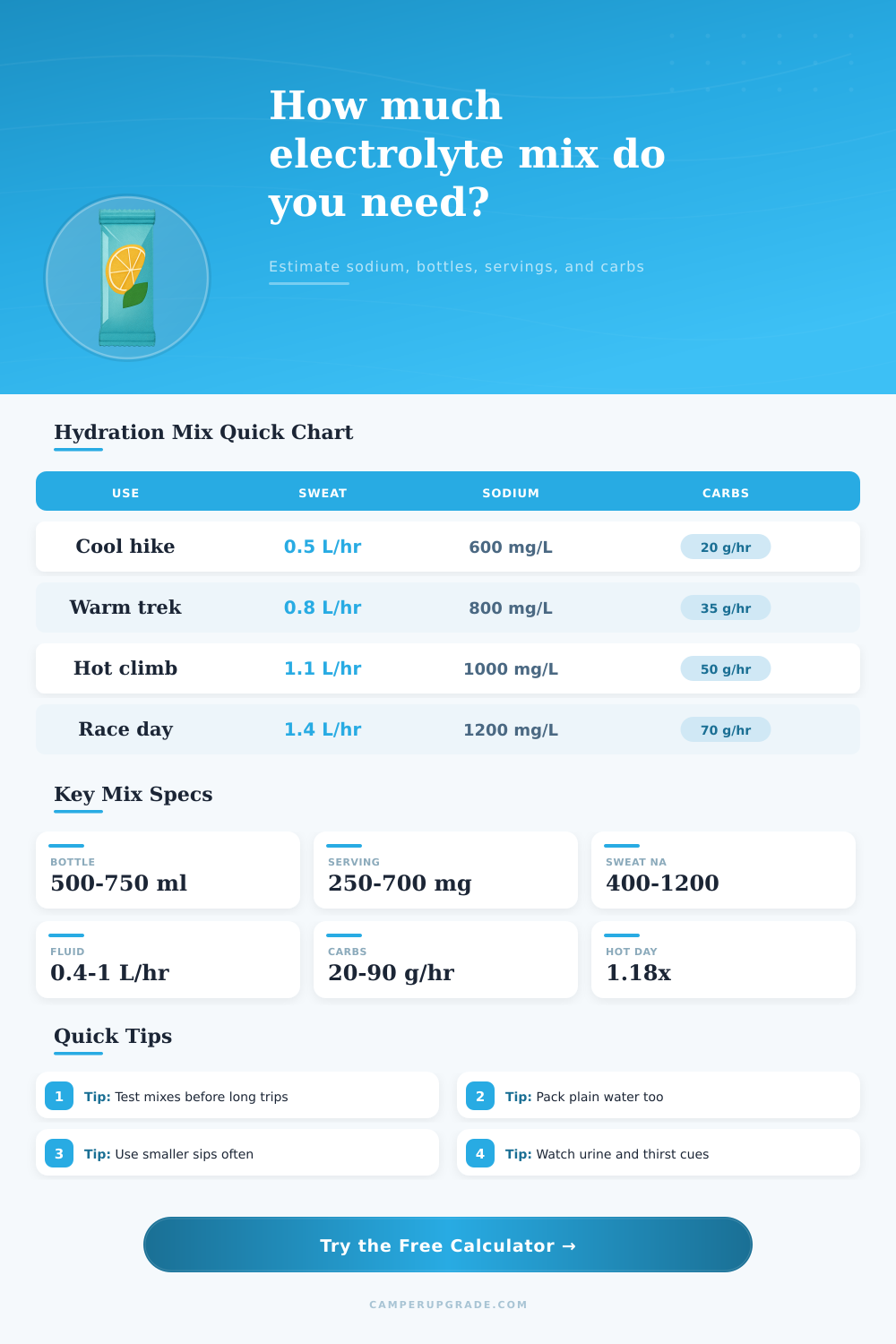
| Sodium band | Common estimate | What it means | Planning note |
|---|---|---|---|
| Low | 300 to 500 mg/L | Less salt lost per liter | A light mix may be enough |
| Moderate | 600 to 900 mg/L | Common outdoor planning range | Use label sodium carefully |
| High | 1000 to 1400 mg/L | Visible salty clothes or lab result | Stronger bottle mix often needed |
| Very high | 1500+ mg/L | Specialized plan territory | Test and consider professional input |
| Condition | Factor | Use case | Watch point |
|---|---|---|---|
| Cool shade | 0.90x | Cool forest or shoulder season | Do not overmix if sweat is low |
| Mild mixed | 1.00x | Baseline backpacking or paddling | Use measured sweat rate if known |
| Warm sun | 1.08x | Open trail with steady heat | Plan slightly more bottles |
| Hot exposed | 1.18x | Desert, rock, road, or beach | Carry extra water margin |
| Very hot or humid | 1.30x | Heavy heat stress or poor cooling | Shorten effort and monitor symptoms |
| Drink strength | Sodium per liter | Typical bottle feel | When useful |
|---|---|---|---|
| Light | 300 to 500 mg/L | Barely salty | Cool hikes or low sodium sweaters |
| Moderate | 600 to 900 mg/L | Noticeable but drinkable | Warm days and steady sweat |
| Strong | 1000 to 1400 mg/L | Salty sports mix | Hot routes or high sodium loss |
| Very strong | 1500+ mg/L | Often hard to drink | Usually split with plain water |
| Effort length | Carb target | Mix strategy | Field note |
|---|---|---|---|
| Under 2 hours | 0 to 30 g/hr | Optional carbs | Snacks may cover it |
| 2 to 4 hours | 20 to 45 g/hr | Light drink carbs | Good for hikes and paddles |
| 4 to 8 hours | 40 to 70 g/hr | Drink plus food | Practice your gut tolerance |
| Long hard days | 60 to 90 g/hr | Multiple carb sources | Use training-tested ratios |
Electrolyte mix planning is another necessary part of the preparation for long activities on the trail. Electrolyte mix planning will help you to avoid the loss of both fluid and salt. If an individual lose too much fluid and salt, they can develop headaches or feel discomfort in they legs.
The electrolyte mix calculator will help you to determine the amount of electrolyte mix that you should use during your activity. To determine this amount, the calculator will use your data to remove guesswork from your plans. Data that you will need to enter into the calculator includes your sweat rate, the concentration of sodium in your sweat, the length of your activity, and the temperature that you will encounter during your activity.
How to Plan Your Electrolyte Drink for Long Hikes
Sweat rate is one of the main factors in creating your electrolyte mix plan. Your sweat rate will determine how much fluid you will lose during your activity. Individuals loses different amounts of fluid during the same period of time.
Factors that can influence your sweat rate include your body size and the activity that you perform. You should enter your sweat rate into the calculator in the amount of liter of fluid that you lose per hour of activity. Your electrolyte mix plan can be tailored to your body in order to account for your specific sweat rate.
Sodium concentration is another of the main factors that you must account for in your electrolyte mix plan. Sodium concentration in human sweat is not the same than individual to individual. Some people naturaly lose more salt than others do.
If you have a high concentration of sodium in your body, your electrolyte mix should be stronger to ensure that you are replacing the sodium that you are losing in your sweat. The electrolyte mix calculator will use this sodium concentration data to create a target for sodium content in your fluid intake. The duration and temperature of your activity will also play a role in your electrolyte mix plan.
The longer that you are performing your activity or the hotter that the temperature will be, the more fluid and salt that you will lose. Your electrolyte mix plan will account for this by creating a higher target for the amount of fluid that you should consume during your activity. Additionally, your body require fluid to balance the water loss that occurs with high temperatures.
The temperature factor that is included in the calculator will take this into account in your planning. Your activity may begin at one temperature, but the body will lose the most fluid in hot temperatures throughout the day. Fluid intake targets will also be created for your activity.
These targets will tell you how much fluid that you should consume during your activity. Not all individuals are able to consume the same amount of fluid. Some individuals may get ill if they consume to much fluid.
However, by comparing fluid intake targets with the amount of fluid that you will lose during your activity, you can determine if you will have enough fluid in your body during your activity or if you will become dehydrated. The size of the bottles in which you plan to consume the electrolyte mix and the strength of the electrolyte mix will also factor into your plans. A strong electrolyte mix will allow you to carry more bottle of fluid in which the sodium content is high.
However, strong electrolyte mixes can be difficult to drink when you are tired from your activities. The number of servings of electrolyte mix that are included in each bottle can help you to determine whether the strength of the electrolyte mix is appropriate for you. This information will allow you to determine if you should consume your sodium content in your drinks, food, or electrolyte capsules.
Carbohydrate targets are different from electrolyte targets; however, they are also important to account for in your plan. The electrolyte mix calculator creates separate targets for carbohydrates and electrolytes so that you can decide how you would like to gain the energy that you need for your activity. Your electrolyte mix may contain carbohydrates, or you may get your carbohydrates from energy bar or gels.
Your body can only tolerate so much carbohydrate content in your drinks. Therefore, you must take this into account in your plan. The tables included in the calculator allow you to estimate your sodium concentration and the factors that relate to the temperature.
Since most individuals do not have the laboratory data regarding their sodium concentration, the bands that are created allow for you to estimate your sodium concentration. The same is true of the factors that relate to the temperature that you will encounter during your activity. These tables will help you to understand the different variable of your electrolyte plan when you are without access to your data.
Some of the most common mistakes that people make in creating an electrolyte plan are not accounting for changes in humidity or changes in the route that you will take during your activity. These factors will change the sodium and fluid loss rates from your body, which will make your original electrolyte plan incorrect. You should rerun the calculator if the route or the weather change; the calculator is fast and can provide a new electrolyte plan for you.
Additionally, the breakdown of the different variables in your electrolyte plan will show you which one has changed, which will allow you to understand the reasons for the new plan. Another essential part of the electrolyte plan is the inclusion of plain water. Plain water can be used to rinse your mouth or to change the taste of your electrolyte mix.
Additionally, if you change the electrolyte plan in the middle of your activity, you will not consume too much sodium. This part of the electrolyte plan is a detail that may seem small and unimportant. However, it does provide you with more options for your activity.
You should learn how to read each of the outputs of the electrolyte mix plan calculator. Each output will describe a different part of your electrolyte mix plan. If the numbers within your electrolyte mix plan do not seem correct to you, you should review the assumptions that you entered into the calculator.
Adjusting your electrolyte mix plan is a normal part of creating one. Finally, you should test your electrolyte mix prior to your long trip. The electrolyte mix plan that you create for your trip may work for your body when you create the plan.
However, your body may not be able to handle the electrolyte mix when it is hot outside. By conducting small trip with the electrolyte mix that you have created, you can ensure that your body can consume the electrolyte mix. Additionally, it allows you to build trust in the numbers and variables that the calculator created.