Couscous Water Ratio Camp Calculator
Plan dry couscous, water to heat or cold soak, finished servings, soak loss, altitude correction, pot fit, and packed meal weight for camp dinners.
⛺Camp Couscous Presets
📝Inputs
🧮Breakdown
⚙Spec Grid
📊Reference Tables
| Style | Ratio | Rest | Best Use |
|---|---|---|---|
| Instant Moroccan | 1.05-1.15 mL/g | 5-7 min | Fast camp dinner |
| Whole wheat | 1.15-1.30 mL/g | 8-10 min | Chewier grain |
| Pearl couscous | 1.65-1.90 mL/g | 8-12 min simmer | Pot meal |
| Cold soak | 1.20-1.45 mL/g | 25-40 min | No stove meal |
| Portion | Dry Couscous | Water | Use |
|---|---|---|---|
| Small side | 55 g | 60 mL | With stew |
| Normal bowl | 85 g | 95 mL | One main serving |
| Hungry hiker | 110 g | 125 mL | Big dinner |
| Two-person pot | 170 g | 190 mL | Shared meal |
| Camp Condition | Add Water | Add Time | Why |
|---|---|---|---|
| Sea level | 0% | 0 min | Normal boil |
| 5,000 ft | 3% | 1 min | Cooler boil |
| 9,000 ft | 6% | 2 min | Slower hydration |
| 12,000 ft | 9% | 3 min | Use cozy |
| Camp Measure | Approx Value | Use | Reliability |
|---|---|---|---|
| 1 cup dry couscous | 170 g | Two small servings | Good |
| 1/2 cup dry | 85 g | One bowl | Good |
| 1 fl oz water | 29.6 mL | Pot marks | High |
| 1 tsp oil | 4.5 g | Texture | Fair |
💡Tips
This calculator estimates field ratios for dry couscous and common dehydrated add-ins. Brand grind, salt, wind, lid fit, pot shape, and sauce powders can shift the exact texture.
Couscous is a common food in camp kitchens for a variety of reasons. Couscous is lightweight, require little cleanup after preparation, and prepares into a hot meal faster than many other grains. Additionally, couscous require a specific amount of water to cook.
Using too little water results in crunchy centers to the couscous grains. Using too much water results in couscous that has a pasty texture. The amount of water required for couscous change based off the number of individuals that will eat the couscous, the amount of other ingredients that are to be added to the couscous, and the altitude at which the cook is to be cooked the couscous.
How Much Water to Use for Couscous
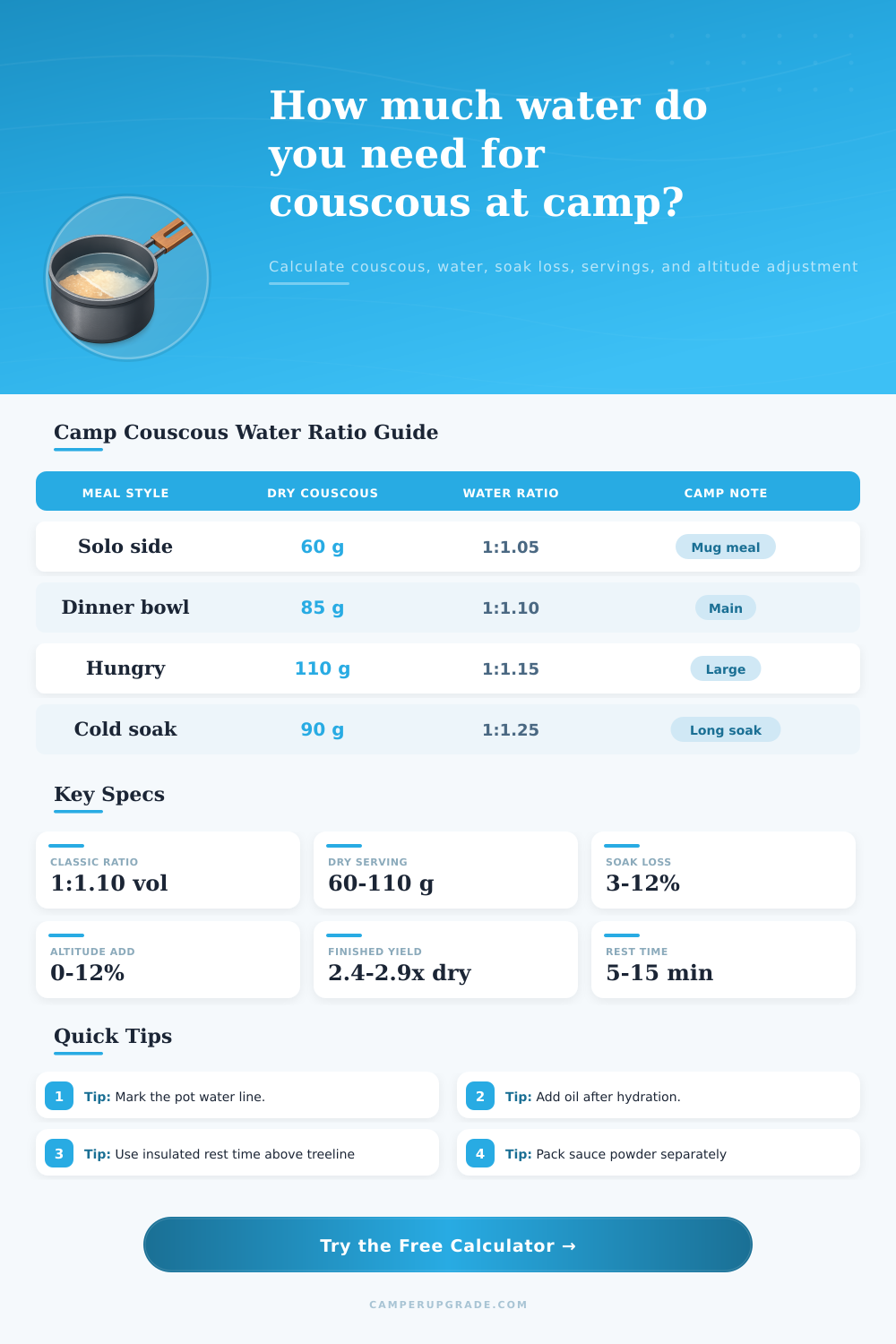
The amount of dry couscous that will be used will determine the amount of water that are required to cook the couscous. A side portion of couscous weigh approximately sixty grams. A dinner portion weighs between eighty-five and one hundred and ten grams.
These weights should of been used for couscous recipes because most of the individuals that is camping will be tired and cold and will eat these amounts. Once the cook has measured the amount of dry couscous, the cook can determine the amount of water that is to be used, as the ratio of water to dry couscous vary with the weight of the dry couscous. The ratio for water to dry instant couscous will be between one and one point two milliliters of water per gram of couscous.
Pearl couscous will require more water then instant couscous due to the larger size of the couscous pearls. Cold-soak couscous will require the most water of the two types of couscous because no heat is used to assist the water in move inside of the couscous grains. These measurements can be accounted for in a couscous calculator so that the cook does not have to guess how much water to add to the couscous to steam.
The altitude at which couscous is cooked will impact the way that couscous cook. At higher altitudes, water boils at a lower temperature. Water that is not as hot as boiling water will take longer to cook couscous.
Additionally, the center of the couscous may remain firm even after the couscous has rested. Adding a small amount of extra water and allowing the cooked couscous to rest for a longer length of time will fix this problem. A couscous calculator can account for these alteration to the cooking process so that cooks dont have to perform these calculations to determine the amount of extra water to be added to couscous.
The other ingredients that are added to couscous will impact the amount of water that is needed to cook the couscous. Ingredients like dehydrated vegetables, sauce powders, and oil will require liquid to rehydrate. Oil will impact the texture of the cooked couscous.
Oil that coats the grains will reduce the amount of water that enter the couscous grains. If many ingredients are packed into the couscous, the weight of the food will increase. It is important to keep track of the total weight of the food that will be prepared so that the cook can ensure that the prepared food will fit into their food bag or bear.
The amount of time that the couscous is to be rested after being cooked is another critical part of preparing couscous. If the cook stirs the couscous too often while absorbing the water, the grain will break. If the grains break, the couscous will release starch, which will cause the couscous to become gluey.
To avoid this outcome, the cook adds the amount of hot water to the couscous, the couscous is given one quick stir, then allowed to sit undisturbed. This allows the couscous to absorb the water without becoming gluey. Using a pot cozy or a jacket to cover the pot will retain the heat, which is beneficial to use on cold camping nights.
Cold-soak meals use the same logic as hot meals. However, cold-soak meals take longer to cook and have a softer texture. Many people choose to prepare cold-soak meals if they would like to avoid using a stove.
A couscous calculator will automatically adjust the amount of water that should be added to the couscous if the user select the cold-soak meal option. Determining the measurements of couscous prior to departing for the camping trip is beneficial to the camper. By calculating the measurements of couscous that will be prepared, the camper will know the amount of couscous that should be portioned out, the amount of water that should be measured, and if the cooking pot is large enough to contain the cooked couscous.
By knowing these measurements in advance, the camper has eliminated one more variable in making decisions while camping. Its actualy helpful to plan ahead, youll recieve better results.