Canvas Tent Weight Calculator
Estimate dry fabric weight, total packed weight, wet carry weight, and load per person from canvas area, fabric weight, pole material, stove jack, groundsheet, stakes, guylines, and bag allowance.
Canvas tent weight estimate
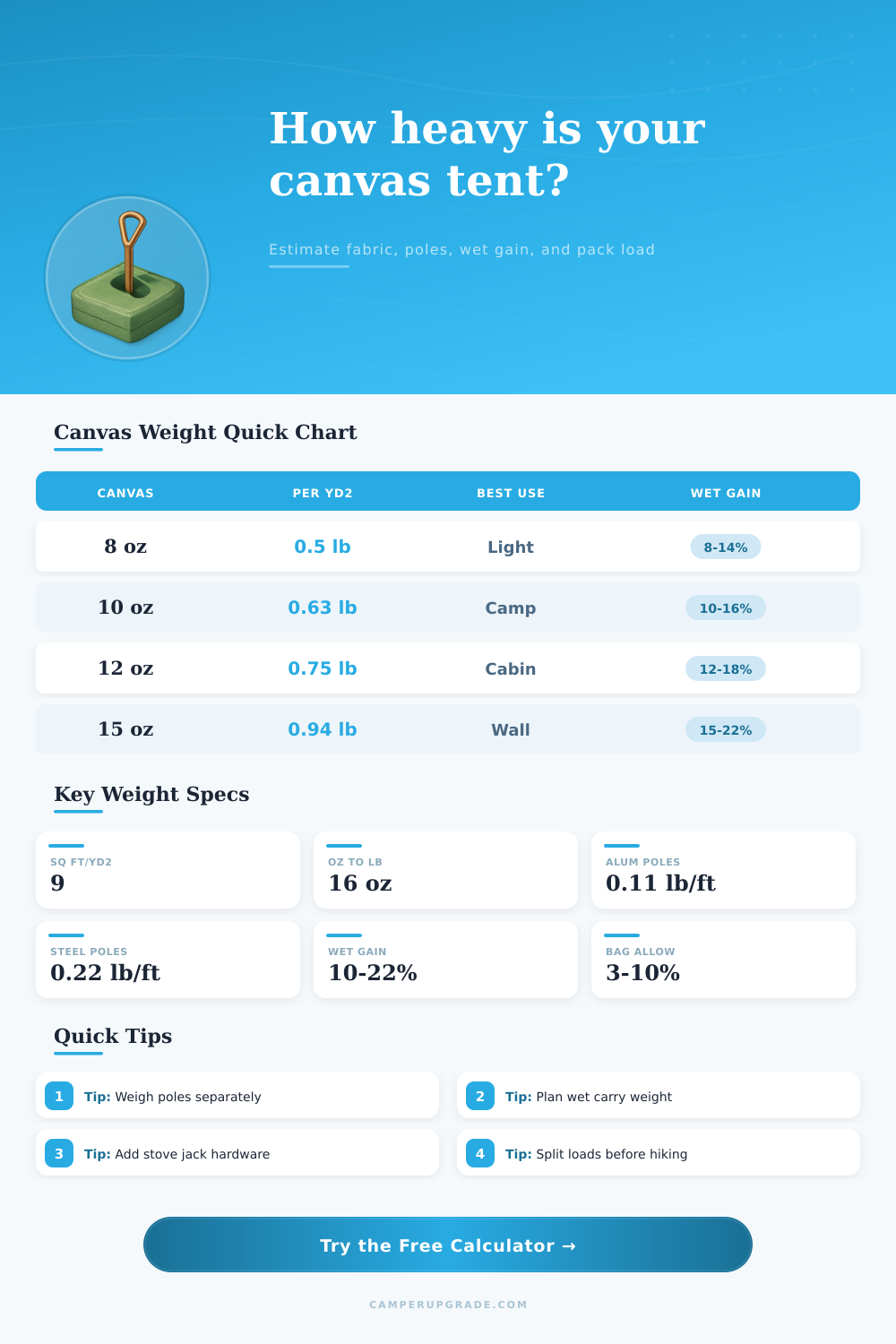
| Canvas spec | Weight per sq yd | Weight per sq ft | Common shelter use |
|---|---|---|---|
| 8 oz light treated canvas | 0.50 lb/yd2 | 0.056 lb/sq ft | Small hot tents and lighter bell tents |
| 10.1 oz army duck canvas | 0.63 lb/yd2 | 0.070 lb/sq ft | General camping and mid-size bell tents |
| 12 oz canvas | 0.75 lb/yd2 | 0.083 lb/sq ft | Cabin tents and moderate wall tents |
| 13 oz canvas | 0.81 lb/yd2 | 0.090 lb/sq ft | Outfitter tents with higher durability |
| 15 oz canvas | 0.94 lb/yd2 | 0.104 lb/sq ft | Large wall tents and heavy base camps |
| 18 oz canvas | 1.13 lb/yd2 | 0.125 lb/sq ft | Very heavy lodge or specialty panels |
| Pole material | Planning weight | Best fit | Weight note |
|---|---|---|---|
| Carbon fiber or composite | 0.075 lb/ft | Light packed shelters | Low weight, often lower dent resistance |
| Aluminum frame poles | 0.11 lb/ft | Portable canvas tents | Good balance for moving camp |
| Fiberglass poles | 0.13 lb/ft | Small center-pole tents | Moderate weight and less rigid |
| Wood lodge poles | 0.18 lb/ft | Traditional or local-cut poles | May not be packed every trip |
| Steel frame poles | 0.22 lb/ft | Wall tents and wind exposure | Strong but quickly dominates pack weight |
| No packed poles | 0.00 lb/ft | Tripods or on-site poles | Use only when poles truly do not travel |
| Condition | Planning gain | What changes | Use in calculator |
|---|---|---|---|
| Dry packed canvas | 0-3% | Stored and packed after full drying | Use 0-3% for shop or storage weights |
| Morning condensation | 5-10% | Surface moisture and damp seams | Use 8% for light damp pack-out |
| Rainy takedown | 12-20% | Canvas fibers and seams hold water | Use 15% for common wet pack planning |
| Cold rain or wet snow | 18-30% | Heavier saturation plus debris | Use 22% or more for conservative trips |
| Very heavy soaked canvas | 30-45% | Worst-case pack-out before drying | Use only for contingency lift planning |
| Tent setup | Fabric area band | Common canvas | Dry packed range |
|---|---|---|---|
| Solo hot tent | 150-230 sq ft | 8-10 oz | 18-35 lb |
| 2-person bell tent | 220-330 sq ft | 8-10 oz | 32-55 lb |
| 4-person wall tent | 420-620 sq ft | 10-12 oz | 65-105 lb |
| 6-person cabin tent | 560-760 sq ft | 10-13 oz | 95-150 lb |
| Outfitter wall tent | 700-950 sq ft | 12-15 oz | 135-230 lb |
| Large base camp wall tent | 900-1,250 sq ft | 13-15 oz | 190-320 lb |
A canvas tent is an piece of equipment that you must carry to the campsite. The weight of the canvas tent is one of the primery factors that will determine how difficult it is to transport the canvas tent to the campsite. You must consider the weight of the canvas tent because the weight will determine the amount of effort that you must expend when camping with the tent.
The canvas tent weight calculator will help you to calculate the total weight of a canvas tent before you purchase the tent. The weight of the canvas fabric is more important in calculating the total weight of the tent. This is because the canvas fabric make up the largest portion of the tent.
How to Calculate Canvas Tent Weight
The weight of the fabric is measured in ounces per square yard. The higher the total area of the canvas tent, the more heavier the total weight of the tent will be. For example, 8 oz canvas will weigh less than a 15 oz canvas.
Therefore, a camper will consider the 8 oz canvas easy to carry. However, the 15 oz canvas will be more durable. The canvas tent weight calculator will allow you to input the size of the tent in terms of the area of the canvas to calculate the weight of the fabric in pounds.
The tent poles also adds to the total weight of the tent. The material of the tent poles will impact the total weight of the tent. Aluminum tent poles will be lighter than steel tent poles.
This is because aluminum tent poles are more flexible than steel tent poles. Wood tent poles can be left behind at the campsite, thus reducing the total weight of the tent that must be carried. The calculator will calculate the tent pole weight by selecting the tent pole material and the length of the tent pole.
The total weight of the tent also include the accessories for the tent. These can include tent stakes, guy lines, and groundsheets. You may not think of these accessories when first considering the weight of the tent.
However, they will add to the total weight of the tent. The calculator will also calculate the weight of these accessories. The moisture that lands on the canvas tent also adds to the total weight of the tent.
The canvas tent fabric will absorb the moisture that falls on the tent while camping. When the tent fabric absorbs moisture, the weight of the tent will increase. The moisture can weigh in at 15% more than the original weight of the canvas tent.
This can add several pound to the total tent weight. Therefore, using the calculator to test tent weights with 15% moisture will allow campers to determine the total tent weight when camping in the rain. Planning for moisture in the environment will allow you to plan for the weight that the tent will have while in bad weather.
The bag allowance will be the percentage of the total weight of the canvas tent that accounts for the weight of the stuff sacks and straps. Including the bag allowance in the calculations will account for the small hardware that comes with the canvas tent. The bag allowance is typically 6 or 7 percent of the total tent weight.
However, if you have many pole bags, the percentage can be more. Including this percentage will ensure that you dont find it surprising by the final weight of the canvas tent. To determine the weight of the canvas tent that each person will have to carry, divide the total weight of the tent by the number of people that will carry the tent.
For example, if a canvas tent weigh 90 pounds and three people will carry the tent, each person would have to carry 30 pounds of the tent. Knowing the weight that each person will carry will allow the group to determine if the weight of the tent is manageable for the group on there journey. The terrain and the weather will have an effect on the weight that each person feels that the tent will have.
For instance, it will be easier for each person to carry the tent on flat terrain as opposed to mountains. Therefore, the weight provided by the calculator will allow you to determine how these other factor will play into the total weight of the tent that each person will have to carry. Calculate the weight of the poles and accessories for the tent before you select the weight of the canvas fabric for the tent.
Knowing the total weight of the poles and accessories will allow you to determine how much weight can remain for the canvas tent fabric. The canvas tent weight calculator allows you to change one input at a time to evaluate how the changes in the weight of the tent fabric will affect the weight of the canvas tent. Depending on the time of year that you will be traveling with the tent, the amount of moisture that will enter the tent will change.
Spring and fall weather will produce more condensation within the tent than summer or winter months. By using the canvas tent weight calculator, you can evaluate how the moisture within the tent can affect the total weight of the tent. This can help ensure that the weight of the tent is appropriate for the time of year that you will be visiting the location with which you will be camping.
The overall goal of using the canvas tent weight calculator is to determine the weight of the tent that will best match your travel style. By using the calculator, you can make a decision regarding the weight of your tent. Additionally, by using the calculator, you can ensure that you understand the weight that the tent will have before you begin your journey with it.