Campfire Dry Tinder Amount Calculator
Estimate how much dry tinder to pack for planned campfires, relights, wet weather, wind, ignition method, kindling quality, and practical starter-bundle sizing.
🏕Campfire Tinder Presets
📏Trip Fire Plan
Count the time you expect to manage campfire starts.
Use 1 for one evening fire, 2 for morning and evening fires.
Add starts for damp wood, interrupted cooking, or shared group use.
Larger lays need a wider flame base and more starter nests.
Applied after weather and kindling difficulty are included.
Subtract usable tinder that is already bagged and dry.
🪵Tinder Material and Starting Conditions
Values estimate loose, dry, hand-packed starter nests.
Use the amount you will pre-portion into each starter nest.
Used only for custom material in calm, dry, prepared conditions.
Higher density means the packed tinder uses less volume.
Spark methods usually need finer, drier nests than open flame.
Prepared kindling reduces how long tinder must carry flame.
This does not make unsafe wood burn; it estimates extra starting demand.
Wind steals heat; humidity makes fine fibers harder to catch.
A dry base keeps the first tinder bundle from wicking moisture.
Use fires only where allowed, follow local restrictions, fully extinguish coals, and never rely on tinder estimates to override fire bans or unsafe conditions.
Dry Tinder Packing Result
🧰Dry Tinder Material Reference
📊Tinder Material Data Table
| Tinder material | Ideal grams per start | Loose density | Best ignition use |
|---|---|---|---|
| Cedar shavings or pencil curls | 6 g | 45 g/L | Matches, lighter, fine coal start |
| Birch bark curls | 7 g | 75 g/L | Damp camps, open flame, ferro prep |
| Fluffed jute twine | 5 g | 35 g/L | Ferro rods, matches, compact kits |
| Dry cotton balls | 3 g | 28 g/L | Spark friendly, light backup tinder |
| Dry grass or cattail fluff | 10 g | 20 g/L | Open flame, fast flare, big volume |
| Feather-stick curls | 12 g | 70 g/L | Knife-made tinder from dry inner wood |
| Fatwood shavings | 5 g | 160 g/L | Windy sites and damp kindling support |
| Shredded dry paper or egg carton | 9 g | 42 g/L | Car camp, RV fire rings, easy flame |
🌡Condition Multiplier Guide
| Condition | Low demand | Medium demand | High demand |
|---|---|---|---|
| Kindling readiness | Split pencil sticks: 0.80x | Mixed sticks: 1.25x | Wet found sticks: 1.75x |
| Main wood condition | Dry split wood: 0.90x | Surface damp: 1.25x | Green or soaked: 1.85x |
| Weather exposure | Calm and dry: 0.90x | Breezy or humid: 1.25x | Rain or wet snow: 1.70x |
| Ignition method | Lighter: 0.95x | Matches: 1.05x | Flint ember: 1.55x |
🎒Packing Conversion Table
| Pack measure | Volume | Useful for | Planning note |
|---|---|---|---|
| 1 cup | 237 ml | Small tinder bag | Enough for several dense nests, fewer grass nests |
| 1 quart bag | 0.95 L | Weekend car camp | Good for bulky curls or lint with reserve |
| 1 liter dry bag | 1.00 L | Backpacking or canoe kits | Use nested bags if rain is expected |
| 2 liter pouch | 2.00 L | Group or wet trips | Separate into multiple starter bundles |
📋Common Campfire Starting Examples
| Scenario | Starts | Typical dry tinder | Why it changes |
|---|---|---|---|
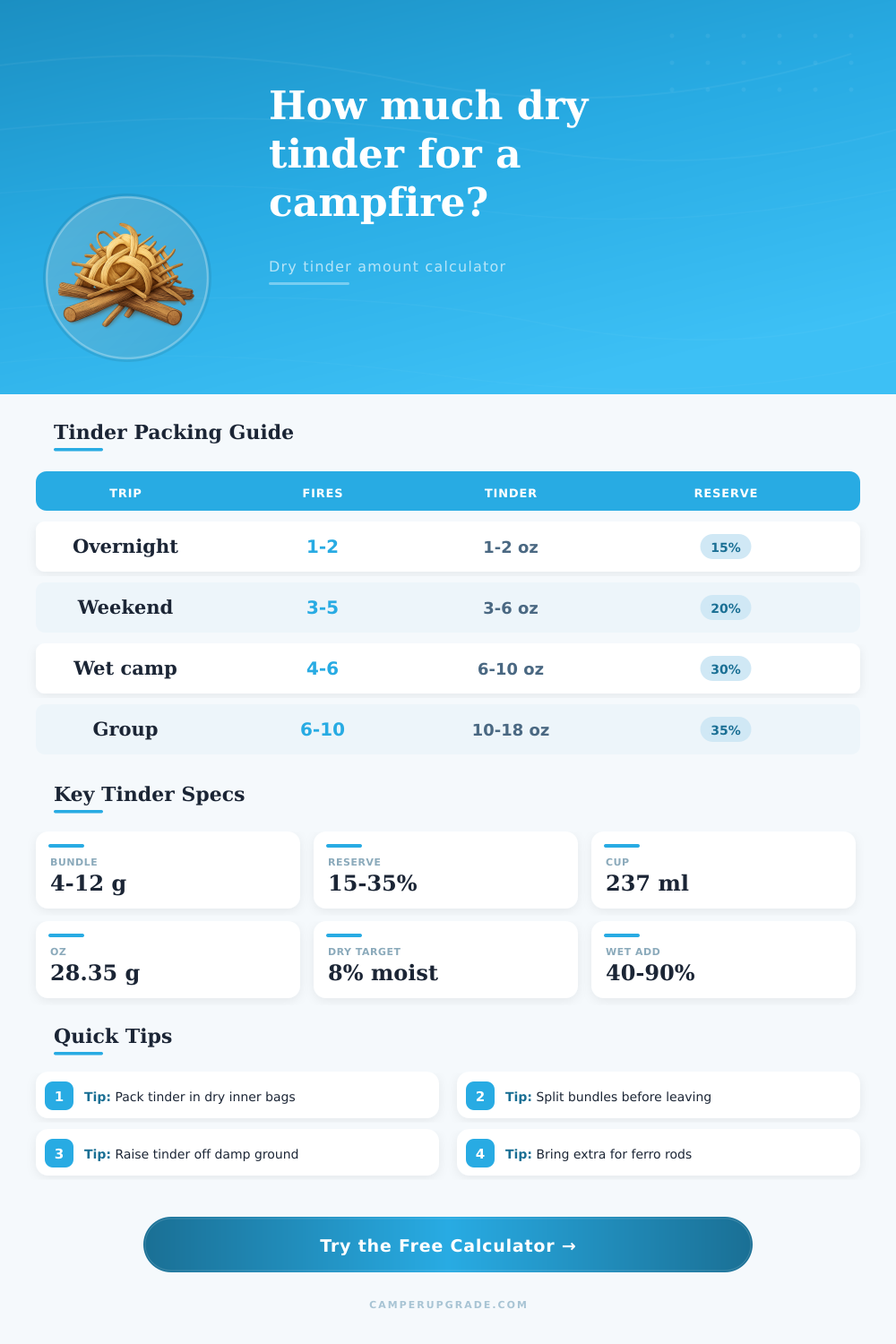
| One dry evening fire | 1 | 0.3 to 0.7 oz | Prepared kindling does most of the work. |
| Weekend family fire ring | 3 to 5 | 3 to 6 oz | Reserve covers wind, relights, and damp bark. |
| Cold windy camp | 4 to 6 | 6 to 12 oz | Tinder must hold flame longer while kindling warms. |
| Large youth group camp | 8 to 12 | 12 to 24 oz | Many starts, training attempts, and shared fire rings. |
💡Dry Tinder Planning Tips
Before you light your first match, know that the true effort lie in preparing for this possibility. The question arises: What kind of tinder will I carry? How much? How do I ensure it stays dry enough to ignite? This all depends upon duration of your journey, availability of wood, and if it’s windy, rainy, or otherwise.
Most hikers brings inadequate amounts; most return from their second day empty-handed. Others overstuff their packs with excess and haul around gear they won’t ever need. How much do I carry? That really depends on environment (tinder is quite forgiving) and your use, if you’re going to light a lot of fires, or in less forgiving situations.
How much tinder to bring
If it’s just an evening fire on dry ground where you have some split kindling prepared, then not much at all. If the ground is wet from recent rain, you’ll require more because one bundle must last long enough for the kindling to ignite. The quality of wood, weather, and type of ignition tool alter this requirement.
For example, ferro rods use sparks, so they requires finer, drier fibers than a lighter would. Also, green or wet wood requires longer burn times that can only be obtained from good tinder.
You input your expected number of starts each day, total days on the trail, desired material, anticipated conditions, and it crunches the numbers (see the calculator above). It start with base amount required per start and multiplies it by factors based off how difficult it is in reality. Then, it adds a reserve percentage to ensure that if you have one bad try, you won’t be stranded without backup.
It tells you how much to pack and how many pre-portioned bundles that are, which removes the guesswork and prevents you from packing too much or to little. The quantity of tinder is important, but so are the contents. Don’t let it get wet from condensation or ground moisture; keep it in your main pack in a separate, dry inner bag.
Break it all up into smaller nests beforehand so that you don’t have to open the whole package when you want to hand someone some, or grab a quick relight. Use some bark or a fire pan to raise first nest off the damp ground. This prevents initial flame from wicking up through moisture and going out before rest of wood gets warm enough.
Most people make this mistake: Tinder is considered something of an afterthought. They think about the wood they’ll burn and figure whatever dry scraps come to hand will do. Then they find the scraps are too coarse, or else damp. That’s what the reserve percentage in the planning process is for.
It is for those times when a start fail, or the fire steals your heat due to wind, or you’ve got only half-dry kindling and need more time. To be sure, all plans end, but they also needs a large supply of tinder to spare for any anticipated starts, and even more for those that don’t come off as planned. It’s not much weight; it’s a lot of peace of mind when darkness falls and temperatures drop.
You should of brought extra tinder if you want to be safe, especially if the weather is moddern or cold. Actually, most people should of realized that more tinder is better then less.