Campfire Chili Batch Calculator
Scale a campfire chili batch by bowls, pot capacity, meat, beans, tomatoes, simmer loss, heat level, toppings, and reserve portions for RV nights, scout patrols, and basecamp dinners.
🌶Camp Chili Presets
Your Campfire Chili Batch Snapshot
⚙Batch, Pot, And Ingredient Inputs
📊Chili Style Reference Grid
🥘Pot Material And Fire Behavior Grid
Cast Iron Dutch Oven
High heat mass. Best for steady simmer, lid coals, and thick chili that needs even bottom heat.
Enameled Dutch Oven
Moderate heat mass. Easy stirring and tomato-friendly surface; protect enamel from direct flame shock.
Stainless Stockpot
Fast response. Good for propane stoves and large batches, but needs frequent scraping at the bottom.
Aluminum Camp Pot
Lightweight. Heats quickly and packs well; use lower heat because tomato chili can scorch fast.
📘Campfire Chili Reference Tables
| Chili Style | Meat or Protein per Bowl | Beans or Chunky Veg per Bowl | Tomato and Liquid Character |
|---|---|---|---|
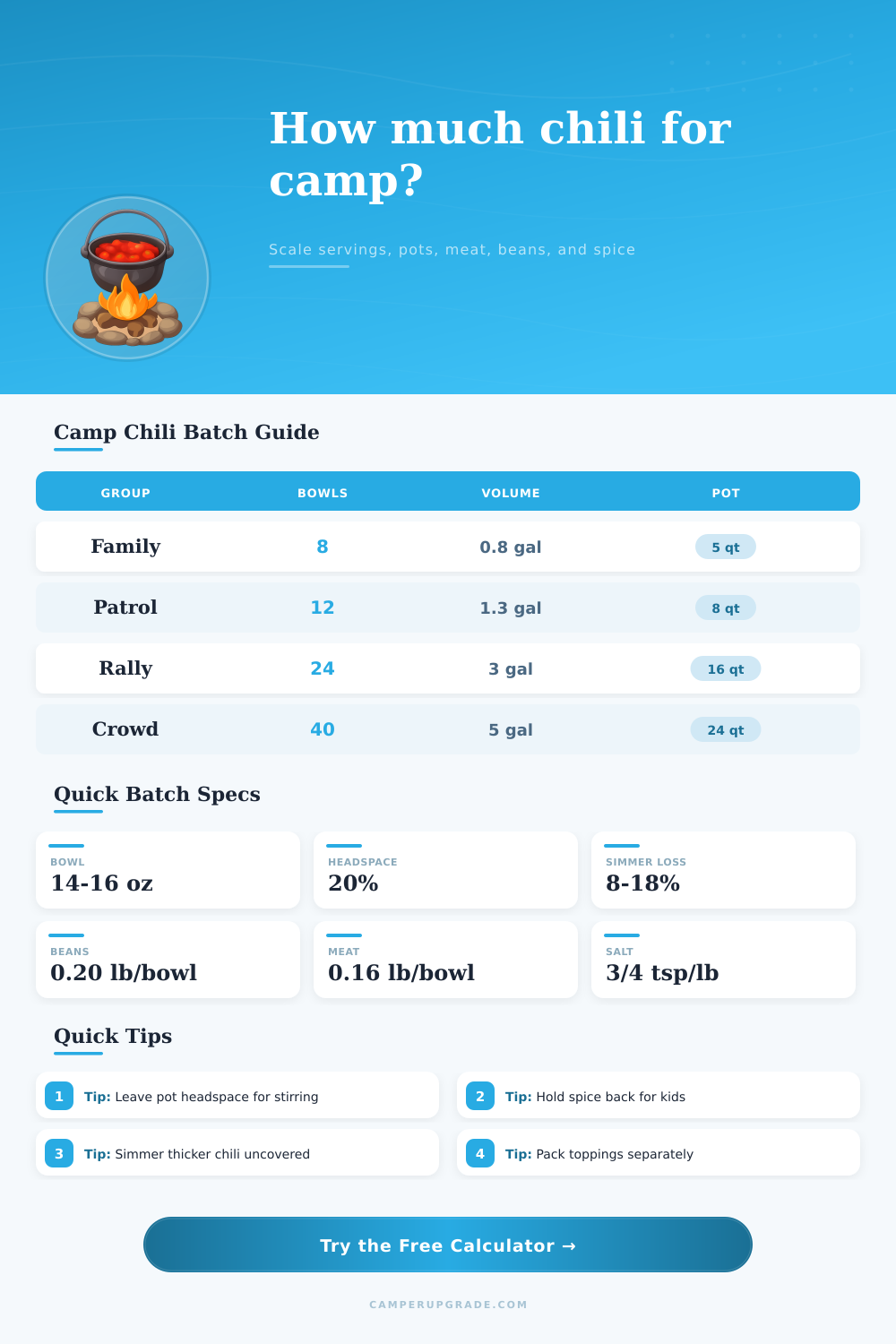
| Classic beef and bean camp chili | 0.16 lb browned beef | 0.20 lb drained beans | Balanced tomato sauce, crushed tomato, and broth. |
| Turkey and black bean chili | 0.15 lb ground turkey | 0.22 lb black beans | Slightly saucier to keep lean meat moist. |
| Three-bean vegetarian chili | No meat; extra vegetables and lentils | 0.30 lb beans and vegetables | Thick tomato base with more broth absorption. |
| No-bean trail kettle chili | 0.24 lb beef or venison | 0.04 lb onion and pepper | Meat-forward red sauce for bowls or tortillas. |
| White chicken camp chili | 0.18 lb cooked chicken | 0.18 lb white beans | Broth and green chile base with less tomato. |
| Group Size | Standard Bowls | Finished Chili | Suggested Pot Capacity |
|---|---|---|---|
| Couple or small cabin dinner | 4 to 6 bowls | 1.8 to 2.6 qt | 4 to 5 qt pot with headspace. |
| Family Dutch oven night | 8 to 10 bowls | 3.5 to 4.4 qt | 6 qt Dutch oven or similar pot. |
| Scout patrol or trail crew | 12 to 16 bowls | 5.3 to 7.0 qt | 8 to 10 qt pot, or split into two ovens. |
| RV rally table or basecamp group | 24 to 32 bowls | 10.5 to 14.0 qt | 16 to 20 qt stockpot with careful stirring. |
| Camp cookoff or cold-weather crowd | 40 to 60 bowls | 17.5 to 26.3 qt | Several pots keep heat and stirring manageable. |
| Simmer Setup | Typical Loss | Start Volume Needed | Camp Use |
|---|---|---|---|
| Covered low simmer on propane | 5% | Finished volume divided by 0.95 | Best when holding chili warm for a serving window. |
| Partly covered campfire simmer | 10% | Finished volume divided by 0.90 | Good default for Dutch ovens and stockpots near coals. |
| Open Dutch oven reduction | 15% | Finished volume divided by 0.85 | Thickens wet batches and concentrates seasoning. |
| Long uncovered crowd batch | 20% | Finished volume divided by 0.80 | Use more starting liquid and stir often to avoid scorching. |
| Ingredient | Camp Scaling Rule | US Planning Shortcut | Metric Planning Shortcut |
|---|---|---|---|
| Ground meat or alternate protein | 0.12 to 0.24 lb per finished bowl | 1.5 to 3 lb for 12 bowls by style. | 55 to 110 g per bowl. |
| Drained beans and chunky vegetables | 0.04 to 0.30 lb per finished bowl | About 1 can drained beans per 4 to 5 bowls. | 20 to 135 g per bowl. |
| Crushed tomatoes, sauce, and broth | Liquid fills the gap after solids displacement | 1.5 to 2.5 cups per finished quart. | 350 to 590 ml per finished liter. |
| Chili powder blend | About 2 Tbsp per finished quart at medium heat | Use less for kids, add hot sauce at serving. | 30 ml powder per 0.95 L. |
| Toppings | Plan separately so chili volume stays honest | 0.5 to 1.5 oz cheese or chips per bowl. | 15 to 43 g toppings per bowl. |
💡Batch Tips
If you’re feeding a crowd, careful planning of your meal is necessary. Chili does not scale like most recipes; ingredients will take up different volumes on open fire, and liquid will boil away. Fortunately, there’s a calculator on this page for that! Use the calculator above to do the math for you. All you have to do is specify the pot size and headcount and let it work out the rest. It’ll save you from having to guess at conversions as you go along.
The headcount is important, but it isn’t as important as how much volume actualy fits in your cookware. That doesn’t matter as much as how much fits in your cookware. There’s an extra factor called headspace (the air above the chili inside your pot). When you stir the pot, you want some space left so the chili can boil without bubbling over. Fill the pot to the very top, and some of your food will be lost to spilling over the edges. It is better to have two smaller batches in separate pots then one massive overflow disaster. The tool considers this safety margin when calculating your final volume so there’s enough for stirring.
How to Plan Your Chili Recipe
Finally, consider simmer loss. When you’re cooking chili on a propane stove or campfire, there’s a lot of evaporation going on (particularly when you leave the lid off to stir). What begins as five quarts may became three in time. Unless you account for this in your initial amounts, you’ll end up with watery-looking servings at the end. To fix this, the calculator calculates backwards from your target portion size. It assumes some of that liquid will evaporate and adds it to your shopping list accordingly.
The ratio of ingredients is heavily influenced by the type of chili you select. With a traditional chili with beans and beef, there’s an even distribution of starches from the beans and protein from the meat. Without beans? Well, it’s all about the meat. And for a veggie-friendly variation, you’ll need more beans to compensate for less mass. These aren’t flavor decisions but structure decisions. So when using the calculator, it adjust the relative weight of each ingredient to match. It recommends a bit more water in a lighter meat like turkey so it stays moist. In a heavier batch like venison, it will decrease the number of beans to preserve that satisfying texture.
You have to guess (by eye) how much to add when seasoning by candlelight. If you aren’t careful, you won’t stir a large amount of chili powder well, so it won’t spread evenly. It’s a starting point from which to create your own blend by volume. But there’s still wiggle room to make it spicier or milder than the recipe calls for. Season a little bit less then you believe will work well, then taste while it cooks down. Because the water cooks off, this concentrates the flavors. You’ll end up with more saltiness, for example, if you put some in too soon. Having some extra hot sauce on hand at the serving table gives each camper a chance to add hotness to his/her liking, without throwing out the entire pot.
And then there’s the toppings. The toppings need their own line item on your planning sheet too. Crumbled tortilla chips, sour cream, and cheese will improve the chili’s texture, but they won’t change how much liquid there is. Plan for the volume of the toppings apart from the chili itself. Store them in something that doesn’t let them get wet before serving. Nothing ruins the crunch in a big bowl of thick chili like soggy toppings. These toppings provide a key textural contrast.
There is no magic to mastering the art of batch cooking; it’s simply a matter of planning. You also need to know that physics applies, including variables such as the material of your cooking pots and pans, altitude, and intensity of flame. No, you can’t control the wind…but you could of controlled what you put in at the beginning. Learn about the characteristics of various pot materials and how they respond to heat by consulting the reference table on this page. Know that cast iron retains heat well, but will be slow to react to adjustments. Know that aluminum will heat rapidly, but may burn quickly when exposed to direct dry heat. Knowing these characteristics will help in managing the simmer without hovering over it constantly.
You want everything to be warm and right. Nothing gets wasted and nobody goes home hungry. The night can be enjoyed rather than fretting over if there’s going to be enough for seconds. You will do a bit less guesswork and feel a lot more confident. Using the calculator will help you fill in the blanks when cooking outdoors, where evaporation rates are high and the ingredients need some love. Respect the evaporation rate, start with good ingredients, and leave a bit in the pot “just in case” someone asks for seconds. It transforms a chaotic campfire meal into a successful feast- but without the worry of an empty pot.