Camper Propane Use in Cold Weather Calculator
Estimate cold-night propane use from outdoor temperature, indoor setpoint, camper size, furnace BTU rating, duty cycle, insulation, tank size, propane energy content, wind exposure, and trip length.
Propane Use Breakdown
| Furnace rating | 25% duty | 50% duty | 75% duty |
|---|---|---|---|
| 16,000 BTU/hr | 0.52 gal/night | 1.05 gal/night | 1.57 gal/night |
| 20,000 BTU/hr | 0.66 gal/night | 1.31 gal/night | 1.97 gal/night |
| 30,000 BTU/hr | 0.98 gal/night | 1.97 gal/night | 2.95 gal/night |
| 40,000 BTU/hr | 1.31 gal/night | 2.62 gal/night | 3.93 gal/night |
| Insulation level | Model factor | Common camper match | Planning note |
|---|---|---|---|
| Excellent four-season | 0.72x | Enclosed underbelly, good windows, tight doors | Wind and floor losses still matter below freezing. |
| Good modern camper | 0.90x | Late-model trailer, Class B, or truck camper | A balanced default when you have no furnace log. |
| Standard trailer | 1.08x | Typical three-season travel trailer | Expect longer cycles as the temperature spread rises. |
| Basic or older shell | 1.30x | Thin-wall camper, older seals, limited floor insulation | Cold floors and air leaks can dominate propane use. |
| Pop-up or soft wall | 1.65x | Tent trailer or hybrid bunk ends | Use conservative reserve and measured run time. |
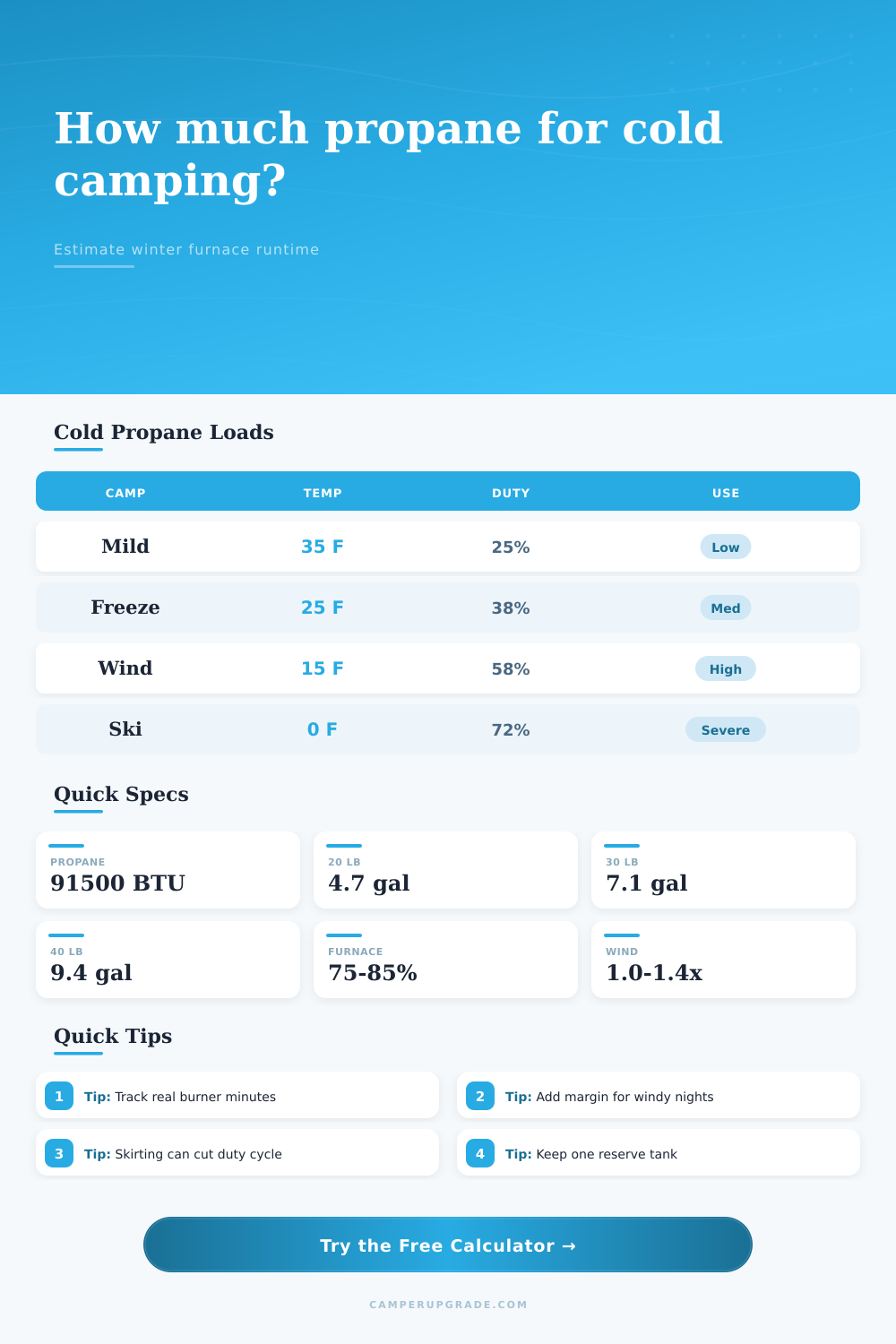
| Outdoor average | Indoor setpoint | Typical duty range | Cold-camp reading |
|---|---|---|---|
| 35°F / 2°C | 64 to 68°F | 18% to 32% | Shoulder-season overnight heat for many small rigs. |
| 25°F / -4°C | 64 to 68°F | 30% to 48% | Freezing water lines and floor comfort become planning items. |
| 15°F / -9°C | 62 to 66°F | 45% to 65% | Wind, slides, and underbelly heat can swing the estimate. |
| 0°F / -18°C | 60 to 65°F | 60% to 85% | Tank reserve and refill access are part of the heat plan. |
| Tank setup | Usable gallons | At 1 gal/night | At 2 gal/night |
|---|---|---|---|
| Single 20 lb cylinder | 4.7 gal | 4.7 nights | 2.4 nights |
| Dual 20 lb cylinders | 9.4 gal | 9.4 nights | 4.7 nights |
| Dual 30 lb cylinders | 14.2 gal | 14.2 nights | 7.1 nights |
| 20 gal ASME tank | 20 gal | 20 nights | 10 nights |
Sheltered Site
0.92-1.00xTrees, buildings, snow banks, or skirting reduce air washing under the floor and around storage doors.
Open Campsite
1.00-1.12xNormal winter campground exposure. Use measured duty cycle if the furnace already cycled overnight.
Windy Ridge
1.25xBroadside wind raises heat loss through slides, vents, baggage doors, and the underside of the camper.
Ski Lot
1.40xLong subfreezing hours, exposed pavement, and storage-bay heat can push duty cycle near continuous operation.
When camping in cold weather, keeping warm is essential as is managing fuel consumption.
At twenty-five degrees Fahrenheit, most campers hits a psychological wall. It might read a warm temperature at thermostat, but it’s cold air in there. So you crank up the furnace. Your fuel runs down fast. You start worrying if there’s enough for the night. Mostly that’s a result of not planning ahead, you did not do the math right.
How to Calculate Your Propane Needs
That’s where this page comes in. There’s a calculator here that takes a forecast and converts it to hours and gallons. Plan ahead, pack with confidence.
So the propane calculator relies on temperature differential between outdoors and indoors. If you’re shooting for an interior of eighty and it’s thirty out, that big temperature spread is what really drive your propane use. Your input data are average outdoor temp and your target indoor temp. Based off these inputs, it will compute energy required.
This figure can vary depending on your insulation quality. A well insulated trailer retain heat better than one with thin walls. That’s what the pre-set buttons do, give you an idea of this factor without having to guess at it yourself. They’re ballpark figures, but they saves you from typing in too many variables.
Propane lasts longer when it’s calm. Wind sucks all that warmth away from outside walls and blows the hot air out of cracks and gaps. Your initial calculation will include a wind factor. A sheltered site tucked behind trees might use ten percent less fuel then an open ridge in a howling wind. This multiplier makes difference between feeling warm or being cold.
Most people ignore wind until they are freezing. If you’re in an exposed campsite choose a higher wind rating. Better to be over prepared for propane than cold on the ground.
The number one reason why trips go wrong is related to tank size. Your average twenty pound propane cylinder contains roughly 4.7 gallons of burnable propane. That doesn’t sound bad until you realize that a half-capacity furnace will burn through it in two to three days. How long do I have? That’s what this tool tells you.
And there’s a safety reserve built into it too. In winter, you never want to let a propane tank run out. Having some gas left in the tank maintains pressure on system. Without it, the system cannot be sealed against outside air. You need to leave yourself at least a fifteen percent reserve (that’s what the calculator says). This reserve help with additional cooktop usage or those cold snaps you weren’t expecting.
Efficiency matters when it comes to using fuel, though not necessarily in way you would think. Furnaces is rated for their input BTU, which doesn’t equate to how much heat actualy reaches your house. Because they don’t have perfect efficiency, they’ll lose heat through poorly sealed ducts and out through the exhaust vent. For this reason, the calculator considers a baseline efficiency rate.
If you’re running an older furnace or have a poorly maintained one, drop that down. The lower your efficiency, the more fuel will be used. It’s a minor variable, but it’ll add up across multiple nights.
You’ll find reference tables on this page. You can use them for a quick check: if it shows roughly the same range as the calculator does (two gallons a night), go with it. Otherwise, double-check your inputs.
In particular, make sure you’re inputting the overnight average temperature, not the daytime high. That’s a common mistake that will lead you to underestimate your fuel consumption.
Redundancy is key in winter camping. There’s no way to predict when the temperature will drop drastically or the wind will pick up. All you can do is pack fuel accordingly. Run the calculator and that’ll give you the bare minimum for your trip. Now add some gas to have peace of mind. Buy more propane rather then shiver all night. Your comfort level should of been determined by how far over the bare minimum you’re willing to go.
Sleep with the storm. Don’t watch the gauge.