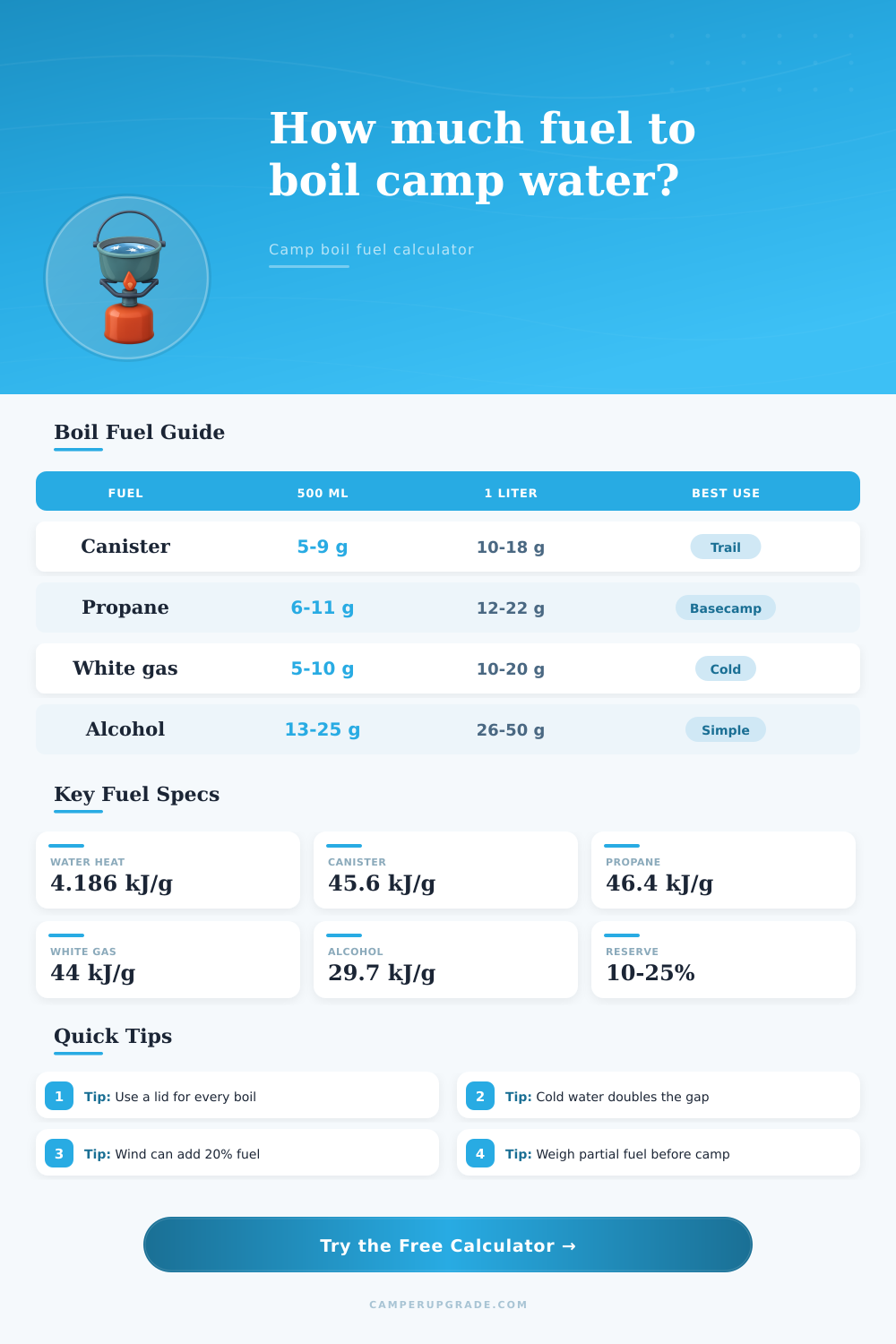
Camp Water Boil Fuel Calculator
Estimate stove fuel for boiling camp water by water volume, starting temperature, altitude, stove fuel, pot setup, wind exposure, repeated boils, and reserve margin.
🏕Camp Boil Presets
🔥Boil Fuel Inputs
Switching units converts the entered water amount.
Total water heated in one boil cycle, before multiplying by repeats.
Cold water from snowmelt or streams needs substantially more energy.
Boiling temperature falls with altitude, so the target temperature changes.
Fuel energy is based on common camping stove fuel heat values.
Use manufacturer data for unusual fuels or gel fuel.
Net efficiency is useful heat delivered into the water.
A lid and right-sized pot reduce heat escaping around the water.
Use stove-safe wind protection; never trap heat around a canister.
Count all planned hot drinks, meal water, and treatment boils.
Optional extra time after first boil for treatment or cooking starts.
Small simmer flames may use 1 to 3 g/min; high output uses more.
Use fuel weight only, not the steel can or bottle tare weight.
For partial canisters, weigh and subtract the empty container weight.
Set lower for partly used canisters, bottles, or cylinders.
Reserve is added to the calculated plan before container rounding.
This calculator estimates fuel for heating liquid water to the local boiling point. Real stove performance varies with pot shape, flame height, regulator design, fuel pressure, wind, and how carefully the stove is run.
Camp Boil Fuel Results
📊Fuel Energy Reference
🌡Water Energy And Altitude Tables
| Water amount | Energy from 15°C to sea-level boil | Canister fuel at 40% | Alcohol fuel at 28% |
|---|---|---|---|
| 500 ml / 16.9 fl oz | 178 kJ useful water heat | About 9.8 g before weather add | About 21.4 g before weather add |
| 750 ml / 25.4 fl oz | 267 kJ useful water heat | About 14.6 g before weather add | About 32.1 g before weather add |
| 1 liter / 33.8 fl oz | 356 kJ useful water heat | About 19.5 g before weather add | About 42.8 g before weather add |
| 2 liters / 67.6 fl oz | 712 kJ useful water heat | About 39.0 g before weather add | About 85.6 g before weather add |
| Altitude | Approx boiling point | Effect on boil fuel | Camp note |
|---|---|---|---|
| Sea level | 100.0°C / 212°F | Full temperature rise | Slowest target temperature, but strong stove pressure |
| 5,000 ft / 1,524 m | 95.0°C / 203°F | About 6% less water heat from 15°C | Food may need longer hot soak despite lower boil point |
| 10,000 ft / 3,048 m | 90.1°C / 194°F | About 12% less water heat from 15°C | Wind and cold often erase the altitude fuel savings |
| 14,000 ft / 4,267 m | 86.2°C / 187°F | About 16% less water heat from 15°C | Use conservative reserve for cold fuel and long meals |
🧮Common Camp Boil Planning Table
| Use case | Water per cycle | Typical cycles | Planning note |
|---|---|---|---|
| Morning coffee or tea | 300 to 500 ml per person | 1 to 2 per morning | Small solo mugs waste less fuel with a narrow pot and lid |
| Freeze-dried dinner | 350 to 600 ml per meal | 1 per person | Count extra hot drinks separately if they use a second boil |
| Group breakfast | 1.5 to 3 liters | 1 to 3 large boils | Large pots are efficient when the burner flame stays under the base |
| Water treatment boil | 1 liter batches | As needed | Add any required rolling-boil minutes with the hot-hold inputs |
| Cold alpine water | 500 ml to 2 liters | Trip dependent | Cold starts and wind matter more than the lower boiling point |
💡Fuel Planning Tips
When planning your next backpacking trip, you typicaly start with route and then food. In the background is the fuel that’ll turn water potable, which is until you find yourself out by one. Boiling water seems easy enough. But what about temperature of water? What about the elevation at which camp is located? How many stovetop lights will be lit over multiple days?
For this reason, a fuel calculator can come in handy. It takes all those different variables and condenses them into an estimate so you can pack accordingly rather than guesswork (and carry unnecesary extra weight).
How to Calculate Fuel for Backpacking
Three factors: How much water? What’s the start temp? What is the elevation? More water require more energy. Water fresh from a cold stream are harder to heat than water that was sitting in a warm bottle soaking up sunshine. The higher your elevation, the lower your boil point. That means you need a smaller increase in temperature. But add in cold air and wind, and often all that gets cancel out.
Plug in those three numbers, and the calculator does the rest; adjusting for stove efficiency; lid type; pot type; and yes, wind chill. So what it spits out is not an ideal situation but a realistic one.
Stoves burn different fuels, which vary in energy output-per-gram. Propane and canister blends works about equally well at mild temps. In cold weather, white gas has the slight advantage. Alcohol is simple but heavier. Tool allows you to dial-in for your real-world pots/stove combo. A heat-exchanger pot with a lid that blocks wind reduces fuel consumption by a surprising amount. Constant wind, or a very wide flame do exactly the opposite.
On longer outing it’s clear how each gram saves money and pack weight. Boils add up fast: Coffee in the morning = a boil. Rehydrating for dinner = a boil. Treating your water = a boil. The tool takes this single-boil figure, multiplies it by how many cycles you plan on doing, and tacks on a reserve percentage just in case you run out the last night. Then, it tells you how many boils you can do per container. That’s useful if you’re trying to decide between carrying two smaller containers (maybe they’ll be full) or one bigger container that may end trip half full.
The calculator accounts for real world variables like stove efficiency, pot and lid choices, and wind exposure so the result reflect actual conditions. In cold weather, fuel pressure decrease. At altitude, regulators is different beasts. And occasionally folks forget: camping on a windy ridgeline might cancel out any theoretical savings from a low boil point.
Enter the reserve input. A small cushion accounts for the times when flame flickers just a bit too long. This happens when group agrees to one more round of hot drinks.
A practical habit is to run numbers in advance. To plan well, you want an accurate starting fuel percentage for the partially-filled canister that you bring from home. Doing this isn’t a guarantee either, but it eliminates your biggest guess from the equation. What’s left is finding the right amount of fuel to feel safe without carrying more then you need. That’s the balance most trips really require.