Camp Stove Fuel Canister Count Calculator
Estimate how many camp stove fuel canisters to pack from meal plans, boil water, simmer time, burner output, weather loss, partial canisters, and reserve fuel.
Fuel canister count estimate
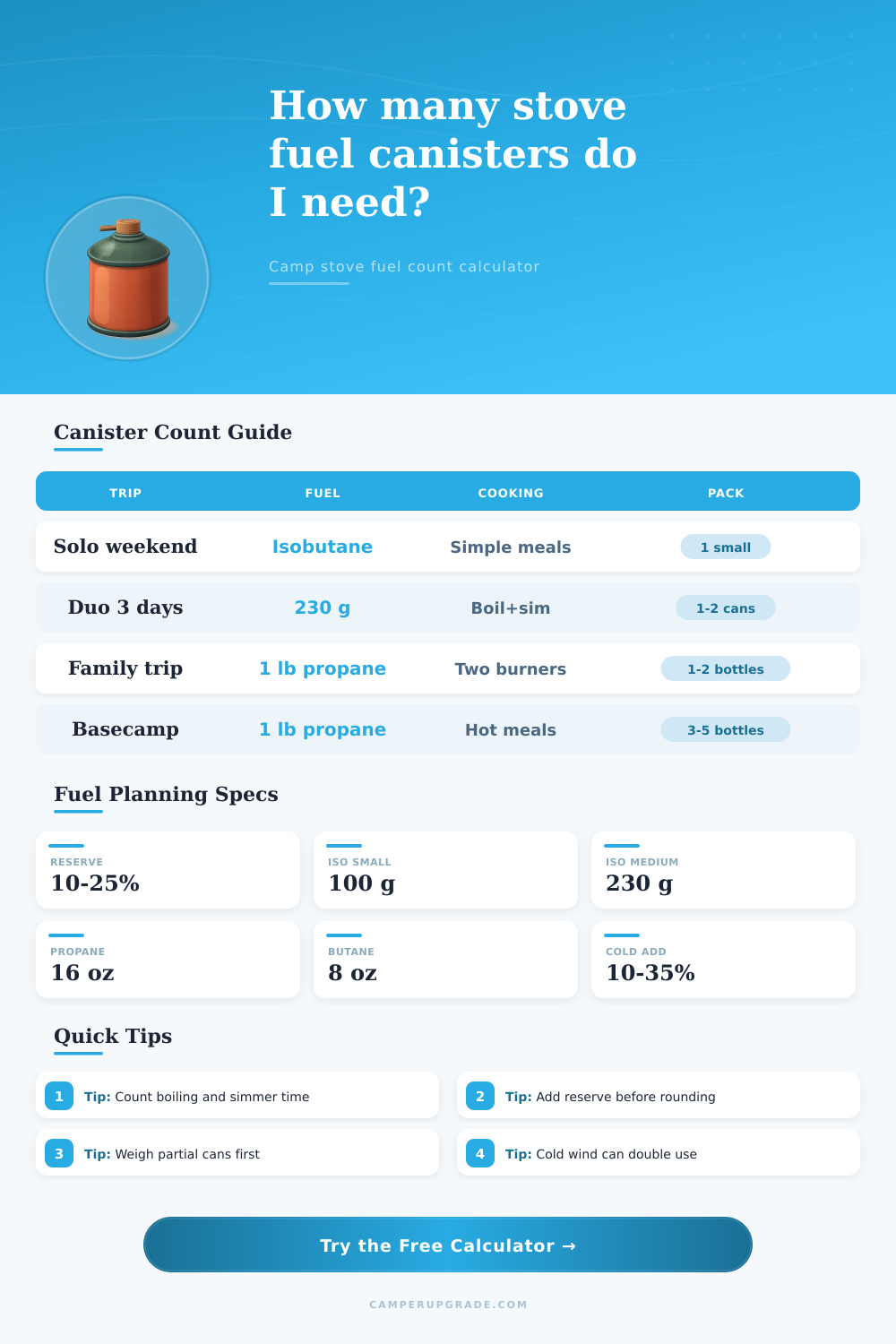
| Cooking style | Fuel pattern | Common estimate | What changes it |
|---|---|---|---|
| Boil-only backpacking meals | Water boils, hot drinks, little simmering | Often 7-14 g per person per hot meal | Cold water, wind, pot lid use, and how much drink water is boiled. |
| Two-burner car camping | Breakfast pan, dinner pot, dish water | Often 0.3-0.7 lb propane per day for a small group | Large pans, long simmer meals, and griddle breakfasts can raise use quickly. |
| Basecamp group cooking | Multiple burners, coffee, large pots | Plan by burner-hours, then add 20% or more reserve | Group size, shared hot drinks, repeated water heating, and meal complexity. |
| Cold weather cooking | Longer boil times and lower canister pressure | Add 25-80% depending on shelter and fuel type | Canister temperature, snow melting, wind exposure, and stove design. |
The amount of fuel to bring for your camp stove can mean the difference between having dinner ready on time versus only being able to sip warm water on day three. There is too many variables involved in how much fuel you’ll burn, such as weather, the number of meals cooked, and the type of stove used. Because of this, you can’t rely on quick mental math if your trip lasts more than one night.
Everyone begins with an estimate based off their previous hikes, but most underestimate how much water it takes to simmer food versus quickly boil water for dinner. You don’t have to manually count grams; just put your meals and conditions into the planner and let the calculator crunch the numbers. It considers cooking (both simmering and boiling) a distinct cost, they use different amounts of time/heat from the stove. And it accounts for inefficiencies such as open pots, cold water, and wind. Even at the same stove rating, those can multiply the amount of fuel that you end up burning.
How to Calculate How Much Fuel You Need
What folks is surprised by the most is the weather. It’s easy to think a few degrees either way won’t make much difference when you’re cooking, but a 10 or 20 percent increase in efficiency (which adds up to a light breeze) doesn’t feel like much, but as soon as the wind gets up or it starts cooling off, the penalty rise fast. That’s why we let you adjust the weather multiplier. Instead of adding a set percentage to your reserve, which may be too much or too little, you can select a multiplier that makes sure your reserve fit the conditions.
Finally, elevation affects water temperature: Water boils at a different temp higher up, which means it takes less time to boil; but not usually enough to compensate for additional loss of heat due to the wind and cold air. The same is true for partial canisters: little mistakes compound. You may not want to buy any more gas if you still has some leftover from your previous outing. Entering that value into the tool will make sure you only purchase as much as you need. And yet, lots of folks still round up regardless (which means lugging around unnecessary weight). This tool credits any usable fuel you have before rounding up. Because of this, total is always realistic and never overly cautious.
Propane cylinders act differently than other fuels, and butane loses pressure faster then isobutane blends, so cold-weather trips adds another layer of complexity. It tells you when your chosen fuel might struggle with your chosen conditions. This way, you can choose to pack additional margin or swap out canister before you go. And it will tell you how much of your cooking time budget the plan need, so that you can see whether the stove would be able to keep up if you had to cook for more people than planned.
For example, the reference ranges provides some perspective on everyday cooking options, while not confining you to hard-and-fast guidelines. They illustrate how much fuel a backpacking boil-only regimen use compared to a more elaborate two-burner car-camping set-up. They also show how melting snow in cold weather changes the equation. The ranges are there to let you see what your own inputs mean compared to typical results, without having to begin at square one every time.
The idea is simply to leave yourself with gas in the tank to get home when plans go wrong. This also allows for another hot coffee, beer, or drink without feeling weighed down by excess gas. But not so much that extra weight becomes a burden on your pack.
Once you enter your variables on the calculator, it’ll spit out your exact number, but knowing how those inputs affect the equation is where the true benefit lies. It turns guessing into a skill for all of your future adventures. You should of known that it’s better to be safe than sorry when it comes to fuel. Actually, the plan would of worked if you had more gas in the tank. It naturaly feels better to be prepared.