Camp Kitchen Weight Calculator
Estimate cookware, stove hardware, fuel, food prep tools, water treatment, storage, packing margin, and fair shared kitchen weight per person.
🏕Camp Kitchen Presets
⚙Kitchen Weight Inputs
Formula logic: shared fixed kitchen = cookware + stove + prep tools + storage. Fuel = people x days x cooked meals x burn rate x fuel margin. Dining gear is per person, and the shared load is divided into a fair per-person carry.
📊Kitchen Spec Grid
📋Kitchen Reference Tables
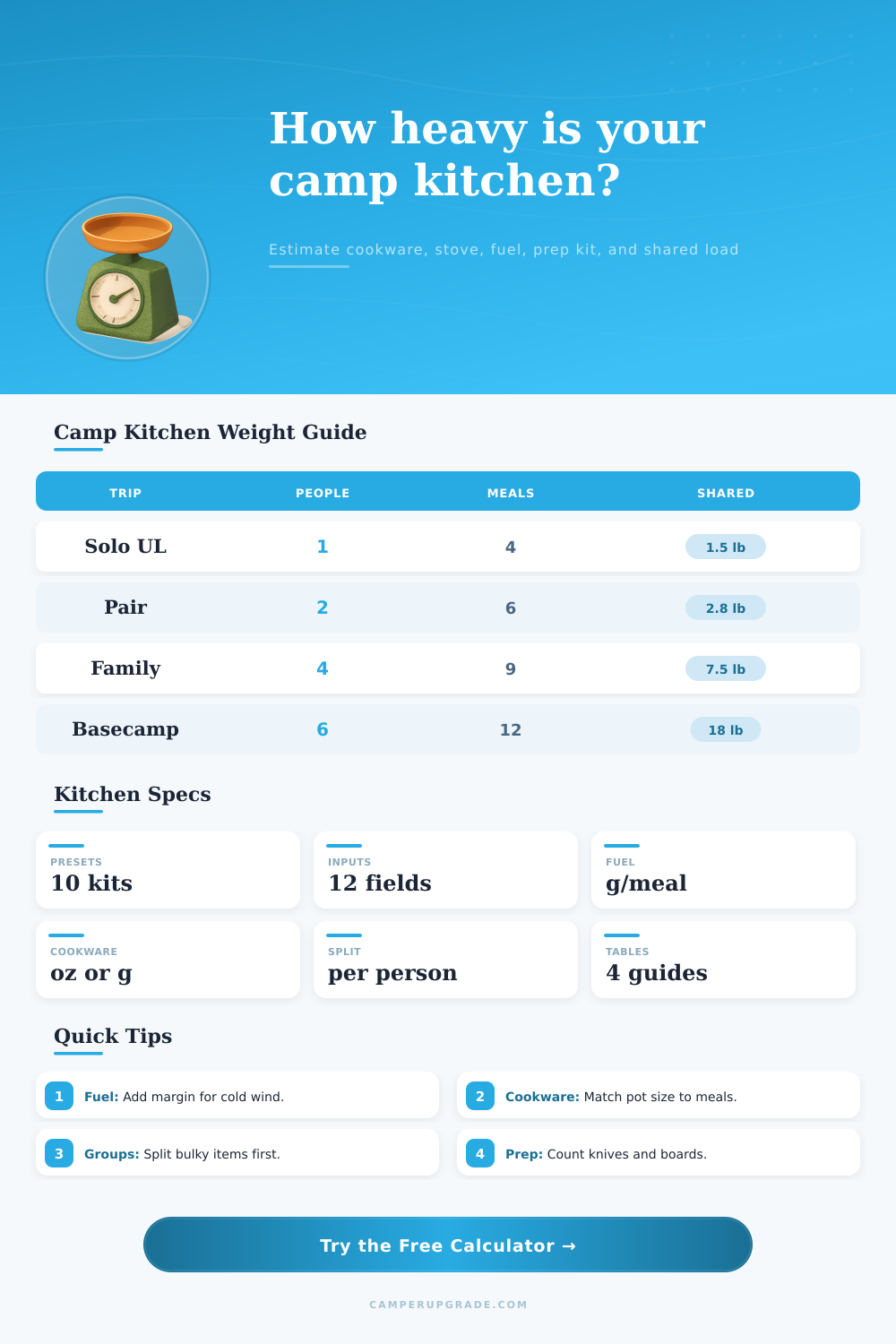
| Preset | People | Kitchen style | Typical shared load |
|---|---|---|---|
| Solo UL boil | 1 | Titanium pot and canister stove | 1.2 to 2.0 lb |
| Pair weekend | 2 | One pot, two dining kits, moderate fuel | 2.5 to 4.0 lb |
| Family car camp | 4 | Pan, pot, utensils, larger stove | 6 to 11 lb |
| Scout patrol | 8 | Large pots, clean-up kit, shared storage | 12 to 22 lb |
| Basecamp chef | 6 | Two-burner cooking and prep station | 16 to 30 lb |
| Fuel type | Planning burn | Best use | Weight note |
|---|---|---|---|
| Canister gas | 7 g per meal | Backpacking boil meals | Count canister shell separately if exact packing matters. |
| Alcohol | 18 g per meal | Simple solo cooking | Fuel is light per bottle but burn rate is higher. |
| White gas | 14 g per meal | Cold trips and groups | Better for snow melt and long simmering. |
| Propane | 22 g per meal | Car camp stove | Large cylinders add container weight. |
| Wood starter | 3 g per meal | Legal wood-stove routes | Carry backup fuel where fire rules require it. |
| Gear bucket | Formula | What to include | Cut check |
|---|---|---|---|
| Cookware | Manual weight | Pot, lid, pan, gripper, windscreen | One pot can replace a pan on simple menus. |
| Stove | Manual weight | Burner, stand, regulator, hose, lighter | Match stove size to pot diameter and group size. |
| Fuel | people x days x meals x burn x margin | Gas, alcohol, white gas, propane, or starter | Cold water and wind increase real burn. |
| Prep kit | Tools + daily add-on | Knife, board, soap, oil, spices, foil, towel | Pre-portioning reduces camp prep weight. |
| Per-person share | Use case | Pack feel | Action |
|---|---|---|---|
| Under 1 lb | Solo UL or very lean pair kit | Easy to absorb | Check fuel margin before cutting more. |
| 1 to 2 lb | Normal backpacking group kitchen | Reasonable shared load | Assign stove, fuel, and pot to named packs. |
| 2 to 4 lb | Family, canoe, or comfort cooking | Noticeable but workable | Split bulky cookware from dense fuel. |
| Over 4 lb | Basecamp or patrol kitchen | Heavy shared system | Use bins, carriers, or multiple cooking stations. |
💡Camp Kitchen Weight Tips
When planning a kitchen for a trip into the woods, the total weights of the kitchen is going to have a significant effect on the distance that you can travel into the woods with your kitchen, as well as the number of supplies that you are able to have for the trip. The total weight of the kitchen will affect your comfort on the trip and how you are able to carry your pack. Often, individuals begins to consider what items that they would like to include in their pack into the woods, but without considering the way that the weight of each of those items will add up to the total weight of the kitchen equipment.
Of the items that you select for your kitchen, some of the items will be items that you will carry into the woods with you for the entire trip, while other items will be supplies that you consume while on the trip. Items like cookware and stove will be items that you carry into the woods with you for the entire trip, while items like fuel and food are supplies that you will consume while on the trip. By distinguishing between items that you will have in your pack while in the woods versus supplies that you will consume, you can make a decision about what items you would like to include in your pack.
How to Plan a Light Kitchen for a Camping Trip
For instance, you can decide if you would like to use one heavy pot that can also be used as a frying pan, or if you would like to use two lighter pot that will require an extra lid and gripper to operate. One of the factors in the calculator is that you will be able to input the size of the individuals that will be going on the trip, the length of the trip, and the number of meals that will be cooked on the trip. Based off these variables, the calculator will be able to calculate the amount of fuel that is necessary to cook those meals during the length of the trip.
The type of fuel that is used for the stoves has a significant effect on the total weight of the fuel that is being carried into the woods. For instance, canister gas is often used for camping stoves, but the canisters of gas can become heavy with melted snow or with a large number of individuals that are being fed. Alcohol stove require more fuel to cook the meals, but use lightweight bottles that are beneficial for individuals that are traveling alone.
White gas is beneficial for cold weather, but requires a heavy container for the fuel, and has a higher chance of spills when being transported. The calculator allows individuals to switch between these different fuel options, and can display the effect that the burn rate of these different fuels will have upon the total weight of the individuals pack. Items like knives and cutting mats has a significant effect upon the total weight of the pack.
For example, a knife and cutting mat will replace a number of gadgets, but are only useful for recipes that incorporate those specific tools. Individual items like spices, oil, and coffee filters have little weight individually, but the weight of those items will increase with the number of days of the trip and the number of individuals that will be consuming the meals. Items like bear bag is efficient for small groups of individuals, but may become bulky for larger groups of individuals.
The shared storage section of the calculator allows individuals to determine if it is better to use a heavy hang kit for all individuals, or to divide the packers between two individuals. The packing margin for items like bags, tape, and spare parts may seem small for each of these items, but the percentage will be applied to the total weight of the kitchen. This extra weight each individual in the trip must bear.
The calculator will calculate the packing margin for the kitchen after the amount of the fixed and consumable items are totalized, to reflect the true weight that each individual will be carrying on the trip. While it is important that the weight of the kitchen is as light as possible, the goal is to create a kitchen that is appropriate for the size of the individuals, the length of the trip, and the weather. If the total weight of the kitchen is to match the demands of the trip, then the weight will feel appropriate for the individuals that are to carry the kitchen.
Thus, each individual will have less time in making decisions about which items belong to which individuals, and more time to enjoy the meals that is cooked in the kitchen. You should of considered the weight more carefully. Its better to plan ahead so you dont recieve a surprise.