Camp Kitchen Water Usage Calculator
Estimate cooking water, hot drinks, dishwashing, hand washing, food prep, surface cleanup, gray-water capture, container count, and reserve water for a camp kitchen.
🏕Camp Kitchen Presets
📝Kitchen Water Inputs
Count people whose meals, dishes, and hand washing come from this kitchen.
Use meal days, including departure breakfast if it uses kitchen water.
A group cooked meal is one shared breakfast, lunch, or dinner cleanup cycle.
Cold meals still use prep, utensil rinse, and hand-wash water.
Includes pasta, oatmeal, rice, soup base, rehydration, and pot steam loss.
Coffee, tea, cocoa, broth, or drink mixes heated in the kitchen.
0.09 gal is about 12 fl oz, or 0.34 L.
Dish water is scaled by group size and mess level below.
Greasy and baked-on meals need more wash and rinse water.
The biggest kitchen saver is removing food before it reaches the basin.
Before food prep, after raw food, after cleanup, and before serving.
A foot pump or spigot shutoff often uses 0.05 to 0.12 gal per wash.
Produce rinse, cutting board rinse, and quick utensil rinse before cooking.
Tables, prep bins, stove splatter, food storage lids, and hand-pump priming.
Mugs, filters, press parts, bottles, and cocoa residue.
Covers priming filters, spilled pours, melted ice not used, and container dregs.
Reserve is added after the kitchen-use estimate and transfer loss.
Dedicated kitchen jugs or tank allocation, separate from personal drinking water.
Use your portable gray tank, approved container, or site-specific disposal capacity.
This calculator estimates camp kitchen water only. Keep personal drinking water, pet water, showers, toilet flushing, and emergency medical water in separate plans.
Camp Kitchen Water Results
📊Kitchen Planning Snapshot
💧Camp Kitchen Water Rate Guide
| Use | Efficient range | Heavy range | Planning note |
|---|---|---|---|
| Cooking water | 0.10 to 0.25 gal per person cooked meal | 0.30 to 0.50 gal | Soup, pasta, and rice push this higher than skillet meals. |
| Hot drinks | 0.06 to 0.12 gal each | 0.15 to 0.20 gal | Large mugs and multiple coffee rounds add up fast. |
| Dishwashing | 0.25 to 0.60 gal per group meal | 0.90 to 1.50 gal | Basins beat running rinses when water is limited. |
| Hand washing | 0.04 to 0.10 gal per event | 0.15 to 0.25 gal | Foot pumps and shutoff spigots reduce waste. |
| Prep and surface cleanup | 0.5 to 1.5 gal per day | 2 to 4 gal | Raw meat, produce rinse, and group serving tables need extra water. |
🍜Dishwashing Method Reference
| Method | Base water | Best use | Tradeoff |
|---|---|---|---|
| Wipe first, tiny basin | 0.28 gal per group meal | Dry camping, van trips, limited jugs | Needs paper towels, scraper, or dedicated wipe cloth. |
| Three-bin wash/rinse/sanitize | 0.55 gal per group meal | Groups and food-safe camp kitchens | Efficient if bins are shallow and dishes are scraped. |
| Two-pan camp wash | 0.75 gal per group meal | Family tent sites and picnic tables | Simple setup but rinse pan dirties quickly. |
| Pump faucet rinse | 1.25 gal per group meal | RV galley or trailer sink | Convenient, but easy to overuse without a shutoff habit. |
| Mostly disposable or no dishes | 0.12 gal per group meal | Travel days or emergency simplicity | Reduces dish water but may increase trash handling. |
🚰Container And Jug Planning
| Container | Usable water | Full weight | Camp kitchen fit |
|---|---|---|---|
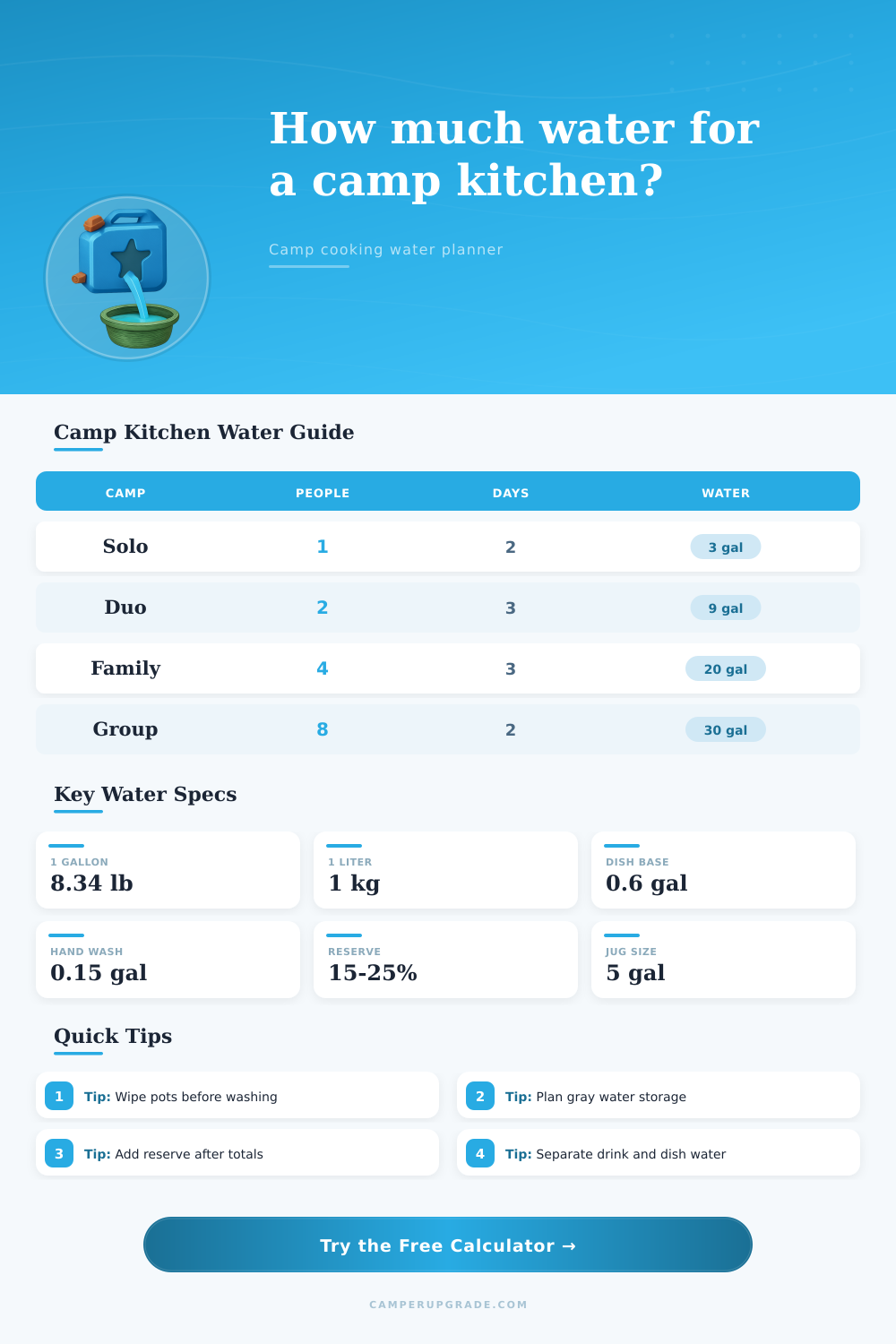
| 1 gal bottle | 1 gal / 3.8 L | 8.3 lb / 3.8 kg | Small coffee kit, hand-wash station, or backup. |
| 2.5 gal cube | 2.5 gal / 9.5 L | 20.9 lb / 9.5 kg | Easy lift for solo or duo kitchens. |
| 5 gal jug | 5 gal / 18.9 L | 41.7 lb / 18.9 kg | Common basecamp kitchen unit. |
| 7 gal aquatainer | 7 gal / 26.5 L | 58.4 lb / 26.5 kg | Good table spigot supply if you can lift it safely. |
| RV tank allocation | Variable | 8.34 lb per gal | Track kitchen use separately from shower and toilet demand. |
♻Gray Water Capture Guide
| Source | Usually gray water? | How to estimate | Important note |
|---|---|---|---|
| Dish wash and rinse | Yes | Most dishwashing water becomes gray water | Strain food solids before storage or approved disposal. |
| Hand washing | Yes | Nearly all hand-wash water needs capture | Use biodegradable soap only where locally allowed. |
| Cooking water eaten | No | Consumed in food or drinks | Pasta drain water does become gray water if discarded. |
| Prep rinse | Partial | Usually 70% to 90% capture | Produce rinse can carry soil and food scraps. |
| Surface cleanup | Yes | Treat as gray water when collected in towels or basins | Check campground and public-land rules before dispersing. |
💡Camp Kitchen Water Tips
For example, don’t forget that while food gets cooked, pots get filled, pans get washed, mugs get rinsed, and all of these things need water. We’ve seen folks who estimate jugs based off food needs, only to have a lightbulb go off there first night about running out of gallons or having to heavy of a pack. That’s usually because they didn’t think through what happens around the stove in addition to the act of cooking.
The obvious piece is cooking water. But there’s more. Some of the water stick to your pot as it boils or evaporates. Some of the water stay in whatever food you’re boiling, cooking, or rehydrating. And then there are hot drinks: You rinse your mug after each round of coffee/tea, which adds a steady drain. Drink size and number of drinks per person matter because coffee lovers will use much more water then a group that only drinks it during breakfast.
Where All Your Water Goes
Where most plans go awry is with dishwashing. How much water goes down at every meal depend on who scrubs what. Some foods are messier than others, and you also has to account for scraping. If folks wipe first, three bin in a row is great; if not, that hand-pump faucet comes in handy. But those little choices add up quickly over multiple days and with multiple people, much faster then most campers anticipate.
Hand washing ranks between cooking and dishes in importance. You do it before you start cooking, after handling raw meat, while cleaning up, and when serving food. Each one might seem insignificant. But when you multiply that by four or five times a day per person, it doesn’t take long to add up.
The same is also true of table wipe-downs, or rinsing off produce. These never get included in pre-planning. However, they are what will make you have to go out for another jug if your original numbers was already stretched.
The supply side of gray water isn’t usually given equal consideration. Somewhere has to recieve dish, hand, and surface water, which may be limited by dry conditions or campground rules. By estimating the separate amount of gray water versus total, you can determine if capturing it in your containers is feasible, or if you should reduces washing volume instead.
The things you can’t predict ahead of time are what the calculator doesn’t see. An extra day because of the weather, an extra cup of coffee on a cold morning, or a cleanup that take much longer than planned all pull from that margin. And a reserve added after the base calculation is a way to keep that buffer honest instead of hiding it within other numbers.
That’s why you run the numbers, to see what dominates your overall picture. If it’s washing dishes that takes up most of it, then the solution is typically a tighter rinse habit plus better scraping… Not buying another five gallon jug. If it’s cooking/drinks, then it’s often a matter of meal choice/less rounds of hot beverages.
The point isn’t to bring just the right amount each time. The point is understanding where the water realy goes, so the next trip has less surprise and more margin.
Put the categories side by side instead of battling them out in your head. Then, the decision suddenly seem a lot easier.