Butter Powder Ratio Calculator
Convert recipe butter into shelf-stable butter powder, hydration water, optional oil boost, and trail-friendly spoon measurements.
Butter Powder Conversion
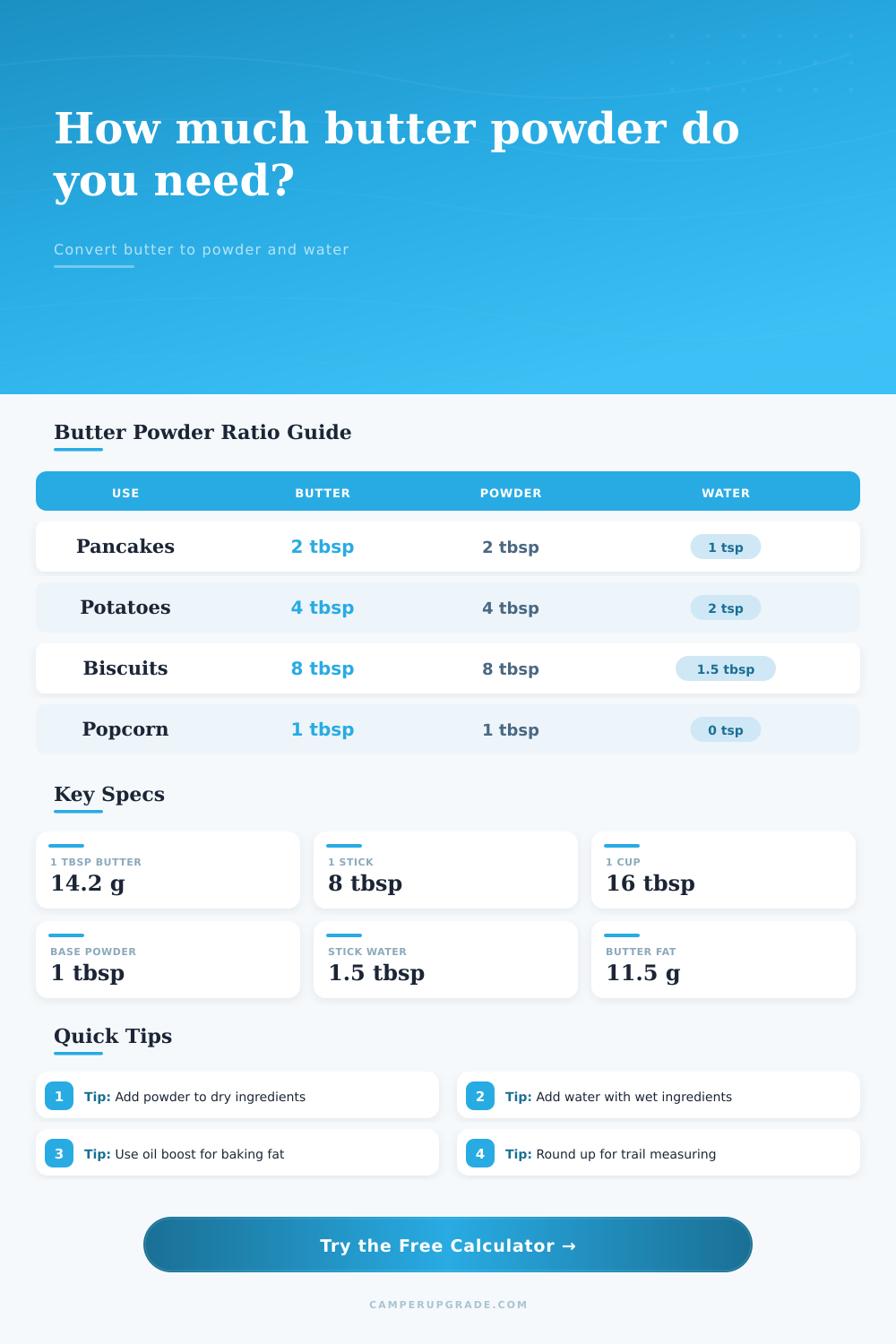
| Fresh Butter Amount | Tablespoons Butter | Base Powder | Base Water |
|---|---|---|---|
| 1 teaspoon butter | 0.33 tbsp | 0.33 tbsp | 0.19 tsp |
| 1 tablespoon butter | 1 tbsp | 1 tbsp | 0.56 tsp |
| 1/4 cup butter | 4 tbsp | 4 tbsp | 2.25 tsp |
| 1/2 cup or 1 stick butter | 8 tbsp | 8 tbsp | 1.5 tbsp |
| 1 cup butter | 16 tbsp | 16 tbsp | 3 tbsp |
| Ratio Style | Powder Per 1 Tbsp Butter | Water Per 1 Tbsp Butter | Best Use |
|---|---|---|---|
| Stick-swap powder | 1 tbsp | 0.56 tsp | Recipes and mixes |
| Spreadable camp paste | 1 tbsp | 1.5 tsp | Toast or potatoes |
| Baking dry-mix blend | 1.1 tbsp | 0.5 tsp | Biscuits and bread |
| Sauce and gravy blend | 0.9 tbsp | 2 tsp | Liquids and sauces |
| Dry seasoning shaker | 0.75 tbsp | 0 tsp | Popcorn or noodles |
| Rich full-flavor blend | 1.25 tbsp | 0.75 tsp | Cornbread and batter |
| Texture Adjustment | Powder Multiplier | Water Multiplier | Calculation Effect |
|---|---|---|---|
| Standard replacement | 1.00x | 1.00x | Follows selected ratio |
| Thick spread or biscuit mix | 1.05x | 0.85x | Firmer mixture |
| Sauce, gravy, or potatoes | 0.95x | 1.60x | Smoother hydration |
| Dry sprinkle or coating | 0.90x | 0.00x | No added water |
| Freezer-bag meal hydration | 1.00x | 1.25x | Extra absorbed water |
| Camp Recipe | Butter Equivalent | Base Powder | Hydration Note |
|---|---|---|---|
| Trail pancake batter | 2 tbsp | 2 tbsp | Add water to wet mix |
| Instant mashed potatoes | 4 tbsp | 4 tbsp | Use thin texture |
| Dutch oven biscuits | 1 stick | 8 to 9 tbsp | Use fat boost |
| Popcorn seasoning bag | 1 tbsp | 0.75 tbsp | Keep dry |
| Camp gravy cup | 2 tbsp | 1.8 tbsp | Whisk into liquid |
Butter Powder is like a no-leak version of butter, so you don’t have to worry about butter going from solid to gooey and then leaking all over everything in your pack. Lighter to carry, and doesn’t melt into a puddle because it’s mostly milk solids and fat, butter powder are stable and won’t leak. It’s a whole other ingredient and needs to be treated different. Knowing how much to add is the primary issue.
Here’s what it boils down to: Butter is roughly 80% fat and 20% water. When they makes powdered butter, the water gets removed (by being dried into powder) and there’s only fat and milk solids left. Then, when you add water back in, you’re creating something from scratch. And that affects the volume. One tablespoon of butter isn’t going to be the same as one tablespoon of butter powder + water just because of how much volume it take up. There are density factors to consider too.
How to Use Butter Powder
How many times have you struggled with using butter powder incorrectly? The calculator on the page figure out the math so you don’t have to guess at whether it’ll wreck your pancakes. Finally, the most frequent error is adding rehydrating water too early. When you combine the powder with cold water and allow it to rest before preparation, all that fat will of separated out once more. What you’ll get isn’t creamy richness, but rather watery grease.
How to fix? Time. First, incorporate the dry powder into whatever you’re making (potato flakes, flour). Next, add the pre-calculated quantity of water along with any additional liquid such as broth or milk. Everything will hydrate at once, dispersing the fat throughout so that it remain well-mixed. A little thing that makes a difference for the ultimate dish texture.
Not all recipes call for the same amount of hydration. A biscuit needs something that’s more like a paste so it can form flaky layers; cornbread needs a similar thick, paste-like texture; mashed potatoes need something thin and watery to ensure the flakes gets covered in the liquid. By varying the amount of water with this tool, you can match the texture for whatever recipe you’re making.
When it comes time to make a seasoning shaker blend, or maybe a dry rub for popcorn, there’s no water at all, just the powder alone for aroma and flavor. You’ll use it for its aromatic properties, which show through your taste buds, as well as its mouthfeel. Which shows due to the fat content.
This is important: fat content creates mouthfeel, and volatile aromatics create taste. Dairy butter typically have a pure fat structure, which powdered butter doesn’t always have. And while powdered butter will have lots of flavor, it may not tenderize things as well than dairy butter does. That’s where the optional oil boost comes into play. The calculator can instructs you on just how much extra ghee or other neutral oil to use for something like biscuits or other breads that require softness in structure. So you’re getting all the nostalgic buttery taste without sacrificing the structure of your breads crumb. It is a practical compromise if you ask me for any hardcore camp cook unwilling to settle for tough, dry results.
The length of time your powder will last depends on storage conditions as well. More so than heat, the enemy are moisture. Keep the lid on tight. If you live in a humid climate, consider tossing one or more desiccant packets into the bottle. When the powder starts to go lumpy from absorbing ambient moisture, its rehydrating powers drops greatly. It won’t be smooth anymore; it’ll be gritty.
Before each outing, check your stockpiles. If it’s damp, then use it now or chuck it. You can’t fix a bad batch.
On their website, they have a handy reference table that lays it all out for typical conversions. But in reality, camping isn’t always done with typical servings. Maybe there are only a few of you. Or maybe there are 4 of you. Adjust the number of servings to match so you can make sure to serve up exactly what is needed per meal. For those big trips, when every ounce matters, you don’t want to go overboard and waste stuff. They takes a large amount and break it down to reasonable daily portions.
In the end, butter powder is more than just an attempt at replicating reality. It’s an effort to bottle up what it feels like to cook at home and still have it last on the trail. Sure there’s sacrifice… You lose a little bit of texture for the sake of convenience and stability. But if you get it right (with fat adjustments and correct hydration timing), then you’re surprised at how close that campfire pancake comes to those Sunday morning pancakes at home. And that grease leak goes away. The taste doesn’t.