
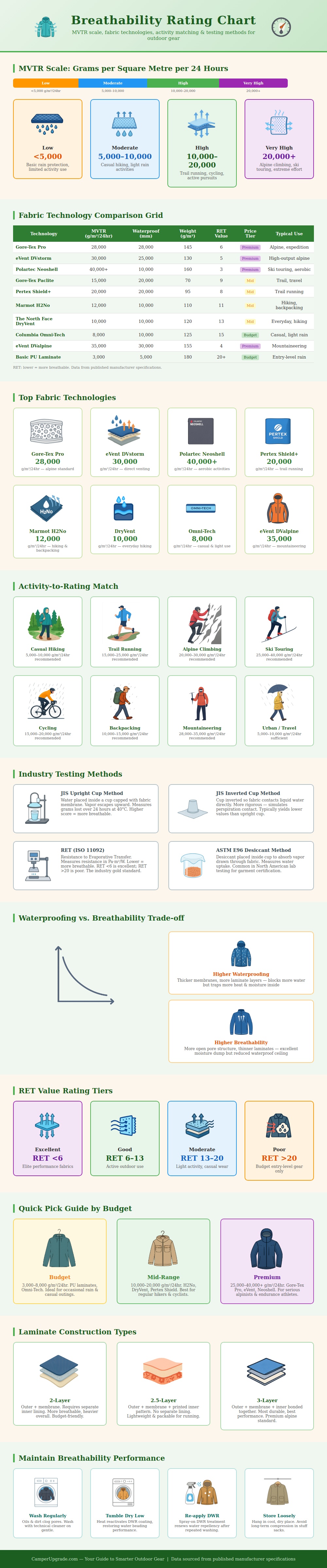
Breathability is the measurement of the amounts of moisture vapor that can pass through a fabric. Breathability is a feature that is necesary for an individuals that wear a waterproof jacket while performing physical activity. When an individual is performing physical activity, that individual is producing moisture vapor from there body in the form of sweat.
If the waterproof jacket that the individual is wearing has low breathability, the moisture vapor will become trapped within the waterproof jacket and the individual will feel wet and uncomfortably while wearing the jacket. If the waterproof jacket has high breathability, however, the moisture vapor is able to escape from the jacket, which will help to keep the individual dry from the inside of their waterproof jacket. Breathability is often measured in the amount of grams of moisture vapor that can pass through the fabric in the period of one square meter of the fabric over a 24 hour period.
Breathability in Waterproof Jackets
The levels of breathability of the fabric range according to the type of physical activity that an individual will perform while wearing the waterproof jacket. For instance, an individual who is walking light rain may only require a jacket that has moderate breathability, but an individual who is performing high intensity physical activity will require a jacket that has high breathability. For the same reason, however, an individual who is wearing a jacket with very high breathability for an activity that has very low breathability may pay more for a feature that the individual dont require for that physical activity.
The construction of the fabric is one of the factors that will determine the breathability that the waterproof jacket will have. Manufacturers manufacture Waterproof jackets by laminating different layers of fabric together. Each of these layers may contain membrane that have microscopic pores within them.
These microscopic pores are small enough to allow liquid water to be blocked from entering the jacket, but large enough to allow moisture vapor to exit the jacket. Some jackets use coatings for waterproofing that have low breathability, while other jackets use membranes with high breathability that manufacturers often produce for the individual who performs intense physical activity. Testing methods for breathability involve placing the waterproof jacket into cups and measuring the amount of moisture vapor that passes through the fabric over time.
Another test for breathability is called RET, which stand for resistance to evaporative heat transfer. A low RET number indicates that the waterproof fabric have low resistance to moisture vapor passing through the fabric, which indicates high breathability. The conditions within the test, however, are not representative of the body conditions under which the individual wearing the jacket will use the waterproof jacket.
The sweat that the individual produces contains salt and oils that have the potential to clog the microscopic pores within the fabric, which will reduce the breathability of the jacket over time.
waterproofing and breathability are two feature of a waterproof jacket that are often trade-offs for the manufacturer. A very tight weave of fabric will allow for the waterproofing of the jacket to be increased, but will decrease the breathability of the jacket. Conversely, a fabric with high breathability will have a decreased level of waterproofing.
One method for managing this trade-off is to wear a breathable layer underneath the waterproof jacket, and to include vent zips on the jacket that allow for the release of hot air from the body. In order to ensure that waterproof jacket maintains its breathability, the jacket may need to be maintained. Dirt and body oils may collect within the microscopic pores in the jacket.
These element may fill the pores and, therefore, create a reduction in the breathability of the jacket. To counteract this potential loss of breathability, the jacket may be washed with gentle technical jacket cleaners to remove the dirt and body oil, and the jacket may be dried on a low setting to maintain its water repellency. If the waterproof jacket is not maintained, the jacket will lose it’s ability to breathe.
Another feature that an individual should consider when purchasing a waterproof jacket is the construction of the jacket. For instance, a two-layer jacket may require a separate liner for the inner portion of the jacket, but can have good breathability. A 2.5 layer jacket is more packable due to the fact that it has a printed interior.
Finally, three-layer jackets often have the advantage that all of the layers of the jacket are bonded together, which increase the durability of the waterproofing. Finally, the individual should also consider the breathability of the jacket in relationship to the intensity of the physical activity that they will perform while wearing the jacket. Choosing a jacket whose breathability can be matched to the physical activity that they will perform will help to ensure that they remain dry and comfortable while performing those activities.