Break Frequency Calculator
Plan safer camping drive stops from distance, moving speed, RV or trailer setup, driver count, passengers, pets, road conditions, fatigue, fuel range, and stop duration.
⚡Camping Drive Presets
🛑Route, Driver, And Stop Inputs
Use the drive distance for the travel day, not the full vacation loop.
Use expected moving speed after traffic and towing limits.
Extra drivers lengthen comfort, but breaks still protect attention.
Bigger rigs and technical roads shorten the recommended interval.
This field has one of the strongest effects on break frequency.
Bad light, wind, and rain increase attention load.
Passenger needs can set the stop rhythm even if the driver feels fine.
The calculator never recommends a longer gap than this cap.
Use for bathroom, stretching, water, and quick driver reset stops.
Use for fuel, charging, meals, longer walks, or RV checks.
A forced major stop is added before exceeding this range.
Useful when lunch, fuel, or pet walks need longer stops.
Add hitch checks, campground departure, dump station, or parking time.
Used to flag whether this plan is one long day or a split drive.
Formula core: base driving interval is adjusted for rig, driver count, fatigue, weather, passengers, and your hard cap; stop count is then matched against route distance and forced fuel or charge range.
Break Frequency Results
⚙Break Planning Factor Grid
📊Break Interval Reference
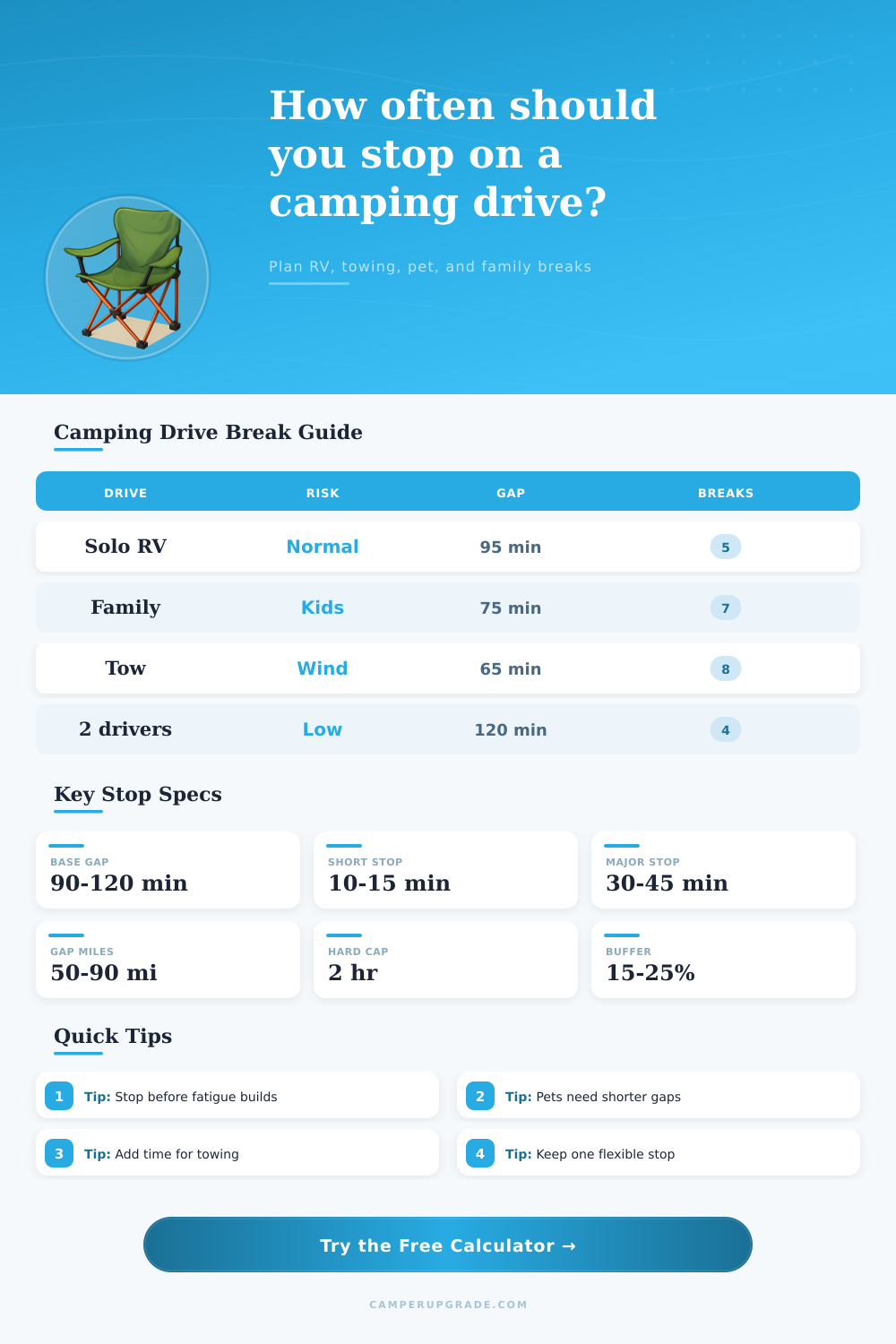
| Driving situation | Starting interval | Best stop type | Planning note |
|---|---|---|---|
| Rested car-camping highway | 110 to 130 minutes | Short stretch | Good only when traffic and weather are easy. |
| Normal camper van day | 95 to 115 minutes | Short stretch | Works for light rigs with simple parking. |
| Travel trailer or motorhome | 80 to 100 minutes | Short plus rig check | Use stops to inspect hitch, tires, straps, and doors. |
| Kids, pets, or mobility needs | 65 to 85 minutes | Walk and restroom | Passenger comfort usually sets the real rhythm. |
| Night, wind, rain, mountains | 55 to 75 minutes | Longer reset | Shorter intervals protect attention and reaction time. |
🚗Rig And Passenger Adjustment Table
| Factor | Typical multiplier | Why it changes stops | Calculator effect |
|---|---|---|---|
| Two drivers | 1.08 | Shared attention and rotation reduce fatigue. | Slightly longer interval. |
| Travel trailer | 0.90 | Towing adds mirrors, braking distance, and parking checks. | Shorter interval. |
| Mountain towing | 0.78 | Curves, grades, heat, and braking add workload. | Much shorter interval. |
| Kids and pets | 0.72 | Bathroom, motion, hydration, and walking needs stack up. | Comfort-first interval. |
| Tired driver | 0.72 | Fatigue reduces vigilance before it feels dramatic. | More frequent breaks. |
⏱Stop Duration Planning Table
| Stop type | Typical minutes | Use when | Break planning note |
|---|---|---|---|
| Quick shoulder-safe reset | 5 to 8 | Water, stretch, mirror check | Use only at safe pullouts or rest areas. |
| Normal stretch break | 10 to 15 | Restroom, walking, snacks | Best default for camping travel days. |
| Pet or kid walk | 15 to 25 | Leash walk, bathroom, car seats | Short intervals need realistic stop length. |
| Fuel or meal stop | 25 to 45 | Fuel, lunch, RV walkaround | Combines comfort stop with range needs. |
| Charge or long rest | 40 to 75 | EV tow, fatigue reset, dinner | Treat as a major stop in the calculator. |
🏕Common Camping Drive Scenarios
| Scenario | Distance | Suggested rhythm | Expected breaks |
|---|---|---|---|
| Weekend campground hop | 140 miles | One break near midpoint | 1 short stop |
| Family trailer day | 280 miles | Break every 70 to 85 minutes | 3 to 4 stops |
| Solo van interstate | 430 miles | Break every 95 to 115 minutes | 4 to 5 stops |
| Mountain tow route | 260 miles | Break every 55 to 70 minutes | 4 to 5 stops |
| Remote gravel access | 180 miles | Short final-leg checks | 3 to 4 stops |
🛻Range And Major Stop Reference
| Range limit | Trip distance | Forced major stops | Use case |
|---|---|---|---|
| 120 miles | 360 miles | 2 stops | EV towing, small tank, remote fuel |
| 180 miles | 360 miles | 1 stop | Heavy tow in wind or mountains |
| 220 miles | 360 miles | 1 stop | Typical conservative tow-day plan |
| 300 miles | 360 miles | 1 stop | Light vehicle with range buffer |
| 500 miles | 360 miles | 0 stops | Range does not force a major stop |
✅Break Frequency Tips
The calculator estimates a travel rhythm for planning. If a driver feels drowsy, impaired, ill, or unsafe, stop sooner and do not continue until conditions improve.
Before departure, there’s a break frequency calculator that takes driving distance, towed weight, number of people/passengers, fuel range, weather & fatigue into a practical schedule for stops along the way. The most common mistake made by camping drivers is planning the drive then the stops; they’re backwards. Stops is what make it a tired scramble-to-set-camp experience at day’s end or a relaxed arrival. With an understanding of what realy fuels fatigue & attention, your stops will stop feeling like interruptions and become part of the plan.
How far? That’s a secondary question. How far until my attention span (and that of other people in the car) fails me? With a rested driver in decent conditions and no passengers, distance can be greater. Bring a crosswind, a trailer or two squirmy children into the equation, and soon the safe distance shorten considerably. Plug those factors in to the calculator above and it do the rest; there’s no more wondering how many miles each should of count for, just whether the total seems reasonable for your party.
Why Planning Stops Is Important
Fatigue is sneaky. It’s not something that usually gives any warning; your reaction time just slides and you don’t notice until an hour later. This is why the start conditions matter far more then most drivers realize. If one person got a good night’s sleep and starts fresh, while another stayed up late partying or worked all day at their job before pulling out, feeling just as alert, he should run a shorter rhythm than the other guy. You can adjust for that with this tool instead of hoping to force your way through it by pure willpower.
The passengers make the schedule. Kids (and pets) don’t often consider how “comfortable” the driver feels. They will require bathroom breaks, water, and just general movement at times that aren’t always within your control. Seniors might requires breaks to take medicine or circulate more frequently. If these requirements are factored in, you’ll see a change in results: Longer stops, shorter intervals. But this isn’t a penalty; it’s the true cost of having everyone remain reasonably comfortable during entire trip.
There’s one more wrinkle: range limits. Often you have to stop for gas or water refill or EV charge anyways. The calculator lets you combine the forced stop along with your comfort pace to ensure you’re not picking either schedule to the detriment of the other. If timing works out, one stop becomes a fuel stop where you can stretch your legs and do a quick rig check. That doesn’t balloon your overall stop time if you plan it out in advance.
The math is also influenced by things we easily overestimate: weather and road conditions. Your mental workload increase during rain, night driving, or when climbing a mountain grade, even if your speed stays the same. That’s why the calculator assume these loads and reduces the recommended interval. A seemingly conservative plan in black and white seems pretty normal when you’re behind the wheel.
It is not just about the recommended interval, although that is very helpful. What’s more helpful is the complete picture. This include how many intervals the day calls for and how much total time those intervals will take. It also shows if moving times can all fit within a day’s worth of driving. That’s what helps answer the question: Should this be done as a one-day drive or over two? Does it allow some buffer to account for the delays which inevitablly occur on a road trip with campgrounds?
A good plan considers breaks to be a part of the drive, not stops during the drive. If you construct your pattern beforehand, even if minor details don’t work out exactly as planned the day will still feel manageable.