
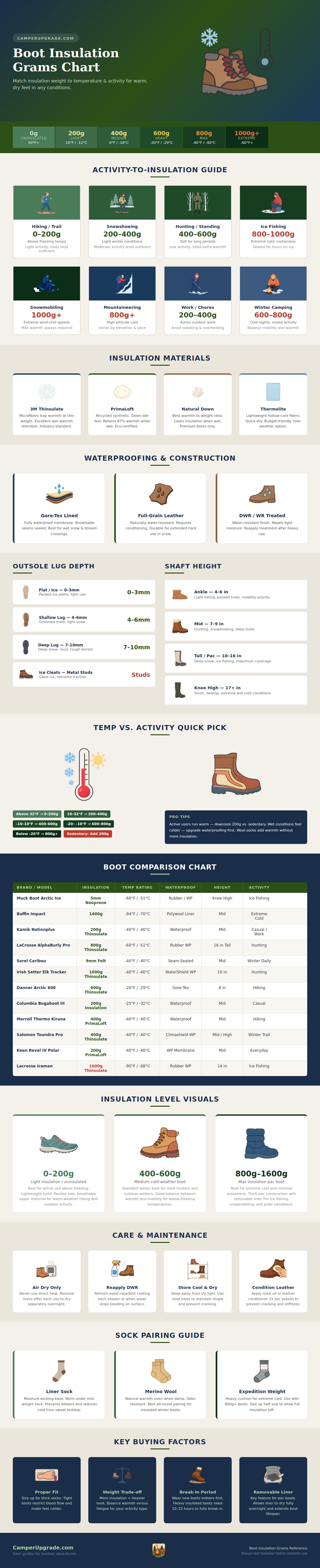
When you dont select the apropiate winter boot for your activities, your toe could become numb. Many people believe that the thicker the winter boots are the warmer they will be. The insulation weight of the winter boots actualy determine the warmth of winter boots.
The insulation weight is measured in gram and determines how much heat the winter boots will hold when it is cold outside. The insulation weight that you should select for your winter boots should match your level of physical activity. If you are performing high-energy physical activities with your body, you will naturaly produce a large amounts of heat with your body.
How to Choose the Right Winter Boots
If you wear winter boots with too much insulation when you are performing these high-energy physical activities, your boot will naturally cause your feet to sweat. Sweat on your feet will make your feet feel cold due to the loss of heat from your damp feet. In this case, you should select winter boots with a low insulation weight so that your feet can breathe during these physical activities.
However, if you will not be performing any physical activities with your body, your muscle will not produce heat with your body. In this case, you should select winter boots with a high insulation weight so that the boot will naturaly retain the heat that your body does produce. The insulation materials for your winter boots is also another important factor to consider when purchasing these types of boots.
Two types of insulation that people often use in winter boots are synthetic and natural down. Synthetic insulation is useful because the synthetic insulation maintain its insulating properties even when it is wet. An alternative to synthetic insulation is natural down insulation.
Natural down insulation is warm, but it loses its insulating properties when it becomes wet. Thus, natural down is a good insulation alternative when the weather is dry and cold but a bad insulation alternative when the ground is slushy and wet. Another necessary component of winter boots are the waterproofing components of the boots.
If water find its way into the seams in the winter boots, the insulation in the boots will become wet and will no longer retain the heat necessary to warm your feet. Some winter boots use membranes that allow for breathability like Gore-Tex. Other winter boots use full-grain leather to allow the boots to provide a rugged defense against water.
You should condition the leather boots and refresh the waterproofing coatings periodically. If you do not maintain the waterproofing components of the winter boots, the boots will no longer protect your feet from becoming wet. The physical design of your winter boots is another important factor to consider in the selection of appropriate winter boots for your needs.
The height of the boot shaft can provide protection of the muscles in your ankle because the muscles in your ankle contain blood vessels. However, if your winter boots are too low in shaft height, cold air can enter into the boots. The outsole of your winter boots will determine the stability that your boots will provide while walking on different types of surfaces.
Deep lug are useful for winter boots for walking on mud and snow but metal studs are useful for walking on glare ice. The physical fit of your winter boots is also an important factor in retaining heat with your winter boots. If your winter boots are too tight for your feet, the insulation in the boots will be compress.
If the insulation is compressed, the insulation will no longer naturally trap the air that will naturally retain heat for your boots. Additionally, if your winter boots are too tight, they will restrict the blood flow in your feet. Blood flow is the means by which your body transport heat from your body to your toes.
If wearing winter boots that are too tight to your feet limits the blood flow in your toes, your toes will remain cold even if you wear thick wool socks. Because thick wool socks will occupy some of the space inside your winter boots, you should select a larger size of winter boots so that there is a pocket of air in your winter boots. Air is a means of insulating the feet inside your winter boots.
Finally, you should take care of your winter boots after you use them. You should never place your winter boots near a fire or near a vent that has high level of heat in the building. Extreme heat will crack the leather of the boots and will damage the glue that hold the boots together.
Allow your boots to air-dry out and remove the liners from the winter boots to allow the boots to dry. If you choose winter boots with the correct insulation weight for your physical activities and properly care for your boots, your winter boots will naturaly keep your feet warm.