Bikepacking Food Weight Per Day Calculator
Estimate bikepacking food ounces per day, calories per riding day, trip carry weight, menu density, packaging overhead, food volume, emergency reserve, and resupply interval needs from your route profile.
🚲Bikepacking Food Presets
Your Bikepacking Food Plan
📝Route And Rider Inputs
🍜Food And Resupply Inputs
How it works: the calculator estimates riding energy from weight, moving hours, distance, terrain, climb, effort, weather, and fueling strategy, then converts calories into dry food weight, packaging weight, volume, and resupply carry weight.
📊Food Weight Planning Metrics
🥫Menu Density Reference
| Menu style | Typical density | Weight for 3000 kcal | Bikepacking note |
|---|---|---|---|
| Very dense nuts, oils, nut butter, chips | 150-180 kcal/oz | 16.7-20 oz | Efficient for remote carries but can feel repetitive. |
| Balanced trail menu | 125-150 kcal/oz | 20-24 oz | Good default for multi-day gravel and mixed routes. |
| Fresh or convenience-heavy food | 95-125 kcal/oz | 24-31.6 oz | Works near towns but grows heavy on long carries. |
| Bulky low-fat snacks | 75-105 kcal/oz | 28.6-40 oz | Volume can fill frame and fork bags quickly. |
📦Bikepacking Food Carry Reference
| Carry length | Food days counted | Common bag space | Planning read |
|---|---|---|---|
| Overnight or 24 hours | 1-1.5 days | Frame or feed bags | Volume is usually easier than weight. |
| Weekend route | 2-3 days | Frame plus seat or bar | Pack dense ride food low and accessible. |
| Remote gravel stretch | 3-5 days | Frame, fork, seat, bar | Menu density becomes a major handling factor. |
| Long dry section | 5+ days | All bags plus rack or overflow | Check both food weight and water carry together. |
🧮Formula And Conversion Reference
| Component | Formula idea | Typical range | Use in calculator |
|---|---|---|---|
| Ride energy | MET x kg x hours | 4.8-9.2 MET | Surface and effort set the daily cycling load. |
| Climb energy | Mass x gravity x gain | 25% efficiency | Total rider plus bike mass raises climbing calories. |
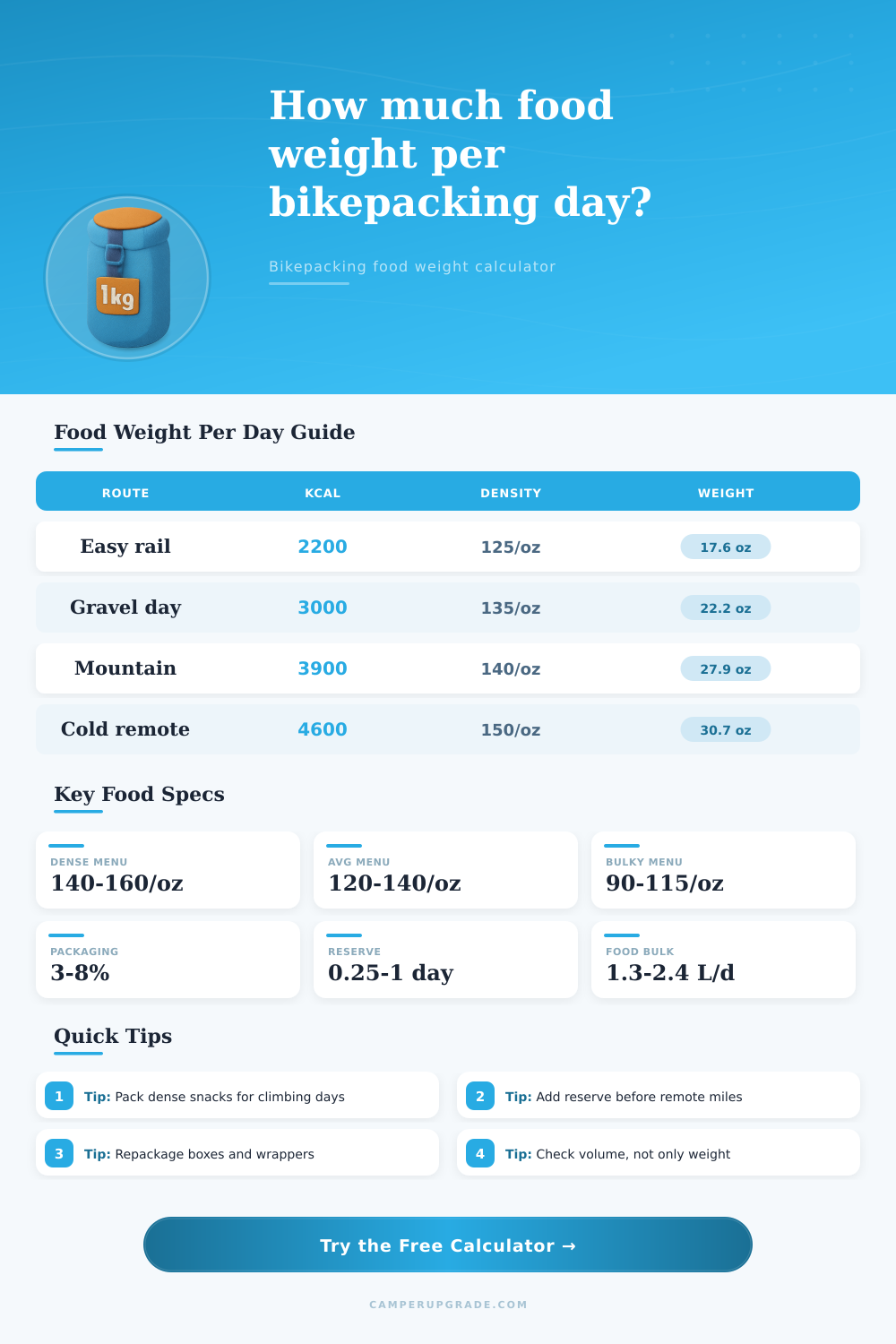
| Food weight | Calories / density | 75-180 kcal/oz | Higher density reduces ounces per day. |
| Packaging | Dry food x overhead | 3-8% | Repacking can reduce but not eliminate wrappers. |
| Food volume | Weight x bulk factor | 0.04-0.12 L/oz | Checks if the food fits your bags. |
🍽Daily Meal Split Reference
| Food block | Common share | Best bikepacking placement | Check before packing |
|---|---|---|---|
| Breakfast | 15-25% | Seat pack or top of food bag | Can you eat without unloading the bike? |
| Lunch and rolling snacks | 30-45% | Feed bags, frame bag, top tube | Enough easy calories while pedaling? |
| Dinner | 25-40% | Frame bag or seat pack | Dense enough after a long day? |
| Extras and drinks | 5-15% | Small pouch or cockpit bag | Includes electrolytes, dessert, and drink mix. |
💡Bikepacking Food Weight Tips
The key is to know how much food to pack for a bikepack by knowing what not to do: Too little food mean you’ll bonk out on day three. And if it’s rainy or you take a wrong turn, there will be no room for error.
Too much food? Each hill require more effort, and the descents become less secure.
How to Choose the Right Amount of Food
The point is that it’s not as simple as knowing how far you’re going, it’s about knowing how much you can carry between resupply. The total calories required for any day depend on how much you weigh. They also depend on what kind of gear and bike you ride. Other factors include how far you go, measured in hours pedaled, and how steep the terrain is, since climbing burns more calories per mile. Finally, the surface you’re riding on matter, as pavement requires less energy than singletrack or gravel. Weather also matters. Hot days may reduce your appetite (even if you pedal hard), while cold temperatures means you’ll need more calories to recover. All this adds up to a shifting daily goal that varies different than time of year and terrain.
But once you have calories, then what? You convert those calories into ounces. Now comes the art of knowing the density of menu. If it’s full of dense foods like oils, nuts, and dried fruit, it has more energy in each ounce then bulky packaged snacks or fresh tortillas. That will show quickly if you’re planning for a week-long carry (4 or 5 days). The higher-density food is lighter overall, but it takes planning to make sure it doesn’t get old, and that there isn’t too much repetition to keep things tasty after a long day.
There’s overhead in packaging. The more labels, wrappers, and resealable bags you keep, the more extra weight you has to carry. Some of it you can’t avoid, and repackaging do help cut down the weight. But fresh food boosts morale closer to town. It also decreases pack density and increases package size. This becomes a factor when your frame bag have to compete against tools and water bottles for space.
Volume is another underestimated variable for many riders. Freeze-dried meals, chips, bread and other items expand more than they appear to on paper. Your menu might fit on the page but require extra room when packed. While weighing a load, check its volume as well, how do you carry it? Do you need to strap extra bags outside the bike or are you carrying less food? Keep loads manageable and make sure bike handles predictably.
Food for reserve days is insurance in case something goes wrong. The weather, your schedule changes, or a store is closed. Even an extra half day of fuel makes a difference on the longest stretch, and it multiplies when you’re already accounting for multiple days to resupply. You should of planned for this.
Enter your food preferences and the specifics of your route into the calculator, and it will do the math for you. It takes the guesswork out of how menu choice, effort, and terrain combine.
Then there’s the practical benefit of doing one full test run before you leave. Load up the heaviest distance you think you’ll ever have to push, take it on a typical day ride and gauge its impact on climbs. See how the bags perform on rough stretches. Make sure your rolling snacks are actualy reachable without having to stop. Make minor tweaks now rather than run into bigger issues when you’re days away from the nearest town. You should of checked this before you leave.