Backpacking Protein Calculator
Estimate protein per day, total trip protein, protein-food weight needed, and calorie-deficit risk from body weight, trail intensity, recovery priority, diet style, and packed food weight.
🥜Backpacking Nutrition Presets
⚙Protein Planning Inputs
📊Protein Food Spec Grid
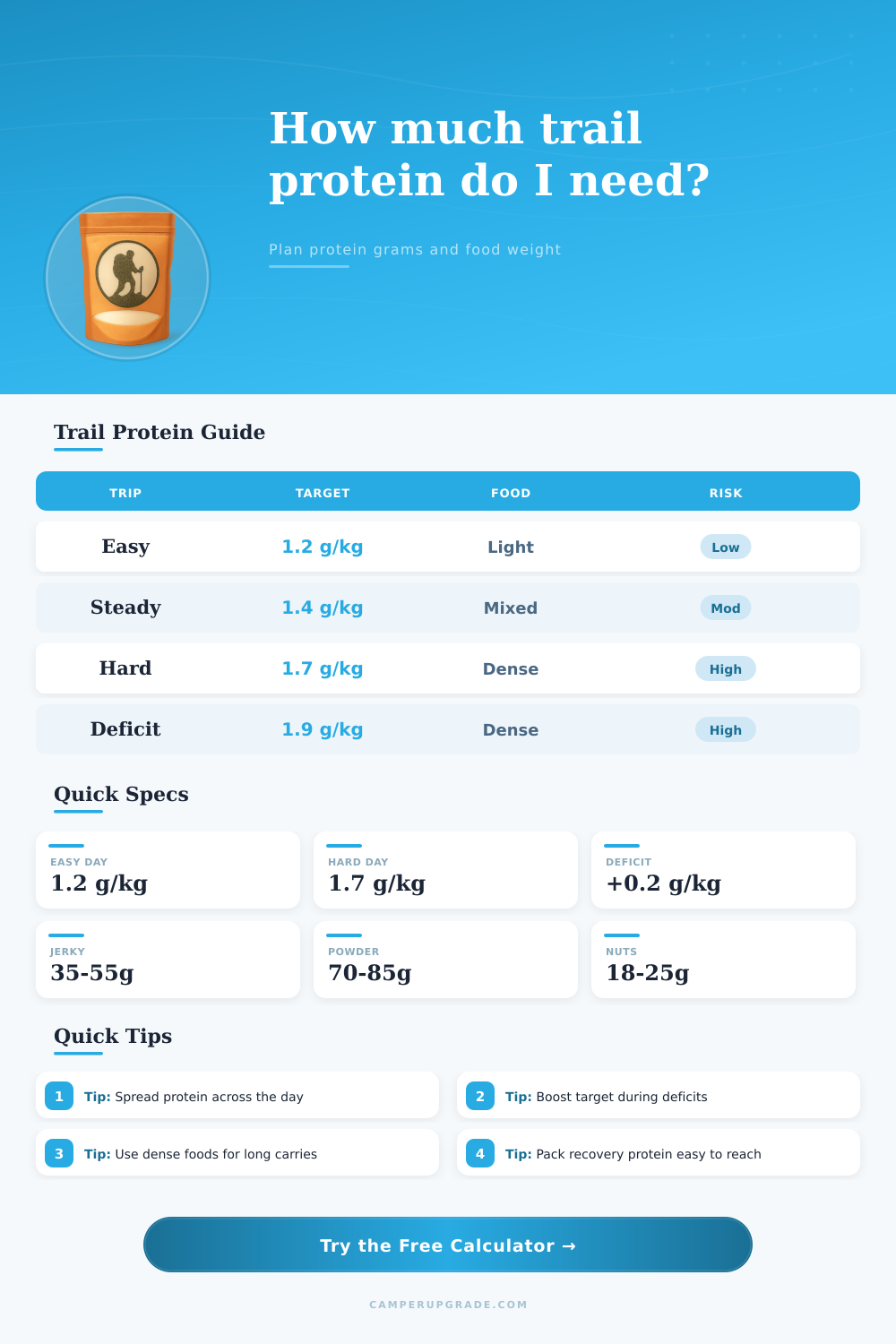
📋Protein Target Reference
| Trail context | Starting target | When to raise it | Planning note |
|---|---|---|---|
| Easy overnight | 1.0 to 1.2 g/kg | Cold weather, poor sleep, or soreness | Useful when mileage is low and meals are balanced. |
| Moderate backpacking | 1.2 to 1.5 g/kg | Daily climbs, longer pack carries, or low calories | A practical range for many three-season trips. |
| Hard mileage or big gain | 1.5 to 1.8 g/kg | Repeated hard days or fast recovery needs | Divide protein across meals instead of saving it all for dinner. |
| Large calorie deficit | 1.7 to 2.1 g/kg | Food carry is tight or body weight loss is expected | Protein becomes more important when total calories are low. |
| Plant-heavy menu | Add 6% to 18% | Protein sources are mostly legumes, grains, nuts, or seeds | Use the vegetarian factor to keep a planning buffer. |
🍲Trail Protein Density Table
| Food type | Protein per 100 g | Packability | Best calculator use |
|---|---|---|---|
| Whey or plant protein powder | 70 to 85 g | Very dense, low water | Use for recovery drinks or breakfast boosts. |
| Jerky, biltong, meat sticks | 35 to 55 g | Dense but salty | Good for lunch snacks and no-cook protein. |
| Tuna, salmon, or chicken pouch | 20 to 30 g | Convenient but water weight | Good for shorter carries or first-day meals. |
| Dehydrated bean or lentil meals | 18 to 28 g | Efficient if dry | Good vegetarian base when paired with grains. |
| Peanut butter powder | 45 to 55 g | Dense and mixable | Useful in oatmeal, wraps, shakes, or sauces. |
| Nuts, seeds, and nut bars | 15 to 25 g | Calorie dense, moderate protein | Count them, but do not rely on them alone. |
| Intensity | Multiplier | Typical day | Protein effect |
|---|---|---|---|
| Easy | 0.95 | Short miles, low gain | Slightly below base target |
| Moderate | 1.00 | Normal trail days | Base target unchanged |
| Long / climbing | 1.08 | Longer miles or steady ascent | Small target increase |
| Very hard | 1.24 | High routes or rough terrain | Large target increase |
| Deficit | Risk effect | Protein note | Food check |
|---|---|---|---|
| 0 to 250 kcal | Low | Normal target is usually fine | Keep meals consistent |
| 250 to 600 kcal | Moderate | Add a small protein buffer | Check snacks and breakfast |
| 600 to 1000 kcal | High | Protein target often needs raising | Use denser protein foods |
| 1000+ kcal | Very high | Recovery and muscle retention may suffer | Recheck total food plan |
🧭Preset Planning Examples
| Preset | Trip style | Protein strategy | Watch point |
|---|---|---|---|
| Easy weekend | Short mileage with balanced meals | Moderate target and normal density foods | Avoid overpacking specialty protein foods. |
| Thru-hike section | Repeated days with a mild deficit | Higher target and dense protein snacks | Small deficits add up across resupply legs. |
| Vegan long carry | Plant-heavy menu over more days | Vegetarian factor plus better density planning | Check total grams, not just calories. |
| Low-density snacks | Protein comes mostly from mixed snacks | Food weight required can rise quickly | Swap in powder, jerky, or dehydrated legumes. |
💡Backpacking Protein Tips
This calculator is for trail food planning, not medical nutrition advice. Individual needs vary with health status, altitude, heat, appetite, sleep, training history, and total calorie intake.
Protein intake is importance on a backpacking trip because the body are under stress on a backpacking trip. A persons body is under stress from having to carry a weight, climb elevation, and consume fewer calories than the bodys muscle require. Because of this stress upon the body, the bodys usual rule regarding protein intake must change, and the body must change its protein intake to encourage its leg muscle to recover and to maintain the persons energy level during the trip.
The protein calculator determine the protein needs of an individual by asking several questions of the backpackers. The backpacker must input their body weight, the length of the backpacking trip, the intensity of the trail that the backpacker will undertake, the expected calorie deficit that the backpacker will experience during the trip, the recovery needs of the backpackers, and the protein density of the foods that will be consumed on the trip. Each of these variable has the potential to impact the protein needs of the backpackers.
How Much Protein to Eat on a Backpacking Trip
For instance, an individual that will hike for moderate miles will have different protein needs than an individual that will hike for long miles with a calorie deficit. The intensity of the trail that the backpacker will complete will also impact the needs for protein; easier miles with less elevation will cause the body to break down less muscle than miles with challenging hills or terrain. The calories that are consume will also have an impact upon the protein needs of the backpackers; if an individual consumes fewer calories than they normaly require, the body may use muscle tissue for energy if the body dont have enough protein to draw upon for energy.
An individual with high recovery needs will require more protein than an individual with low recovery needs because the muscle will break down more during periods of higher recovery needs. Vegetarian diet contain less protein than diets that include dairy products and meat, so an individual that follows a vegetarian diet may have higher protein needs to ensure that their body have enough protein for muscle repair. The protein density of the foods that will be consumed will impact the total weight of the backpackers pack; foods with high protein density, such as protein powder or jerky, will weigh less in the pack than foods with low protein density, such as nuts or trail bars.
Many individual make mistakes when they dont spread their protein intake throughout the day. For instance, an individual should not consume all of the protein that they require each day within one meal each evening. An individual should also avoid consuming only one group of foods for protein throughout the day.
Instead, they should spread their protein intake throughout the day to improve the absorption of the protein, and to maintain their blood levels of amino acids throughout the day. Another common mistake is not considering the impact that calorie deficit may have upon protein needs; an individual that consumes many calories during the day will require less protein than an individual that has a calorie deficit each day. The reference tables include information regarding the protein densities of different food that can be consumed on a backpacking trip.
These tables also include information regarding the protein needs of individuals for different scenario on the backpacking trip. These tables is provided for reference only. For instance, if an individual experiences heat throughout the trip, they will burn more calories and may require more protein; the same for altitude and sleep quality.
Therefore, these tables are provided as a starting point for each individual before they begin to backpack, and before each resupply of food for the trip.