Backpacking Electrolyte Daily Calculator
Estimate daily trail water, sodium replacement, drink-mix servings, potassium and magnesium support, hourly pacing, and refill pressure for backpacking days in heat, humidity, altitude, snow, or long mileage.
🏕Backpacking Day Presets
💧Daily Trail Inputs
Used for baseline fluid needs and pack-load strain.
Include water carried at the start of the day.
Use actual hiking, climbing, portaging, or snowshoe time.
Helps estimate intensity from pace.
Steep climbing raises sweat and sodium loss.
Use the felt temperature during the warmest work period.
Humid air makes sweat less efficient.
Sun and dry wind both increase fluid planning.
High altitude can raise respiration water loss.
Measured sweat rate is best if you have pack-weigh data.
Enter 0 unless the custom profile is selected.
White shirt marks and stinging eyes often mean higher sodium loss.
Lab sweat tests vary widely; 400 to 1300 mg/L is common planning range.
Do not try to replace every milligram of sodium during normal hiking.
Include ramen, jerky, salted nuts, chips, soup, or electrolyte chews eaten on trail.
Check your drink mix, tablets, capsules, or homemade serving label.
Use total drinkable water access for the day, not just bottle capacity.
This adds a small planning buffer, not a medical correction.
This calculator estimates trail hydration and electrolyte planning. It is not medical advice. Kidney, heart, blood pressure, endocrine, medication, heat illness, or hyponatremia concerns should be handled with a qualified clinician.
Daily Electrolyte Results
🧭Live Electrolyte Spec Grid
📊Backpacking Electrolyte Reference Tables
| Sweat profile | Base rate | Common trail sign | Planning note |
|---|---|---|---|
| Very light sweater | 0.35 L/hr | Shirt damp only on climbs | Often enough with normal snacks unless heat is high. |
| Light sweater | 0.45 L/hr | Moderate dampness after steady hiking | Good default for cool forest and shoulder season trips. |
| Average backpacker | 0.65 L/hr | Wet shirt under pack straps | Common three-season planning value for loaded hiking. |
| Heavy sweater | 0.85 L/hr | Shirt wet through during climbs | Usually needs regular sodium during hot or humid days. |
| Very heavy sweater | 1.05 L/hr | Dripping sweat and soaked hat | Plan refills carefully and avoid forced overdrinking. |
| Sweat sodium type | Calculator value | Trail clue | Electrolyte approach |
|---|---|---|---|
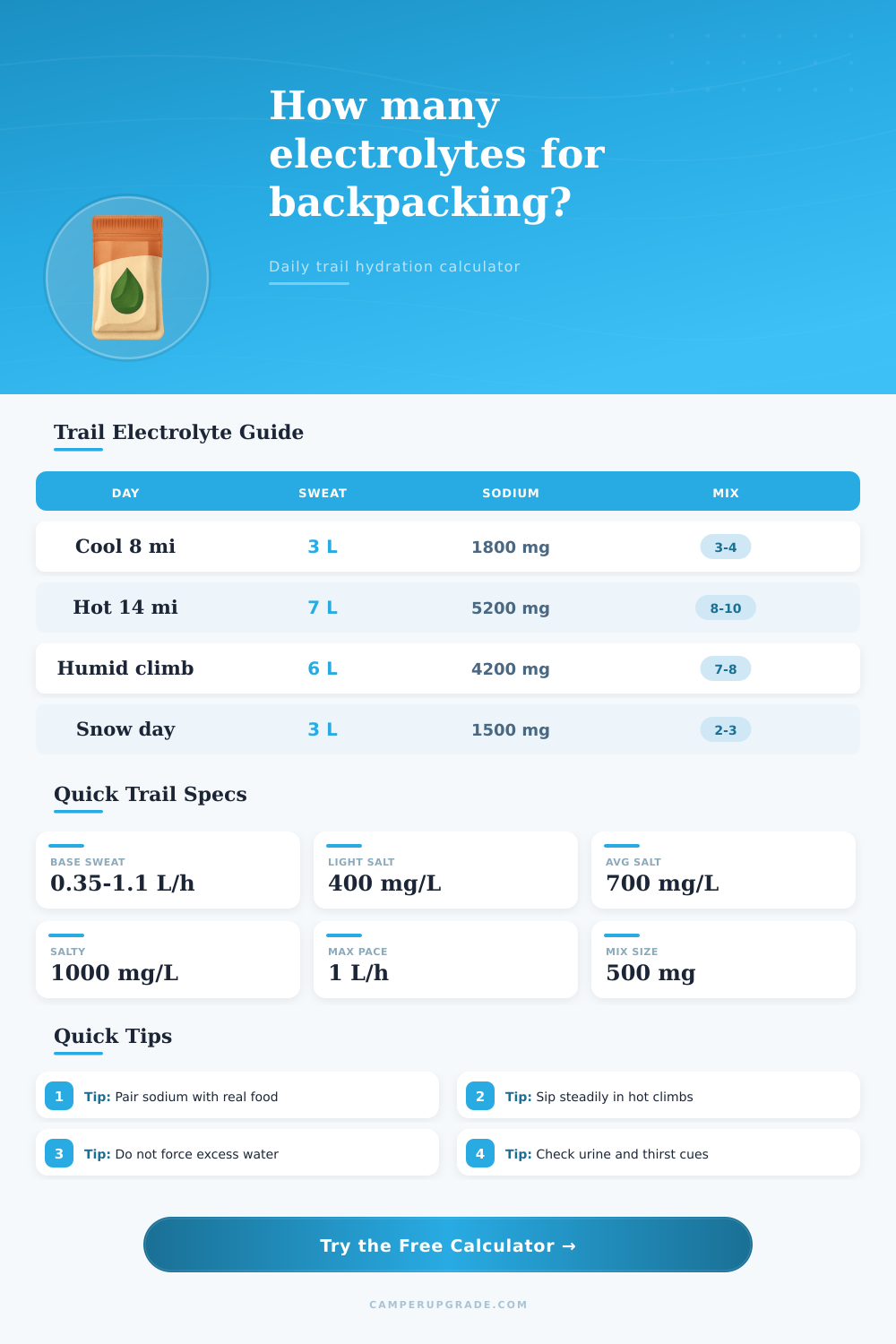
| Light salt sweater | 400 mg/L | Little salt crust on clothing | Food may cover easy days; mix helps during heat. |
| Average salt sweater | 700 mg/L | Some salt marks after long climbs | Most drink mixes are designed around this middle range. |
| Salty sweater | 1000 mg/L | White marks, gritty skin, stinging eyes | Use a higher sodium mix or add salty snacks with water. |
| Very salty sweater | 1300 mg/L | Heavy salt crust on hat and shirt | Split sodium across food, mix, and capsules if tolerated. |
| Custom tested value | 200-2000 mg/L | Lab or field sweat test result | Use the measured number for race, desert, or expedition days. |
| Condition | Sweat multiplier | Fluid concern | Electrolyte concern |
|---|---|---|---|
| Cool shade under 60 F | 0.80 to 0.95 | Thirst may lag in cold air | Meals can cover more of the sodium plan. |
| Mild three-season hiking | 1.00 | Normal sip-and-refill rhythm | Use sodium during long climbs or warm afternoons. |
| Hot sun over 85 F | 1.30 to 1.60 | Water access becomes the limiter | Spread servings hourly instead of all at once. |
| Humid, still air | 1.12 to 1.25 | Sweat may not cool well | Sodium loss can climb even at moderate pace. |
| High altitude above 8000 ft | 1.05 to 1.15 | Respiration increases water loss | Do not ignore electrolytes in cool alpine air. |
| Backpacking day | Typical inputs | Likely fluid range | Likely sodium plan |
|---|---|---|---|
| Cool forest 8 mi | 4 hr, 60 F, 1000 ft gain | 2.8 to 3.8 L/day | Food plus 2 to 4 servings. |
| Humid climb 12 mi | 7 hr, 80 F, 3000 ft gain | 5.0 to 7.0 L/day | Steady mix plus salty snacks. |
| Hot desert 14 mi | 8 hr, 96 F, exposed sun | 7.0 to 9.5 L/day | High sodium mix split hourly. |
| Winter snowshoe 9 mi | 6 hr, 25 F, heavy pack | 3.0 to 4.5 L/day | Warm salty food may cover much of it. |
| High alpine fastpack | 9 hr, 70 F, 10000 ft altitude | 5.5 to 7.5 L/day | Use mix early before appetite drops. |
💡Backpacking Electrolyte Tips
Your body can adjust its fluid and salt levels more quickely than many backpackers expect. However, it doesn’t always go as planned. The amount of water and sodium lost on a given day are highly influenced by factors like a long climb in warm air or being on an exposed ridgeline with drying wind.
Feeling great at mile ten? Assuming you will lose energy instead of tracking it could cause you to hit a wall suddenly. It starts with your sweat rate. How much sweat does it take for you to get your shirt damp? An hour of constant hiking for some has them barely breaking a sweat; for others, they’re sopping wet in just one big hill. That sweat rate can go up or down based off factors like body weight, pack load, how fast you hike, and how hot or cold it is.
How to Use the Calculator
But don’t worry about the coefficients and conversions and guessing the right answer. It’s trial and error if you try to figure this out without the calculator (above). Plug those numbers in and the calculator will do the work for you. And it’s not just how much you sweat but how salty your sweat is. While a lighter sweater will lose four hundred milligrams per liter of sweat, a salty sweater may reach a thousand or higher (you’ll know because your eyes will sting and you’ll see the white crust on your clothes). When sodium loss are higher, you don’t want to just replace with water and run the risk of diluting your small supply.
You can also measure and input your own value or select a profile from the list. It will balance your needs with what you have planned to eat so there is no fear of overpacking mix or under-replacing on hot days. Reality complicates the math. Real world routes present challenges like dry water between intended resupplies or breathing loss at higher altitudes, even in cool air. An extra coffee the night before throws you behind the eight ball. A saltier meal shift your starting line. The calculator assumes small buffers for all these factors, but ultimately, you must pay attention to thirst and urine color instead of using any one number as a rigid goal.
That’s where the reference tables on the page show the multiplier effect of different conditions (e.g., a humid day might only increase fluid needs modestly, yet those same conditions can raise sodium loss because sweat becomes less effective at cooling) which allows you to plan accordingly and determine if you should change your pace, carry more mix, or get started earlier during the worst part of the heat. But there are common errors that typically revolve around viewing it as a static rather than changing variable. A set amount, not one that changes. For example, drinking water without sodium during a long climb or gulping more fluid to try and meet a higher calculated need will both backfire.
You want a system that allows you to sip/eat while sustaining a pace that matches the day’s demands. The rhythm is what sticks. Now that you know how your sweat profile, effort level, temperature, and humidity works together, the calculator becomes a fast pre-day check instead of a mystery. It’s a baseline, but it’s up to you to feel out if plan is on point.
You should of checked your weight first.