ATV Trailer Ramp Length Calculator
Size ATV loading ramps from trailer deck height, target ramp angle, traction, loaded machine weight, ramp rating, wheelbase, clearance, and the space needed behind the trailer.
🏷Topic Labels
🛻ATV And Trailer Presets
Ramp Length And Loading Snapshot
⚙Calculator Inputs
Formula: ramp length = deck height / sin(angle). Actual ramp angle = arcsin(deck height / ramp length). Capacity use compares loaded ATV weight times safety factor against the entered ramp pair rating.
🔧Ramp Material And Spec Comparison
📊Reference Tables
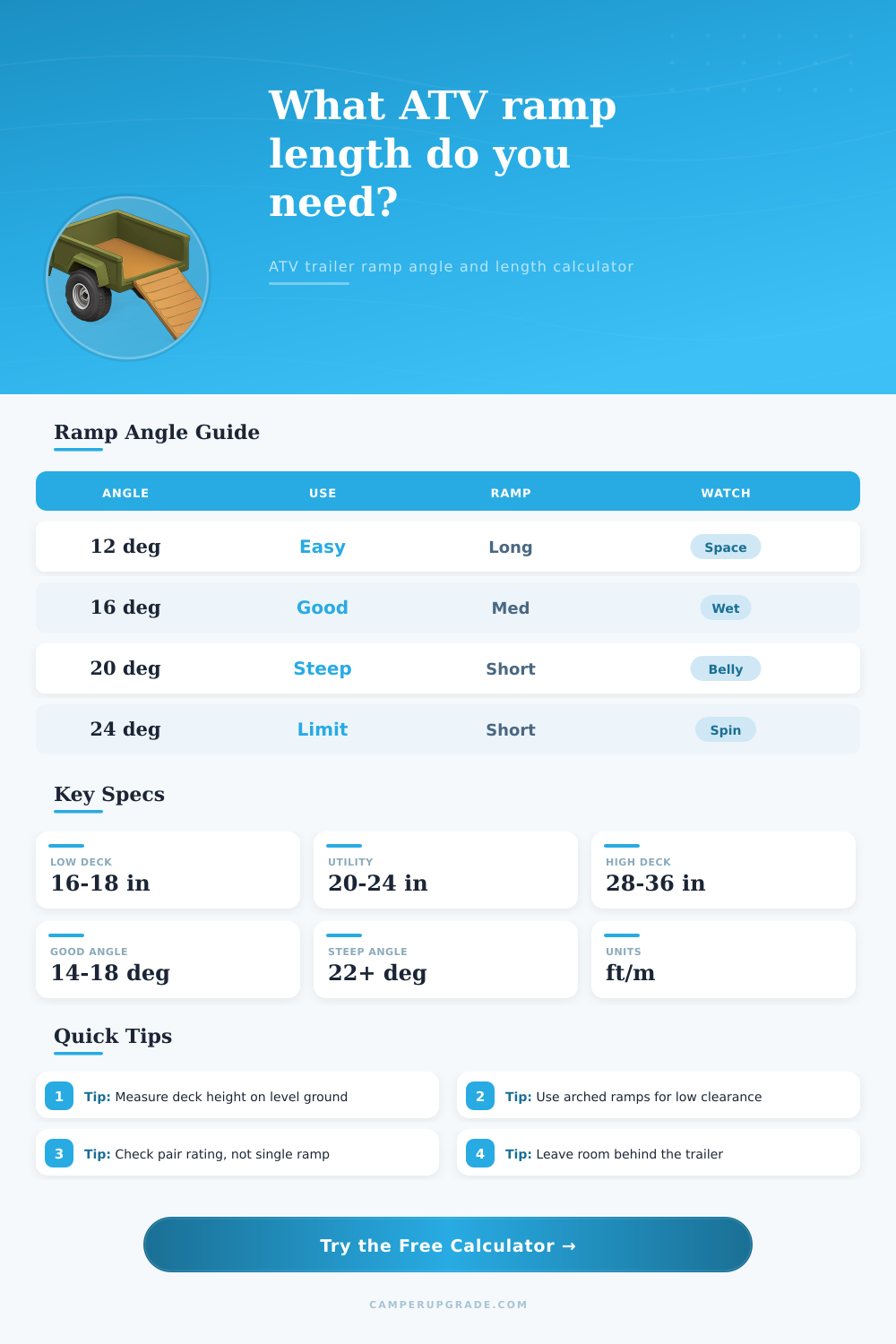
| Ramp Angle | Loading Feel | Best Use | Watch Point |
|---|---|---|---|
| 10 to 12 degrees | Very gentle | Heavy ATV, wet surface, low-clearance machine | Needs a long open area behind the trailer. |
| 13 to 16 degrees | Comfortable | Most utility ATVs and dry trailhead loading | Still check belly clearance at the deck edge. |
| 17 to 20 degrees | Moderately steep | Shorter ramps on dry, textured surfaces | Muddy tires can spin and straight ramps may drag. |
| 21 to 24 degrees | Steep | Only when traction, clearance, and control are strong | Use a spotter and consider a longer or arched ramp. |
| Over 24 degrees | Limit zone | Special cases with manufacturer approval | High rollover, spin, and undercarriage contact risk. |
| Deck Height | Ramp At 14 Deg | Ramp At 16 Deg | Ramp At 20 Deg |
|---|---|---|---|
| 16 in low utility | 5.5 ft | 4.8 ft | 3.9 ft |
| 20 in utility | 6.9 ft | 6.0 ft | 4.9 ft |
| 24 in enclosed | 8.3 ft | 7.3 ft | 5.8 ft |
| 30 in toy hauler | 10.3 ft | 9.1 ft | 7.3 ft |
| 36 in high deck | 12.4 ft | 10.9 ft | 8.8 ft |
| Surface Condition | Suggested Max Angle | Ramp Texture | Calculator Note |
|---|---|---|---|
| Dry expanded metal | 22 degrees | Open punched or expanded tread | Good grip if tires are clean and ramp is locked. |
| Rubberized door | 18 degrees | Full-width textured mat | Good tire support, but hinge transition still matters. |
| Wet metal | 16 degrees | Raised lugs or serrated traction | Flatten the target angle or dry the ramp first. |
| Muddy tires | 14 degrees | Aggressive texture and straight approach | Weight transfer and throttle surge increase risk. |
| Snow or frost | 12 degrees | Cleated or treated surface | Use a very conservative angle and a spotter. |
| Trailer Setup | Typical Deck Height | Common Ramp Length | Fit Check |
|---|---|---|---|
| Low 5x8 utility trailer | 16 to 18 in | 5 to 6 ft pair | Usually angle-friendly, still confirm track width. |
| Landscape trailer | 20 to 24 in | 6.5 to 8 ft gate or ramp | Gate angle varies with hinge height and tires. |
| Enclosed cargo trailer | 22 to 28 in | 7 to 9 ft ramp door | Door lip can catch low skids and plow mounts. |
| Toy hauler | 26 to 34 in | 8 to 10 ft door | Measure loaded suspension height at campsite grade. |
| High flatbed trailer | 32 to 40 in | 10 to 14 ft ramps | Needs long footprint and a strong retention setup. |
💡Loading Tips
An ATV’s loading may appear easy, but don’t be fooled by spinning tires on a wet ramp. With the tires struggling for traction up an incline that seems steeper than it is, you’re standing at the rear of the trailer, willing your machine to the top.
The ramp angle derived from deck height determine whether the load goes smoothly or scratches underside. Those inches make all the difference. A few inches of vertical rise doesn’t seem like much, yet they will dictate the slope you has to the vehicle climb. This time it’s not brute force; it’s not pushing hard with the throttle; it’s getting the math right.
Why Ramp Length and Angle Matter for Safe Loading
While folks tend to look only at total ramp length, they forget about how that impacts actual angle at which something ascends or descends. Less steep is better. You’ll have better traction and less chance of the front end lifting up unsafely.
The calculator (above) takes into account the sine of the angle instead of just straight-line distance. It will do the math for you using your desired angle and your trailer deck height to show you the minimum length you need. This avoids the all-too-common mistake of purchasing a ramp that “sounds” like it should of work, but isn’t long enough for the angle you want.
The only variable that spoils the best-laid plans of mice and men alike on rain-soaked campouts and muddy trailheads is traction. Clean tires and dry pavement make for a good approach. But add some loose gravel and mud, and once ideal ramp becomes dangerous. To adjust accordingly, the tool will factor in conditions, leveling off the recommended angle as grip deteriorates. That’s important, since once a tire loses traction, incline begins to increase spin rate very quickly. Even if it costs you a little extra real estate behind the trailer, you want a shallower ramp if you’re hooking up in slippery condition. Space is cheap; damage to your skid plates or hitch receivers is not.
Another quiet assassin is clearance at the deck edge for low-sitting ATV, particularly if they have a heavy cargo rack or a plow. It’s easy to see how a sharp break-over point between ground and trailer floor can be enough to drag the belly across. Ramps that arch slightly will lift in the center, providing added vertical space at the critical hinge point. A straight ramp need to be that much longer to provide same gradual curve. This means you’ll also need that much extra staging area behind the trailer.
Use the table on this page to see how deck height affect the safe angle of approach for different ramp styles. Most people do not realize that maximum capacity is a dynamic value. An ATV may be rated at eight hundred pounds but it is constantly shifting and surging as you go from stop to full throttle uphill. A safety factor is built in by the calculator so it knows the ramp will always be rated over the load it sees the moment it is loaded. A 1.25 or greater safety factor give a buffer on any bump, snap of the throttle etc that can see your ATV’s static weight exceeded. Best to have more than less when exceeding static weight in stressed conditions.
A proper loading is all about controlling friction and momentum while pushing the limits of your equipment. You need just enough speed to pop over the bump, but not too much so that you lose control at the top. That’s where the sweet spot of a well-chosen ramp comes into play. It allows for just enough angle to keep things under control, turning what could be a terrifing climb into a familiar drill. The ATV move uphill without struggle.
When the physics align in your favor, you don’t have to worry about scratches and can just look forward to fun rides.