Annual Park Pass Break Even Calculator
Compare an annual park pass against per-visit entry fees, occupants, planned visits, camping discounts, extra vehicle fees, state or federal pass style, and the months left before expiration.
🏞Park Pass Presets
📋Pass And Visit Inputs
Calculation Breakdown
📌Fast Benchmarks
📊Break Even Reference Tables
| Pass Price | Entry Fee Saved Each Visit | Break Even Visits | Planning Read |
|---|---|---|---|
| $50 | $10 per vehicle | 5 visits | Works for frequent nearby day-use parks. |
| $60 | $15 per vehicle | 4 visits | Good weekend-family threshold. |
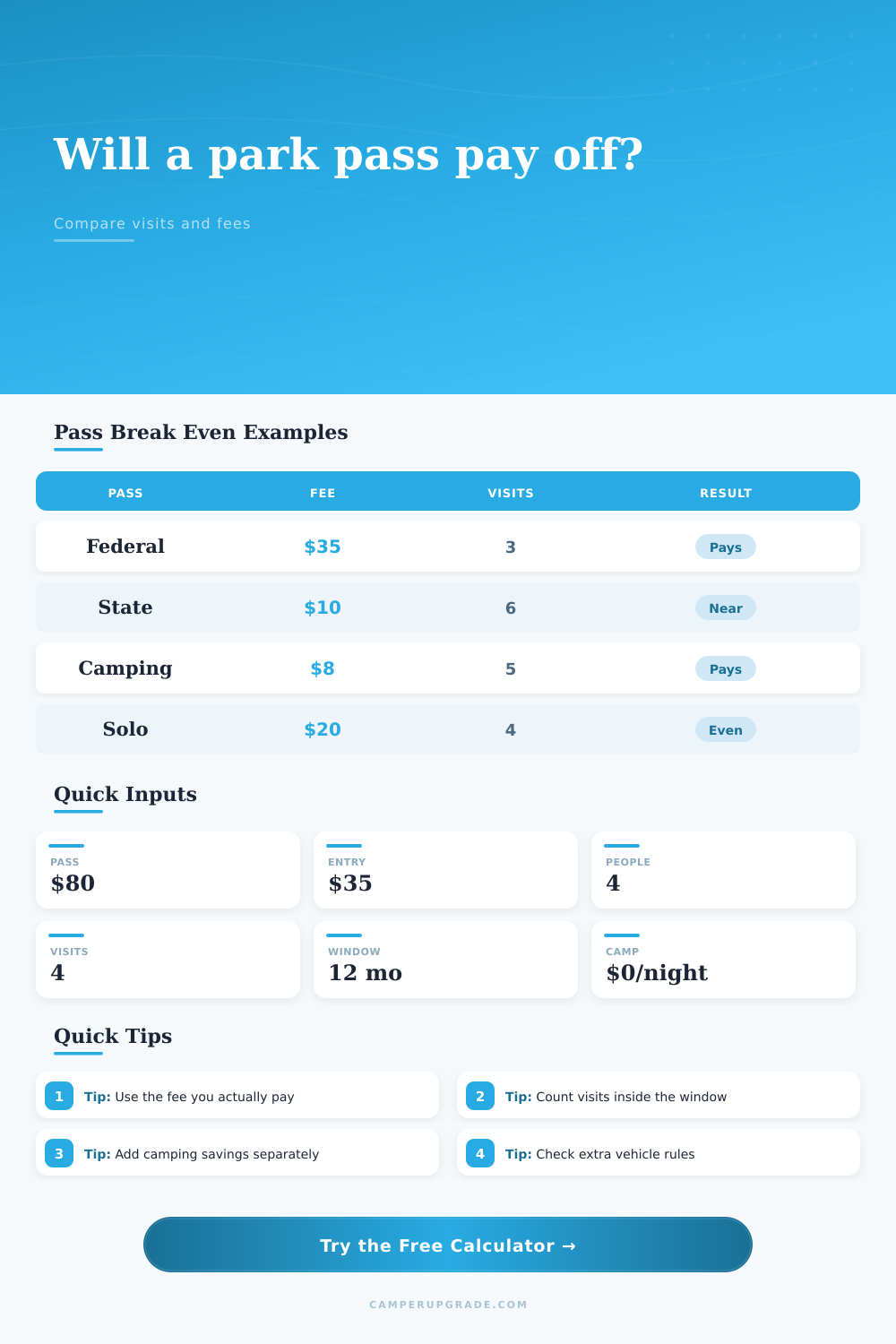
| $80 | $35 per vehicle | 3 visits | Often pays during a multi-park road trip. |
| $120 | $20 per vehicle | 6 visits | Needs a steady season of repeat trips. |
| $150 | $25 per vehicle | 6 visits | Camping discounts can shorten payback. |
| Fee Basis | How To Enter It | Occupant Effect | Common Use |
|---|---|---|---|
| Per vehicle | One gate fee per visit | Occupants do not change savings | Most drive-in entrance stations |
| Per person | Fee for one person | Multiplies by vehicle occupants | Walk-in, ferry, shuttle, or special sites |
| Mixed trip | Use your blended average fee | Depends on the average you choose | Trips split across different park systems |
| No entry fee | Enter 0 for entry fee | Camping discounts may still matter | Pass bought mainly for camping credits |
| Expiration Window | Planned Visits | Visit Pace | What To Check |
|---|---|---|---|
| 12 months | 12 visits | 1.0 per month | Normal annual planning pace. |
| 9 months | 6 visits | 0.7 per month | Useful for passes expiring by calendar year. |
| 6 months | 4 visits | 0.7 per month | Late-season purchases need tighter plans. |
| 3 months | 3 visits | 1.0 per month | Works only when trips are already scheduled. |
| Camping Discount | Nights Used | Total Credit | Break Even Effect |
|---|---|---|---|
| $0 per night | 0 nights | $0 | Only entrance savings count. |
| $5 per night | 8 nights | $40 | Can remove two to four low-fee visits. |
| $10 per night | 10 nights | $100 | May pay for a modest state pass alone. |
| $15 per night | 14 nights | $210 | Camping-heavy users should include it. |
🧭Pass Type Comparison Grid
Federal Vehicle
High fee tripsBest when several planned entrances charge a higher vehicle fee and the pass covers everyone in the same vehicle.
State Vehicle
Repeat local useOften depends on many shorter visits, because individual state day-use fees may be lower than national park gates.
Camping Credit
Night savingsDiscounted campground nights can be more important than entry savings for campers who stay multiple nights per trip.
Multi Vehicle
Rule checkExtra vehicles can add recurring fees unless the pass, reservation, or campground policy clearly includes them.
💡Park Pass Break Even Tips
An annual pass can be a smart investment that offsets expenses and even becomes profitable depending on how often you visit. Many people get one on impulse at entrance since the cost seems too large compared to the one-time cost of entry. They think they’ll make it into the park a minimum of ten times during the year. But in reality, few of those folks return as frequently.
An annual pass is worth something if you go enough times and use it enough times. It has nothing to do with how much you love naturey. With that in mind, here’s calculation based off your numbers.
How to Decide If an Annual Pass Is Worth It
The calculator is designed to stop you from making inaccurate guesses regarding how often you travel. It exposes where your intentions meet reality, where do they differ?
Will you be traveling in a single vehicle or are you individuals who each pay separately? Some parks charge per car, while others charges per person. At those parks charging per person, a day-use entry is a lot more costly when there is four adults in the car. So purchasing the annual pass pays off sooner.
On the other hand, the per-car rate isn’t impacted by how many people you have along for the ride. The math comes down to whether or not you’ll visit enough to break even with the per-visit price.
To be clear: A later-in-the-year purchase lowers the value of your pass. Most people get their pass mid-season and they’re paying for 12 months of access. That means you’ll have to go twice as much (six months) to get your money’s worth on an annual pass. Adjusting the expiration date is an option with this tool. It doesn’t factor trips beyond dates of your pass.
Don’t forget campground discounts. They’re free, after all, so why overlook ’em? Certain passes includes cheaper rates when you stay at campgrounds. These night-by-night credits increase value more then just the entry fees. The nightly credit might make the pass worthwhile even if you just go a couple of times. This is true if you like to camp alot.
Things get complicated when there are additional cars. Does the pass include a second car? Does it include a towed vehicle, such as a boat or RV? If not, then each time you use that park, you’ll have to pay an additional fee, reducing your net savings.
The chart below shows what various fee structures does to the minimum visits needed in order to break even. A park with a high per-day fee would need just three visits before it breaks even. A park with a low per-day fee, such as many state parks, may take a dozen visits to reach the same breakeven point. Because the cost per day is lower at state parks, the break-even point is higher; you need more visits to recoup the initial cost.
This data doesn’t mean that you shouldn’t be honest with yourself about what kind of traveler you are. Don’t plan out some ideal trip. Review your logs from last year. Did you visit three park last year? If nothing has changed, assume you’ll visit three this year.
The math is easy but people aren’t mathematical. Sure, if you want to see more and think you might get around to it, go ahead and buy the pass. Just understand the price is part of the journey. Don’t anticipate any money back.
Knowing the numbers upfront before swiping that credit card pays off. An annual pass is a way to buy certainty. The gate fee is a tax on being spontaneous. Pick the one that best fits your life (not your dreamd-up itinerary).