Altitude Sickness Risk Calculator
Estimate acute mountain sickness risk from sleeping elevation, ascent rate, maximum altitude, symptom pattern, prior history, exertion, hydration, and medical caution factors.
🏔Altitude Trip Presets
⚙Altitude, Ascent, Sleep Elevation, and Symptom Inputs
This calculator is for planning and symptom triage support only. It does not diagnose altitude illness or replace wilderness medical training, local rescue guidance, or clinician advice.
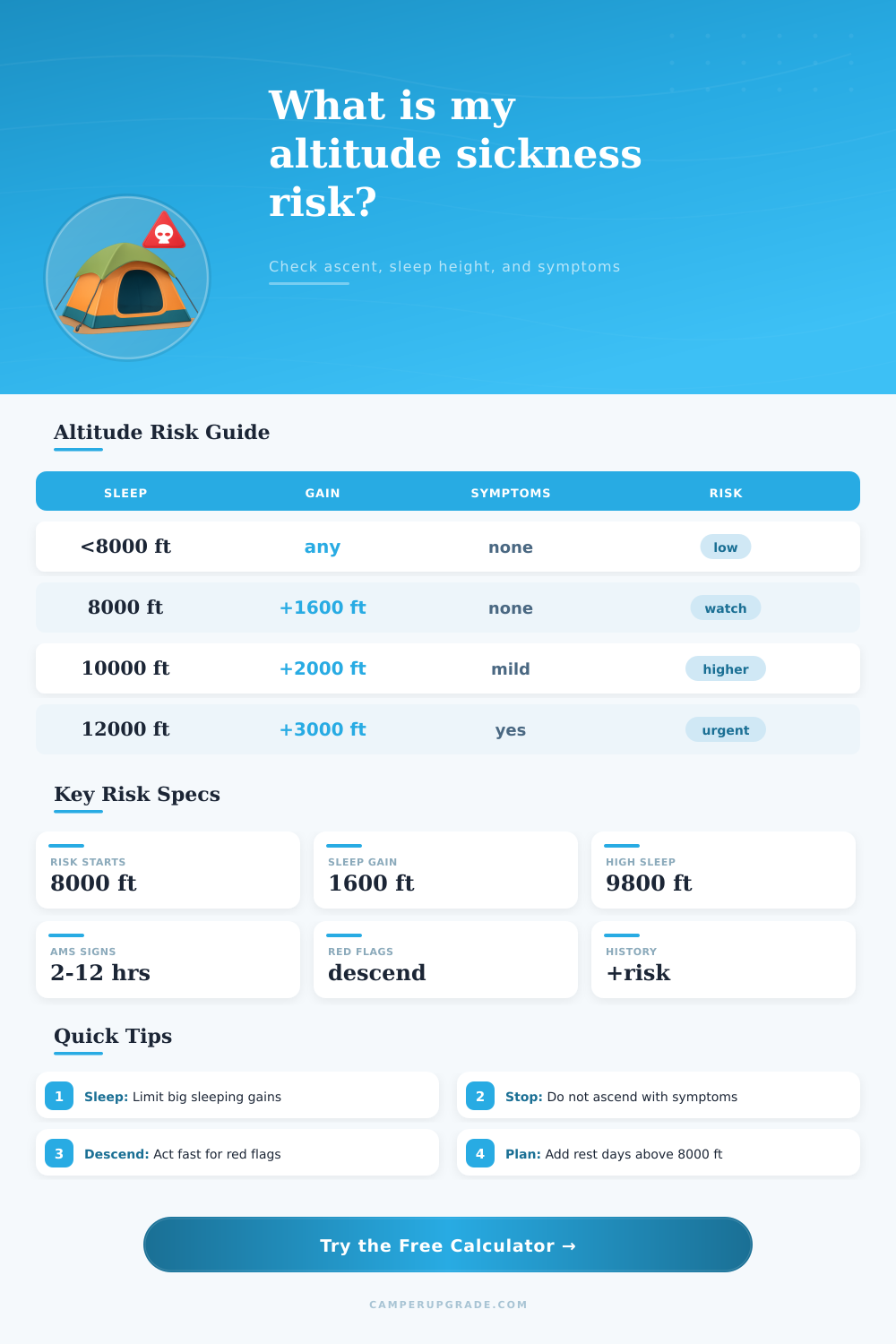
🧭Altitude Risk Factor Grid
Sleeping Height
8,000 ft+AMS risk becomes more relevant once sleeping elevations move into high-altitude terrain.
Sleep Gain
1,600 ftLarge overnight gains above 8,000 ft deserve a slower plan or rest day.
Timing Window
2-12 hrsSymptoms often begin after arrival or after the first high night.
Red Flags
DescendConfusion, poor coordination, or breathlessness at rest is not a wait-and-see signal.
📌Altitude Planning Specs
📊Altitude Risk Reference Tables
| Sleeping Elevation | Risk Meaning | Watch Point | Planning Note |
|---|---|---|---|
| Below 8,000 ft | Usually lower | rapid ascent | symptoms still matter |
| 8,000-9,800 ft | high altitude | first night | go easy on arrival |
| 9,800-11,500 ft | moderate risk | sleep gain | add acclimatization |
| 11,500-14,000 ft | higher risk | AMS symptoms | avoid rapid ascent |
| Above 14,000 ft | very high | red flags | conservative plan |
| Sleep Gain | Feet | Meters | Risk Signal |
|---|---|---|---|
| Small | 0-1,000 | 0-305 | easier |
| Moderate | 1,000-1,600 | 305-488 | watch |
| Large | 1,600-2,500 | 488-762 | higher |
| Very large | 2,500-4,000 | 762-1,219 | high |
| Extreme | 4,000+ | 1,219+ | very high |
| Symptom Pattern | Examples | Concern | Action Cue |
|---|---|---|---|
| None | normal energy | low | monitor |
| Mild | headache only | watch | rest, reassess |
| AMS-like | headache plus nausea, dizzy, fatigue | higher | stop ascent |
| Worsening | severe headache or vomiting | serious | descend |
| Red flag | confusion, ataxia, breathless rest | urgent | descend now |
| Trip Style | Typical Exposure | Risk Driver | Safer Adjustment |
|---|---|---|---|
| Ski weekend | 8k-10k ft | fast arrival | easy first day |
| Backpack pass | 9k-12k ft | sleep gain | camp lower |
| Day fourteener | 14k ft high | hard effort | start acclimated |
| Hut ascent | 10k-13k ft | night altitude | stage approach |
| Expedition trek | 12k ft+ | repeated nights | rest days |
💡Altitude Risk Tips
When planning a mountain trip, an individual must consider how there body will react to thin air. More importantly, though, they should consider the sleeping elevation for which they will sleep throughout the night. Sleeping elevation is more important than the highest elevation that an individual will reach during the day.
Altitude sickness, or acute mountain sickness, will typically develop after an individual stop for the night and pitches there tent. Such altitude sickness does not necesarly occur the moment that an individual first reaches high elevations, but often develops after an individual has ceased there physical exertion for the day. An individual’s body must adjust its breathing rate and fluid balance in the face of thin air at high altitudes.
Where You Sleep Matters for Altitude Sickness
The bodys ability to adjust to these changes rapid will impact an individual’s risk of developing altitude sickness. For instance, an individual may feel fine while ascending to high elevations, but may develop altitude sickness upon reaching the sleeping elevation for the night. An individual can enter such sleeping elevation into the calculator along with the previous camp location and the individual’s home elevation.
The calculator will use these inputs to determine the expected stress that an individual’s body will experience during the sleeping portion of the trip. An individual’s history with altitude sickness is another important variable. An individual that has suffered from altitude sickness in the past will have a more higher risk of developing the illness again.
A calculation of these variables accounts for the impact that altitude sickness has on an individual by weighting those previous instance of altitude sickness. This calculation can help those with a history of altitude sickness to understand that they may need to adjust their mountain trip plan to include additional rest days for there body to adjust. The exertion levels that an individual performs on the trip that includes high sleeping elevations can also impact the likelihood of developing altitude sickness.
For instance, an individual that performs a moderate hike will lose fluid in their lungs due to the thin air at high elevations. Additionally, any hard physical effort may exacerbate this issue. An individual can enter the exertion level for the individual into the calculator to account for any underestimations that an individual may have regarding the exertion levels that there body is performing during the trip.
Lastly, an individual can also account for dehydration level and alcohol use. Both of these factors can increase an individual’s risk of developing altitude sickness. Dehydration can make an individual more susceptible to altitude sickness, as can alcohol use, which can lead to a decreased breathing rate.
An individual can mark both of these variables on the calculator to account for those factors in the calculation of the risk of altitude sickness for that individual. An individual should pay attention to the symptoms of altitude sickness for that sleeping portion of the trip. For example, an individual may only experience a single instance of headache symptom.
However, if an individual also experiences nausea, dizziness, and fatigue, the altitude sickness is becoming more serious. The reference tables account for these types of symptoms for the same reasons that an individual should pay attention to those symptoms: to prevent the need for evacuation from high elevations if those symptoms are recognized early enough. Additionally, should an individual experience symptoms like confusion or shortness of breath while resting, the individual must descend from those elevations immediately; such symptoms are more serious than those recognized by the calculator.
Another variable that the calculator can account for is the acclimatization of an individual’s body to high altitudes. Individual acclimatization rate to high altitudes can vary from individual to individual. Some individuals may adjust rapidly to high altitudes while others may feel the effects of those high altitudes after a week of resting at those elevations.
An individual can input the length of time that they have spent at high altitudes to account for this variable; however, the calculator will also indicate if the benefits to acclimatization for high altitudes will dissapear if the sleeping elevation increases too quickly without a rest day. The style of trip that an individual plans also has an impact on the risk of developing altitude sickness. For instance, an individual that plans a ski trip may have to arrive at high altitudes quickly after arriving at there mountain location; in contrast, an individual taking a backpacking trip may find that the sleeping elevations gradually increase over time.
The calculator accounts for these variables so that an individual can make informed decisions regarding there mountain trip without guesswork. The reference tables for sleeping elevations and overnight gain for various altitudes may help to indicate the risks associated with specific sleeping elevations. An individual can use these tables to determine the elevations at which they should use extra caution.
Accordingly, an individual can adjust there mountain trip according to these tables to ensure that they do not enter into situations that may lead to altitude sickness. An individual may adjust specific variables within the calculator if any variable regarding sleeping elevation or the symptoms of altitude sickness change. These variables should not be relied upon as permanent variables for the mountain trip; sleeping elevations and symptoms may change during the mountainous trip.
By adjusting these variables, the individual can account for any changes to the mountain trip. The two most important variables to an individual on a mountain trip are sleeping elevation and the rate at which an individual reaches that elevation. An individual’s history with altitude sickness can indicate the number of days of rest that they need for there body to adjust; however, they must pay attention to both sleeping elevation and symptoms to ensure the safety of the individual on there mountain trip.