Oatmeal Water Ratio Calculator
Estimate camp oatmeal water by oats type, serving size, texture, add-ins, cook method, altitude, and pot headroom so breakfast lands thick, spoonable, or pourable.
🥣Camp Oatmeal Presets
⚙Oatmeal Ratio Inputs
📊Oat Hydration Spec Grid
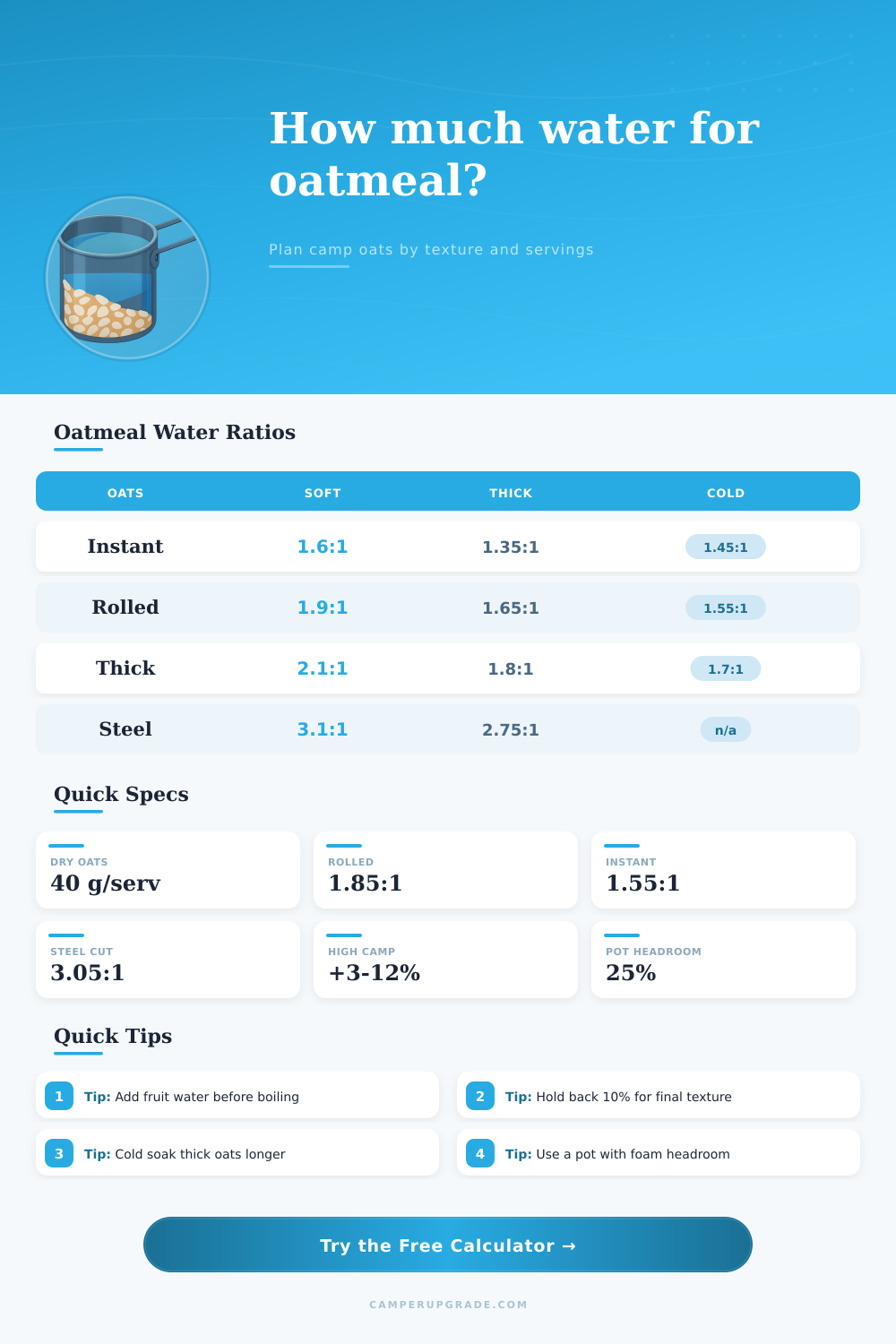
📋Oat Type Ratio Table
| Oats type | Classic water ratio | Approx dry cup weight | Best camp use |
|---|---|---|---|
| Instant oats | 1.55 cups water per cup oats | 80 g per cup | Fast mug meals and minimal stove time. |
| Quick oats | 1.65 cups water per cup oats | 82 g per cup | Soft bowls with short simmer or pour-over prep. |
| Old-fashioned rolled oats | 1.85 cups water per cup oats | 90 g per cup | Most flexible camp stove oatmeal base. |
| Thick rolled oats | 2.05 cups water per cup oats | 95 g per cup | Chewier bowls and colder morning breakfasts. |
| Steel-cut oats | 3.05 cups water per cup oats | 160 g per cup | Camper van, RV, or longer simmer setups. |
| Muesli or mixed oats | 1.30 cups water per cup mix | 92 g per cup | Cold-soak jars where texture stays looser. |
| Texture | Multiplier | Result | Trail note |
|---|---|---|---|
| Stiff camp spoonful | 0.82 | Dense, low spill | Good for eating from a small mug. |
| Thick and creamy | 0.92 | Rich bowl | Best all-around setting for rolled oats. |
| Soft classic bowl | 1.00 | Standard oatmeal | Matches most package directions. |
| Loose pourable oats | 1.15 | More fluid | Useful with protein powder or cold mornings. |
| Add-in | Extra water | Why it matters | When to add |
|---|---|---|---|
| Dried fruit | 0.35 ml per g | Fruit rehydrates and softens. | Add before hot water. |
| Milk powder | 0.70 ml per g | Powder thickens the bowl. | Mix dry before water. |
| Protein powder | 1.20 ml per g | Can turn pasty if under-watered. | Stir with hold-back water. |
| Chia or flax | 8.00 ml per g | Seeds gel and bind liquid. | Soak longer, stir twice. |
🧭Camp Batch Planning Table
| Camp scenario | Dry oats | Typical water | Recommended vessel |
|---|---|---|---|
| Solo instant mug | 40 g instant oats | 125 to 160 ml | 450 ml mug with lid |
| Two rolled-oat bowls | 80 g rolled oats | 330 to 420 ml | 900 ml pot or larger |
| Four-person family pot | 180 g rolled oats | 750 to 950 ml | 1.6 L pot with foam room |
| Cold-soak trail jar | 60 g muesli mix | 170 to 230 ml | 500 ml jar, shake once |
| Steel-cut camper breakfast | 160 g steel-cut oats | 700 to 850 ml | 1.4 L pot, longer simmer |
💡Oatmeal Ratio Tips
Ratios are planning estimates for plain water. Milk, sweetened packets, wind, pot shape, lid use, and soak time can shift the final texture, so keep a small water reserve nearby.
The amount of water you use for camp oatmeal determine teh texture of the camp oatmeal. The amount of water you use will determine whether your camp oatmeal will be too thick or too thin. If you use too little water, the camp oatmeal will become thick and glue like.
If you use too much water, the camp oatmeal will become thin like a soups. You must understand how each of these variable affects the texture of your camp oatmeal so that you are able to achieve the desired texture. The type of oat you use will determine how much water you need.
How Much Water to Use for Camp Oatmeal
Instant oat is thin and have been steamed so it absorbs water quick. Rolled oats are thicker than instant oats. Therefore, you will need more water for rolled oats than instant oats.
Steel-cut oats are the densest form of oat. Thus, you will need more water to cook steel-cut oats than rolled oats. The calculator will provide a proper amount of water for each type of oat so you dont have to memorize the water ratio for each type of oat.
The way you cook the camp oatmeal will change the amount of water you will need. If you cook it on the stovetop, some of the water will evaporate so you will need to adding more water. For the cold soak method, the oats will absorb the water more slow because there is no heat involve.
For the thermos method, no water will be lost to evaporation but the camp oatmeal may be less thick because there is no agitation of the oats. If you are cooking at high altitudes, the boiling point of water will be lower so you will need more water and more cooking time to properly cook your camp oatmeal. Any add-ins will change the amount of water needed.
Dried fruit will absorb water. Chia and flax seed will absorb water to become gel. Protein and milk powder will absorb the water and thicken the camp oatmeal.
You will need to enter the weight of the add-ins into the calculator to determine how much extra water the add-ins will need to properly absorb the water. Your preferred texture will determine the setting you will use. If you like thick camp oatmeal or thin camp oatmeal, you can choose the texture you would like.
You can use the hold back percentage so that when your camp oatmeal is finished cooking you can add water to it. It is easier to add water to thick camp oatmeal than to remove water from thin camp oatmeal. The size of the pot you use to cook your camp oatmeal will also affect the outcome of your camp oatmeal.
The camp oatmeal and water will take up space in the pot. When cooking on the stove, the camp oatmeal will create foam so there must be enough space for the foam so that your camp oatmeal does not boil over in your pot. The calculator will provide a recommendation for the size of the pot you should use for your camp oatmeal.
Lastly, there are some variable in the real world that will impact the outcome of your camp oatmeal. For instance, the wind speed will have no effect on the outcome of your camp oatmeal. However, the material of the pot will change the outcome of the temperature of your camp oatmeal.
You should of had an extra measure of water so that if your camp oatmeal becomes too thick you can add the water. While the calculator may provide you with the perfect measurement of water to add to your camp oatmeal, you will need to make the final adjustment yourself to the texture of your camp oatmeal.