Dutch Oven Temperature Calculator
Estimate top coals, bottom coals, expected oven temperature, and reload timing from oven diameter, target heat, briquette output, coal split, weather, altitude, cook time, and reload cycle.
🔥Dutch Oven Heat Presets
⚙Oven, Coal, Weather, and Timing Inputs
The calculator estimates charcoal placement for covered camp Dutch ovens. Confirm doneness with recipe cues and food-safe internal temperatures where appropriate.
Dutch oven coal plan
📊Briquette and Temperature Spec Grid
🍳Common Dutch Oven Presets Table
| Preset | Oven and target | Top / bottom split | Planning note |
|---|---|---|---|
| 10 in biscuits | 10 in, 425°F | 70% top / 30% bottom | Strong lid heat for browning, short cook |
| 12 in camp bread | 12 in, 375°F | 65% top / 35% bottom | Moderate bake with one rotation cycle |
| 12 in cobbler | 12 in, 350°F | 70% top / 30% bottom | Sweet filling needs bottom scorch control |
| 14 in stew simmer | 14 in, 275°F | 45% top / 55% bottom | More heat under the pot for liquid simmer |
| 14 in roast | 14 in, 325°F | 60% top / 40% bottom | Balanced heat for longer covered cooking |
| 16 in group bake | 16 in, 350°F | 65% top / 35% bottom | Large lid needs even ring spacing |
| Cold morning bake | 12 in, 375°F | 65% top / 35% bottom | Extra coals offset cold air and ground |
| Windy dessert | 12 in, 350°F | 70% top / 30% bottom | Protect lid coals from gusts |
| High camp cornbread | 10 in, 375°F | 65% top / 35% bottom | Small altitude margin and shorter reload |
| Low slow beans | 14 in, 250°F | 45% top / 55% bottom | Gentle bottom heat with repeat reloads |
🌡Coal Count by Oven Diameter
| Oven diameter | 325°F bake | 350°F bake | 375°F bake |
|---|---|---|---|
| 8 in | 10 top / 4 bottom | 10 top / 6 bottom | 12 top / 6 bottom |
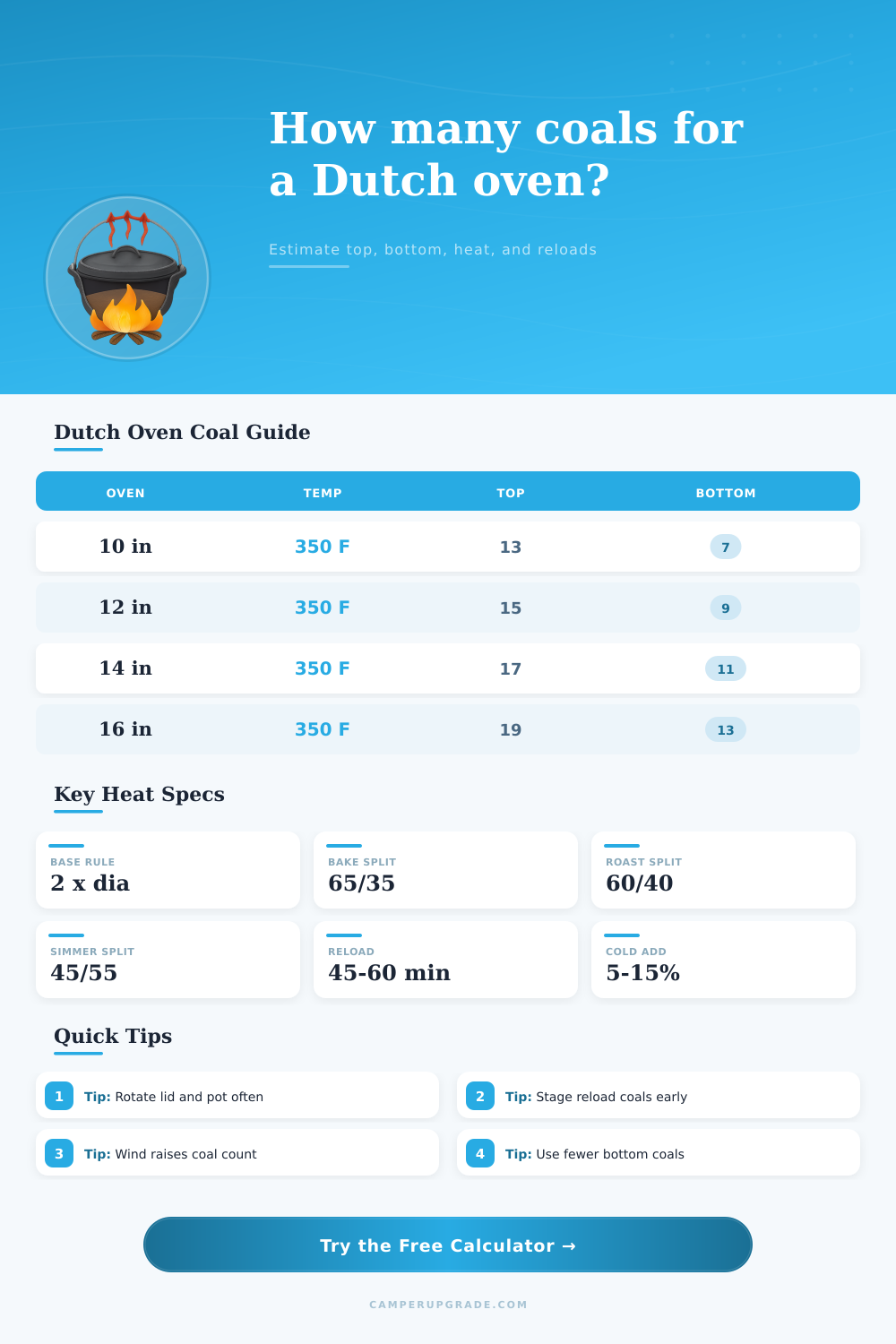
| 10 in | 12 top / 6 bottom | 13 top / 7 bottom | 14 top / 8 bottom |
| 12 in | 14 top / 8 bottom | 15 top / 9 bottom | 17 top / 9 bottom |
| 14 in | 16 top / 10 bottom | 18 top / 10 bottom | 19 top / 11 bottom |
| 16 in | 18 top / 12 bottom | 21 top / 11 bottom | 22 top / 12 bottom |
| 18 in | 21 top / 13 bottom | 23 top / 13 bottom | 25 top / 13 bottom |
📌Briquette Heat Output Reference
| Briquette condition | Input range | Heat behavior | Calculator adjustment |
|---|---|---|---|
| Fresh standard briquette | 600-700 BTU/hr each | Baseline camp Dutch oven coal | Use 650 unless you know the fuel |
| Dense premium briquette | 700-850 BTU/hr each | Longer, steadier heat | Needs fewer pieces for the same target |
| Natural briquette | 550-675 BTU/hr each | Can ash and fade faster | Use a normal or slightly higher coal count |
| Partly spent briquette | 400-550 BTU/hr each | Lower output near reload time | Reload earlier or add pieces |
| Small lump pieces | 500-750 BTU/hr each | Uneven sizes and hot spots | Watch food and adjust visually |
| Wind-cooled lid coals | Effective output varies | Heat loss across the lid | Shield the oven before adding many coals |
🌬Weather, Altitude, and Reload Table
| Condition | Coal effect | Reload effect | Practical cue |
|---|---|---|---|
| Calm, 65-75°F | Use baseline count | 45-60 min reload | Rotate pot and lid every 10-15 min |
| Cool, 40-55°F | Add roughly 5-10% | Stage reload 5 min earlier | Keep oven off cold bare ground if possible |
| Cold, below 35°F | Add roughly 10-18% | Reload cycle shortens | Use a lid stand, wind screen, and preheated coals |
| Moderate wind | Add roughly 10-16% | Lid coals fade faster | Shield crosswind while preserving airflow |
| Strong gusts | Add roughly 20%+ | Check every 25-35 min | Move to shelter before adding excessive coals |
| Above 6000 ft | Small planning margin | Weather usually matters more | Expect recipe timing changes for breads and beans |
💡Dutch Oven Temperature Tips
To manage a Dutch oven outdoors, manage two heat sources from the Dutch oven: the coals on the lid and the coals under the Dutch oven pot. The coals on the lid will heat the food from above and provide even browning of the food from top to bottom. The coals under the Dutch oven will provide heat to the food from the bottom, ensuring that the food recieve heat from that portion of the cooking vessel as well.
If you use too many coals under the Dutch oven, the bottom of the food will scorch. If you use too many coals on the lid, the top of the food will brown while the center of the food are undercooked. Finding the proper balance between the coals on the lid and under the Dutch oven will allow you to cook your food correct.
How to Manage Coals on a Dutch Oven
The environment will play a significant role in how the coals in the Dutch oven perform. The environmental factors that will impact the Dutch oven is the wind and the temperature. The wind will remove the heat from the lid of the Dutch oven, causing the coals on the lid to lose heat faster.
Additionally, the cold air and ground will take heat away from the Dutch oven. These environmental factors will impact the coals under the Dutch oven. The calculator included in this article will help you determine the proper number of coals to use based on the size of the Dutch oven and the desired temperature of the cooking vessel, as well as the impact that the wind and outside temperature will have upon the performance of you Dutch oven.
The ratio of the number of coals on the lid to the number of coals under the Dutch oven will change based on the type of food you are cooking. If you are performing baking and browning, you will need more coals on the lid than under the Dutch oven. If you are simmers and stews, you will need more coals under the Dutch oven than on the lid.
This calculator will help you determine the proper ratio of coals on the lid to coals under the Dutch oven by asking you the type of food you are cooking. Based on your answer, the calculator will provide you the proper number of coals to use and the time that you should of reload the coals in the Dutch oven. You will have to reload the coals in the Dutch oven regularly because a load of coals will not last for a full hour.
If you do not reload the coals before the first batch of coals fade, the Dutch oven will drop in temperature. This will change the cooking process of your food. This calculator will allow you to estimate when to reload the coals in the Dutch oven by taking into account the wind, the temperature outside the Dutch oven, and the age of the coals.
Additionally, you can rotate the Dutch oven and its lid every ten or fifteen minutes to even out the heat that is distributed to your cooking vessel. Ensure that you rotate the Dutch oven and its lid in opposite directions to avoid one side of the Dutch oven receiving more heat than the other side. The reference tables will allow you to see how different cooking temperatures will impact your Dutch oven.
The tables will show you how Dutch oven recipes that cook to 325 degrees will differ from cook times to 375 degrees. Additionally, the tables will allow you to see how many extra coal are required for a windy day outside the Dutch oven. However, you must also observe the food to determine whether the heat levels are proper.
If the bottom of your food is browning too quick, you must move some of the coals from under the Dutch oven to the lid. If the top of your food is pale, you must add more coals to the Dutch ovens lid. By observing your food and adjusting the coals as described, you can maintain the proper temperature of the Dutch oven.