🌞 Sunscreen Allergy Reaction Duration Estimator
Estimate how long your sunscreen allergic reaction may last based on reaction type, severity, skin type, and treatment used
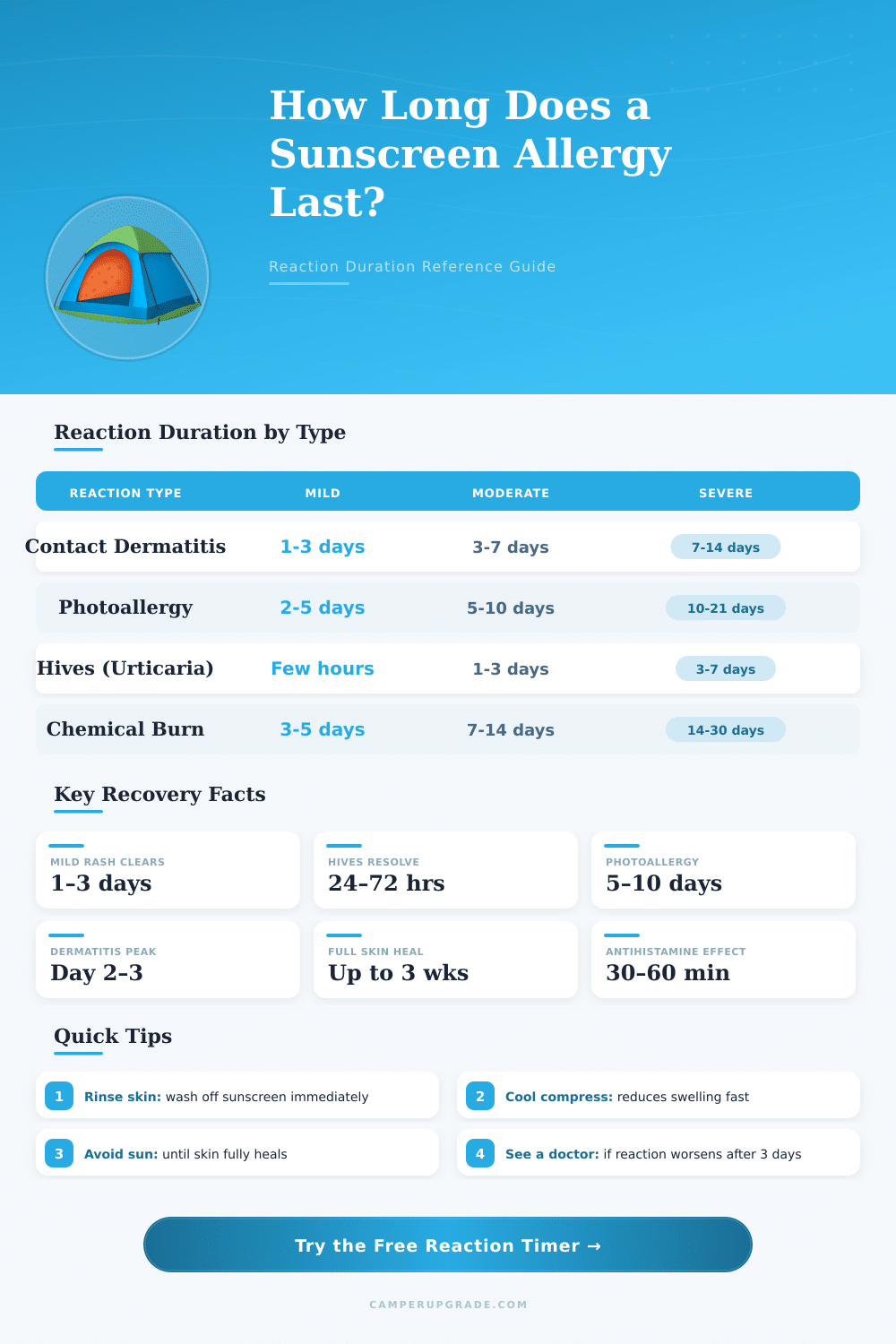
| Reaction Type | Mild Duration | Moderate Duration | Severe Duration |
|---|---|---|---|
| Contact Dermatitis | 1–3 days | 3–7 days | 7–14 days |
| Photoallergic Reaction | 2–5 days | 5–10 days | 10–21 days |
| Hives (Urticaria) | 6–12 hours | 1–3 days | 3–7 days |
| Chemical Irritant Reaction | 1–2 days | 2–5 days | 5–10 days |
| Eczema Flare-Up | 3–7 days | 1–3 weeks | 3–6 weeks |
| Mild Anaphylaxis / Swelling | 12–24 hours | 1–3 days | 3–5 days |
| Burning / Stinging Sensation | 30–60 min | 2–6 hours | 6–24 hours |
| Acne Breakout Reaction | 3–5 days | 7–14 days | 2–4 weeks |
| Treatment | Effect on Duration | Onset of Relief | Best For |
|---|---|---|---|
| No Treatment (rinse only) | Baseline (no reduction) | Varies | Very mild reactions |
| Oral Antihistamine | Reduces by 25–40% | 30–60 minutes | Hives, itching |
| Topical Steroid Cream | Reduces by 30–50% | 4–12 hours | Dermatitis, rash |
| Antihistamine + Steroid | Reduces by 40–60% | 30–60 min | Moderate/severe reactions |
| Cold Compress | Reduces by 10–20% | Immediate | Swelling, burning |
| Prescription Treatment | Reduces by 50–70% | 12–24 hours | Severe / widespread |
| Skin Type | Duration Modifier | Typical Recovery | Risk Level |
|---|---|---|---|
| Normal Skin | Baseline (x1.0) | Standard timeline | Low |
| Sensitive / Reactive | +30–50% longer | Extended healing | Moderate–High |
| Dry / Compromised Barrier | +20–40% longer | Slower repair | Moderate |
| Oily / Acne-Prone | +10–20% longer | Breakouts may persist | Low–Moderate |
| Age Group | Healing Speed | Duration Modifier | Notes |
|---|---|---|---|
| Infant (under 2) | Very sensitive skin | +40–60% longer | Consult doctor immediately |
| Child (2–17) | Generally faster | –10 to +20% | Monitor closely |
| Adult (18–60) | Standard baseline | Baseline (x1.0) | Normal healing rate |
| Elderly (60+) | Slower skin repair | +20–40% longer | Thinner skin, longer heal |
sunscreen is a product that one puts on the skin to protect it against sunburn and to help avoid skin cancer. It has several names, for instance sunblock, sun lotion or simply sun cream. The product comes in various forms, as creams, sprays gels and foams.
Use sunscreen as a key part of protecting the skin against sun damage.
How to Use Sunscreen
The amount of sunscreen that one uses matters a lot. The way one applies it, and what extra steps one takes with it, affects how well the skin stays protected against sunburn, skin cancer and too early skin aging. A great method is to choose one that has broad spectrum, so it blocks both UVA-rays and UVB-rays.
It also matters to look for water resistance, along with an SPF value of 30 or bigger.
SPF shows the Sun Protective Factor. It shows how much more time one can stay in the sun to receive the same amount of UVB-damage than without any protection. Like this, using SPF 30, one needs tihrty times more time to reach the same level of damage.
Almost all folks apply too little sunscreen. Around one ounce is enough to cover the whole body. Spots that are easily missed are the tops of ears, the neck, the tops of feet and parts around clothing and sunglasses.
Repeating the application every too hours is key, and even more soon after sweating or swimming. Setting alarms on the phone helps, because one easily loses the feeling of time outside. Sunscreen that is waterproof does not truly stay waterproof forever, so one must reapply it after water contact.
sunscreen has two main kinds: chemical and mineral. Mineral sunscreen uses physical blockers for UV-rays, that can feel a bit chalky and harder to rub. New mineral versions spread quickly and soak in easily, with only few white traces.
The choice of the right kind depends on the skin type. Lightweight gel sunscreen works well for oily or mixed skin. Creams or thicker mixes work better for dry skin.
Safety deserves attention. Spray sunscreen often carries flammable stuff. There were cases when folks applied aerosol sunscreen and later came near a grill or fire, which caused burns on their skin and needed medical help.
Some sprays were removed from sale after five folks burned in one year alone. Clean sunscreen avoids risky chemicals like oxybenzone and octinoxate. From more than 2,200 tested sunscreen products, only around one from four met standards for good sun protection while they avoided ingredients that are tied to known healthrisks.
Australian sunscreen tends to be thicker and heavier, because they usually are made to be waterproof. Korean and Japanese sunscreen is more light, because they are not truly meant for swimming.