🧀 Dehydrated Food Mason Jar Shelf Life Calculator
Estimate how long your dehydrated food will last based on food type, jar size, storage conditions & sealing method
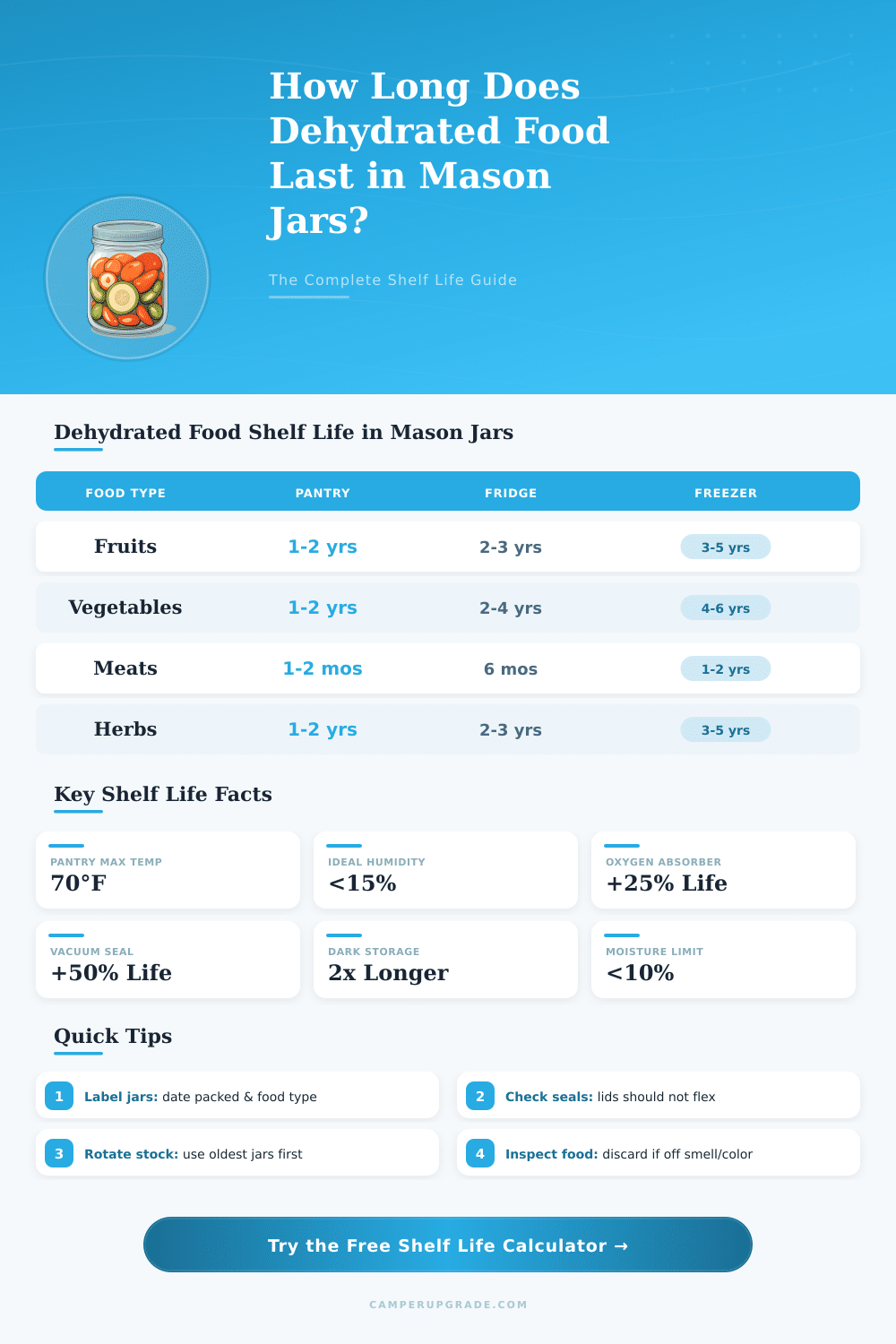
| Food Type | Pantry (sealed) | Fridge | Freezer | Optimal Conditions Max |
|---|---|---|---|---|
| Berries (strawberry, blueberry) | 1–2 years | 2–3 years | 3–5 years | 5 years |
| Apple / Pear Slices | 1–2 years | 2–4 years | 4–5 years | 5 years |
| Tropical Fruits (mango, pineapple) | 1–2 years | 2–3 years | 3–5 years | 5 years |
| Citrus Peel / Zest | 2–3 years | 3–4 years | 4–5 years | 5 years |
| Root Vegetables (carrot, potato) | 1–2 years | 2–4 years | 4–6 years | 8 years |
| Leafy Greens (kale, spinach) | 6 mos–1 year | 1–2 years | 2–4 years | 4 years |
| Peppers / Tomatoes | 1–2 years | 2–3 years | 3–5 years | 5 years |
| Corn / Peas / Beans (fresh) | 1–2 years | 2–4 years | 4–6 years | 8 years |
| Beef Jerky / Meat Strips | 1–2 months | 3–6 months | 1–2 years | 2 years |
| Dried Fish | 1–2 months | 3–6 months | 1–2 years | 2 years |
| Dried Poultry | 1–2 months | 3–6 months | 6 mos–1 year | 1 year |
| Fresh Herbs (basil, parsley) | 1–2 years | 2–3 years | 3–4 years | 4 years |
| Woody Herbs (rosemary, thyme) | 2–3 years | 3–4 years | 4–5 years | 5 years |
| White Rice / Pasta | 8–10 years | 10–15 years | 20–30 years | 30 years |
| Whole Grains (oats, barley) | 4–8 years | 8–12 years | 15–25 years | 25 years |
| Dried Beans / Lentils | 2–5 years | 5–10 years | 10–25 years | 25 years |
| Powdered Milk | 2–5 years | 5–8 years | 8–10 years | 10 years |
| Powdered Cheese | 2–4 years | 4–6 years | 6–10 years | 10 years |
| Sealing Method | Shelf Life Multiplier | Oxygen Removed | Best For |
|---|---|---|---|
| Standard Lid (no vacuum) | 1.0x (baseline) | No | Short-term storage, high turnover |
| Oxygen Absorber + Standard Lid | 1.3x–1.5x | Yes (absorbs O2) | Grains, legumes, long-term staples |
| Vacuum Sealed Lid | 1.4x–1.6x | Mostly (reduces O2) | Fruits, vegetables, herbs |
| Vacuum Seal + Oxygen Absorber | 1.6x–2.0x | Yes (near 0% O2) | Maximum shelf life, all types |
| Storage Location | Temperature (°F) | Temperature (°C) | Life vs Pantry |
|---|---|---|---|
| Hot pantry / kitchen counter | 75–85°F | 24–29°C | 0.5x — half the life |
| Pantry / cupboard (typical) | 60–70°F | 15–21°C | 1.0x (baseline) |
| Root cellar / cool basement | 40–60°F | 4–15°C | 1.5x–2.0x |
| Refrigerator | 35–40°F | 2–4°C | 2.0x–3.0x |
| Freezer | 0°F | -18°C | 3.0x–5.0x |
| Moisture Level | % Moisture | Shelf Life Impact | Texture Test |
|---|---|---|---|
| Optimal | <10% | Full shelf life (1.0x) | Crisp, brittle, snaps when bent |
| Acceptable | 10–15% | Slightly reduced (0.8x) | Leathery, pliable, no moisture when squeezed |
| Marginal | 15–20% | Significantly reduced (0.5x) | Slightly moist, bends without breaking |
| Poor (re-dry needed) | >20% | Risk of mold (0.2x) | Soft, sticky — must re-dehydrate |
Dehydrated food is simply that, food that has had almost all moisture removed. The main idea behind it is to quickly remove the water so that the food does not spoil and to stop growth of harmful germs. After the water is gone the food can stay good for a really long time.
It does not need to freeze, and in some cases it lasts almost forever.
What Is Dehydrated Food and How to Use It
An interesting trait of dehydrated food is its nutritional value, that stays same as in fresh versions. The process of slow gentle drying removes the water, but leaves the natural nutrients inside. Even so, some nutrients do get lost during the drying.
This happens especially with fruits and vegetables. Vitamin C and riboflavin suffer the most. Although, drying keeps more nutrients than many otehr methods for storing food.
Many kinds of foods work for drying. Fruits like apples, peaches, pears, bananas and mangoes are commonly chosen. Also vegetables, meats and grains work well.
Some folks even dry pasta sauce and ground beef. A funny name for dried ground beef is “hamburger rocks“. While drying ground beef, one washes it after cooking, which helps to remove most of the fat.
Running it through a food processor makes the bits more small and more easily dried, when one later adds water back. Adding breadcrumbs to the hamburger meet before drying stops it from becoming too hard.
The space travel industry is one of the main users of dehydrated food. Many space travel products are made by means of spray drying, which means that one turns them into a fine mist and then blows warm air on it. The moisture dries almost right away, leaving only milk powder.
Dehydrated food has big popularity for hiking and camping. It weighs less, because you do not need to carry water. For a long hiking trip a small amount of dehydrated food works together with a tiny stove and one jar.
To eat, one only mixes the dried items, adds water, boils briefly, and the meal is ready. Some folks grind the food into powder after drying, which lets you add cold water instead of warm.
The best way to make dehydrated food at home is to use a food dryer. Many like to dry vegetables during the season, taking them from the garden or local market. Fruits can also be done in an oven at low heat, for instance as fruit leather.
Dipping fruit in lemon juice mixed with water before drying helps stop browning. Cutting the bits in the same size ensures even drying.
Even so not every food works well for drying. It matters to choose the right foods. Ripe food without bruises gives the best results.
Compared to storebought dehydrated food, homemade batches cost much less. For the price of some premade meals one can buy a great food dryer instead.