🏕️ Camping Gear Weight & Volume Calculator
Plan your pack load — calculate total gear volume, weight, and pack requirements for any camping trip
| Trip Type | Pack Volume | Base Weight | Total with Food & Water (2 nights) |
|---|---|---|---|
| Ultralight Backpacking | 20–35 L | 5–10 lbs (2.3–4.5 kg) | 12–18 lbs (5.4–8.2 kg) |
| Backpacking | 40–65 L | 15–25 lbs (6.8–11.3 kg) | 25–40 lbs (11.3–18.1 kg) |
| Car Camping | 60–100+ L | 25–50 lbs (11.3–22.7 kg) | 35–65 lbs (15.9–29.5 kg) |
| RV / Glamping | No limit | 50–100+ lbs (22.7–45+ kg) | 60–120+ lbs (27.2–54.4+ kg) |
| Gear Category | Ultralight Version | Standard Version | Car Camp Version |
|---|---|---|---|
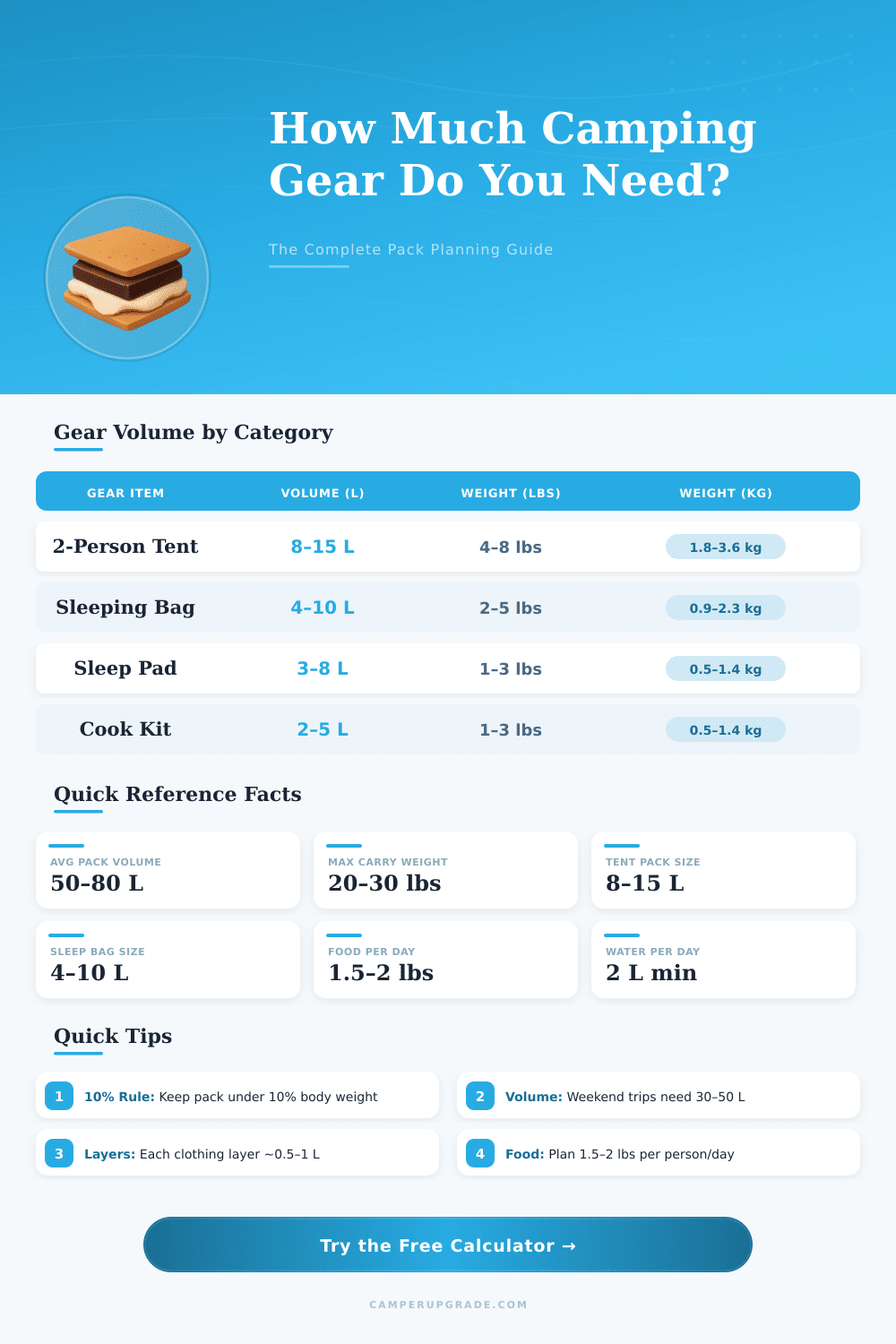
| Tent (per person) | 3–5 L, 1–2 lbs | 6–10 L, 3–5 lbs | 12–20 L, 6–10 lbs |
| Sleeping Bag | 3–5 L, 1–2 lbs | 5–8 L, 2–4 lbs | 10–20 L, 3–6 lbs |
| Sleeping Pad | 1–2 L (inflatable) | 3–5 L (foam) | Bulky / self-inflating |
| Cooking System | 1–2 L, 0.5–1 lb | 2–4 L, 1–2 lbs | 5–15 L, 3–8 lbs |
| Clothing (3 nights) | 3–5 L, 1–2 lbs | 5–8 L, 2–4 lbs | 10–20 L, 4–8 lbs |
| Water (per liter) | 1 L = 1 kg = 2.2 lbs | 1 L = 1 kg = 2.2 lbs | 1 L = 1 kg = 2.2 lbs |
| Food (per lb) | 1 lb = 0.45 kg | 1 lb = 0.45 kg | 1 lb = 0.45 kg |
| Body Weight (lbs) | Body Weight (kg) | Max Pack (10% rule) | Comfortable Pack (20% rule) |
|---|---|---|---|
| 120 lbs | 54.4 kg | 12 lbs (5.4 kg) | 24 lbs (10.9 kg) |
| 140 lbs | 63.5 kg | 14 lbs (6.4 kg) | 28 lbs (12.7 kg) |
| 160 lbs | 72.6 kg | 16 lbs (7.3 kg) | 32 lbs (14.5 kg) |
| 180 lbs | 81.6 kg | 18 lbs (8.2 kg) | 36 lbs (16.3 kg) |
| 200 lbs | 90.7 kg | 20 lbs (9.1 kg) | 40 lbs (18.1 kg) |
| 220 lbs | 99.8 kg | 22 lbs (10.0 kg) | 44 lbs (20.0 kg) |
**Note:** The info in this article is based on actual experiences and advice of fans about Camping.
Camping Gear is made up of everything that one takes for a journey away from home. This includes materials for making fire, food, drinks, protection like a tent and resources to preserve foods fresh. The ideal stuff is that which answers to the user.
What to Take Camping
It does not matter if they cost a lot or come from famous companies. Everything depends on the intention the landscape, the weather and the duration of the trip.
For a good list of Camping Gear one must start with a tent, ground cover, extra strings for the tent and a hammer. Later come sleeping bags, pads for sleep or a mattress, cushions for the head during Camping and covers. Hammocks deserve attention, because the best of them are light, easily carried and fast to lay somewhere.
Tents from Coleman with instant setup are very liked, since they do not require poles through which one must pass strings. They fold well when one takes them down, and the model for six people easily accepts an air mattress or sleeping pad with a lot of space for otehr stuff.
Causes for light are more important than one usually thinks. A little lantern on batteries or rechargeable, that swings from the ceiling in the tent, really helps. Like this one leaves hands free to arrange the space.
A lantern on the head is another practical tool. Some campers even bring LED-strings only for fun.
When one passes from tent Camping to Camping buy car, chair and table change everything. A cooler from Coleman answers well. Two coolers work perfectly; one for foods and another for drinks.
One must not forget tools against rain. A knife is useful for tasks at the tent, for instance cut wood for fire or meats for cooking, and it can serve also as a second knife to prepare foods.
For each imagined need there is Camping Gear, from canvas bags and big flashlights to coolers for the tent and tools for babies during Camping. When one finds the right tent, one must store it on solid shelves in the garage, that is the next stage. First aid kits are needed, even simply use that from the car is enough.
Gear does not need to be bought all new. Secondhand stores and flea markets are good places, especially in winter. A tent that costs hundreds of dollars sometimes is available almost free, without holes, flaws or problems.
Old military products are cheap, last long and show up cheap at stores for army and navy. Canoe trips offer even more possibilities (Camping on islands without neighbours), with bigger Gear, bigger cooler andwithout worry about foods dehydrated. The brand Sea to Summit has prize-winning sleeping pads and inflatable cushions for Camping, that deserve a look.